Feijoada brazilian black beans
1344×768 · AVIF · CC BY 4.0
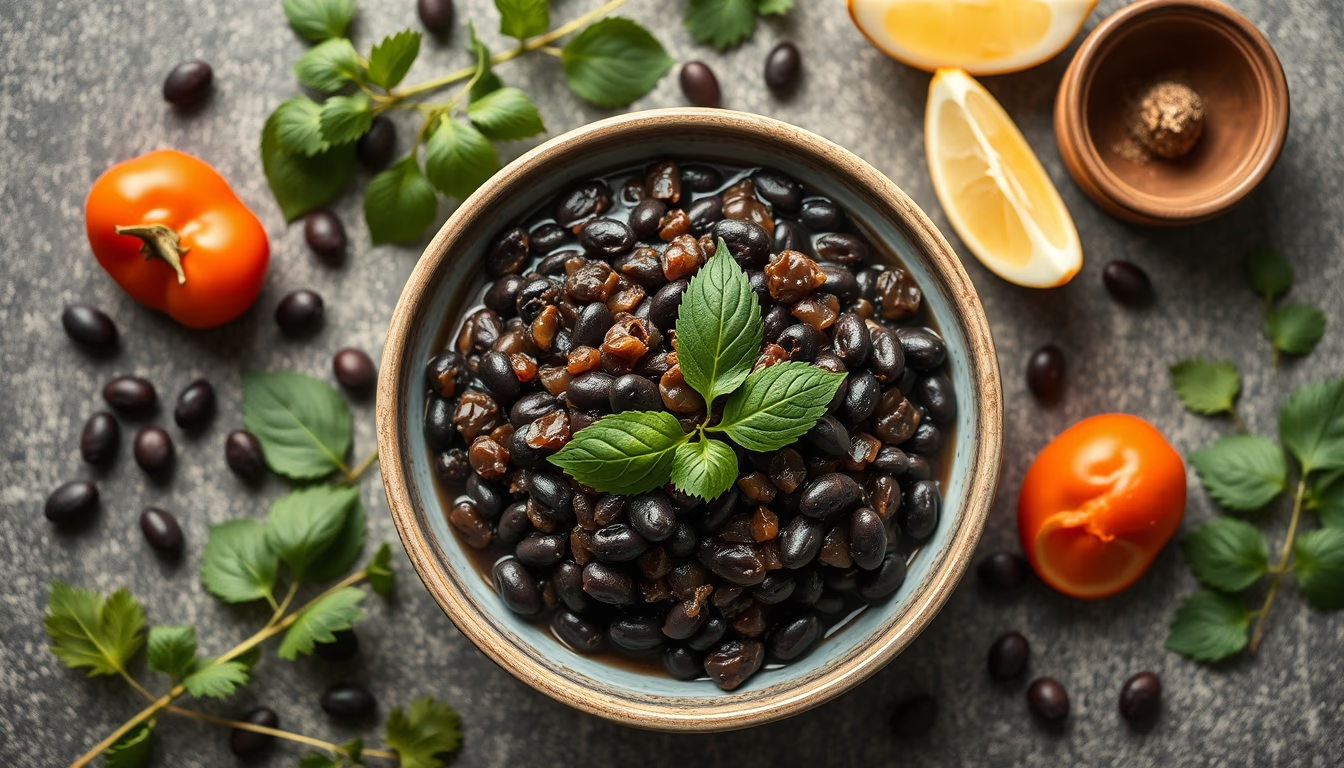
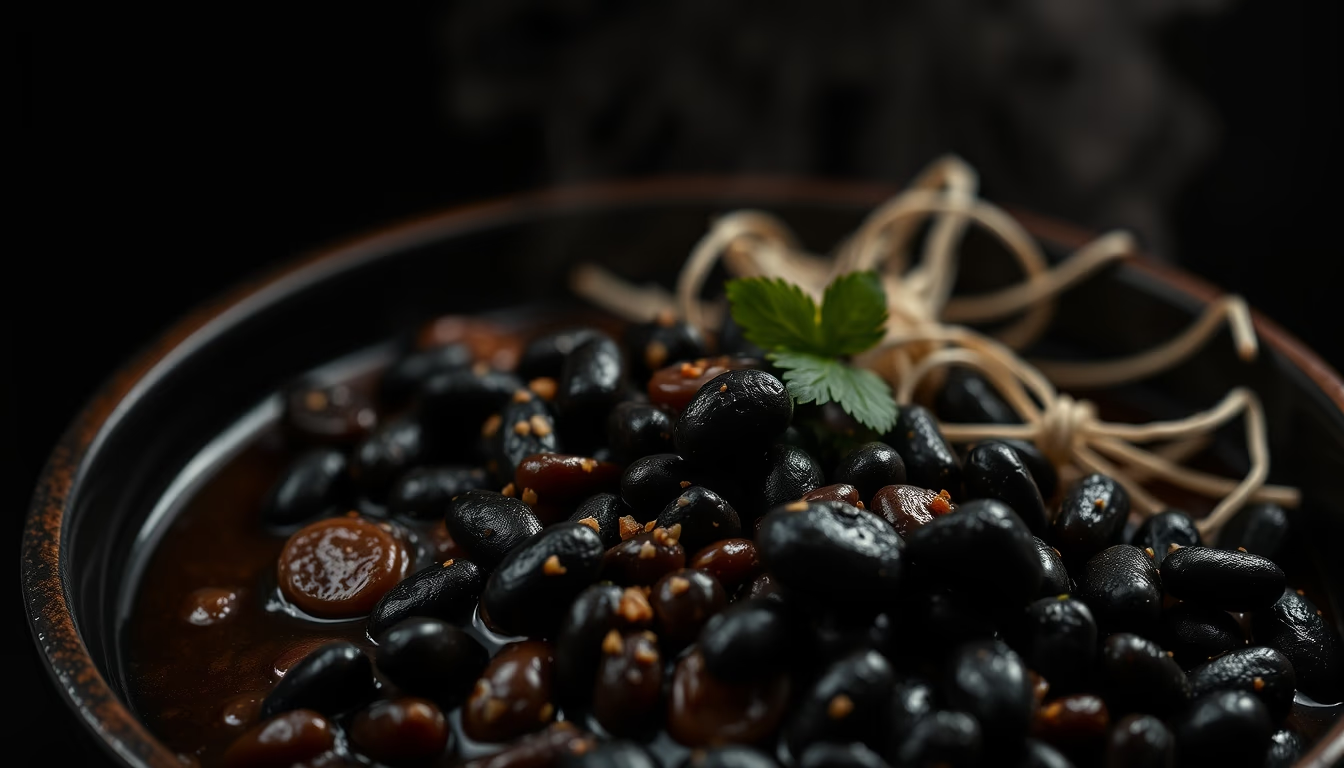
Feijoada é o prato mais emblemático da culinária brasileira, um ensopado de feijão preto com carnes defumadas e frescas, servido com arroz, couve e farofa.
Sobre o tema
A feijoada é um dos pratos mais representativos do Brasil, com raízes que remontam ao período colonial. Sua origem é tema de debate, mas a versão mais aceita aponta que ela evoluiu a partir de cozidos europeus adaptados pelos escravizados africanos usando ingredientes disponíveis, como o feijão preto e as partes menos nobres do porco. O prato tradicionalmente leva uma combinação de carnes salgadas e defumadas, como orelha, rabo, pé, costela, lombo e paio, cozidas lentamente com feijão preto, alho e cebola. O tempero é simples, mas o resultado é um caldo encorpado e saboroso.
Tradicionalmente, a feijoada é servida às quartas e sábados em bares e restaurantes por todo o país, acompanhada de arroz branco, couve refogada, farofa, torresmo, laranja em rodelas e, às vezes, vinagrete. A laranja tem a função de auxiliar na digestão da gordura das carnes. Hoje existem versões mais leves, que usam carnes magras ou substituem o porco por frango e cogumelos, agradando a vegetarianos e adeptos de dietas restritivas.
A feijoada vai além da comida; ela simboliza a mistura de culturas que formou o Brasil. É um prato que reúne família e amigos em volta da mesa, especialmente no Rio de Janeiro e em São Paulo, onde é comum em encontros descontraídos. Em 2018, a feijoada foi reconhecida como patrimônio cultural imaterial do estado do Rio de Janeiro, reforçando sua importância na identidade nacional. Apesar de variações regionais, a essência do prato permanece a mesma: um ensopado que celebra a tradição e a partilha.
Perguntas frequentes
Qual é a origem da feijoada?
Embora haja controvérsias, acredita-se que a feijoada tenha surgido no Brasil colonial como adaptação de cozidos europeus feita por escravizados africanos, que usavam feijão preto e partes menos nobres do porco que sobravam das casas-grandes.
Quais acompanhamentos típicos acompanham a feijoada?
A feijoada tradicionalmente é servida com arroz branco, couve refogada, farofa, torresmo, rodelas de laranja e, em algumas regiões, vinagrete. Cada elemento complementa e equilibra o sabor do prato.
A feijoada é consumida em todo o Brasil?
Sim, é consumida em todo o país, mas especialmente nas regiões Sudeste e Nordeste. A tradição de servir às quartas e sábados é forte nos bares e restaurantes, principalmente no Rio de Janeiro e em São Paulo.
URL direta
https://pub-c7d6a6ea828543ac903a74a341ccb2e1.r2.dev/imagens/feijoada-brazilian-black-beans-isometric-flat-lay-fresh3.avifComo creditar
Inclua um link visível de volta pro UtilizAí. Copie um dos snippets abaixo:
<a href="https://xn--utiliza-eza.com/midia/imagens/feijoada-brazilian-black-beans-isometric-flat-lay-fresh3">Feijoada brazilian black beans</a> by <a href="https://xn--utiliza-eza.com">UtilizAí</a>, licensed under <a href="https://creativecommons.org/licenses/by/4.0/">CC BY 4.0</a>.
[Feijoada brazilian black beans](https://xn--utiliza-eza.com/midia/imagens/feijoada-brazilian-black-beans-isometric-flat-lay-fresh3) by [UtilizAí](https://xn--utiliza-eza.com), CC BY 4.0
Licença: CC-BY-4.0