Eyjafjallajökull volcano
1344×768 · AVIF · CC BY 4.0
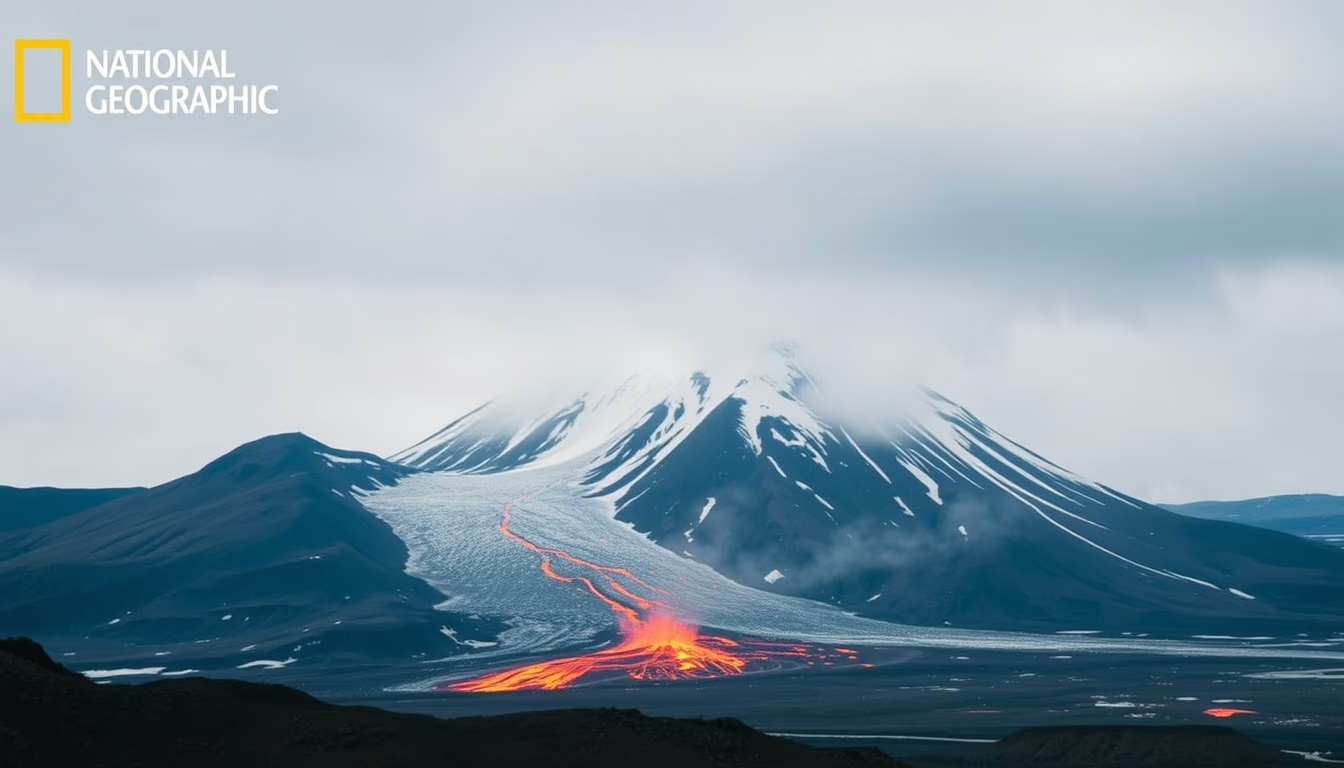
Iceland's Eyjafjallajökull volcano erupted in 2010, causing unprecedented disruption to European air travel.
About this subject
Eyjafjallajökull is a subglacial stratovolcano located in southern Iceland, beneath an ice cap whose name translates to 'island-mountain glacier'. It rises 1,666 meters above sea level and features a crater 3 to 4 kilometers in diameter. It forms part of the Katla volcanic system, a highly active geological region situated along the Mid-Atlantic Ridge, where the Eurasian and North American tectonic plates diverge. Prior to 2010, its last major eruption occurred from 1821 to 1823, with smaller events in 1612 and 1613.
In April 2010, following increased seismic activity, Eyjafjallajökull erupted. The eruption initially melted the overlying ice cap, triggering glacial floods (jökulhlaups) that damaged roads and bridges. The subsequent explosive phase, driven by magma-ice interaction, produced a plume of fine volcanic ash that rose 9 to 11 kilometers into the atmosphere. Prevailing winds carried the ash cloud over northern Europe, leading to the closure of airspace across 20 countries for six consecutive days in May 2010. Approximately 100,000 flights were canceled, affecting 10 million passengers and causing billions of dollars in economic losses for airlines and related industries.
The ash from Eyjafjallajökull was notable for its high silica content, making it exceptionally abrasive and hazardous to jet engines. The event prompted major revisions in aviation safety protocols, replacing blanket airspace closures with risk zones based on ash concentration. Volcanologists used the eruption to improve monitoring of subglacial volcanoes, which pose unique challenges due to ice cover. The eruption also captured global attention, turning the famously unpronounceable volcano name into a household term and marking a pivotal moment in modern volcanology and air travel regulation.
Frequently Asked Questions
Why did the Eyjafjallajökull eruption in 2010 cause so much air travel chaos?
The fine, silica-rich volcanic ash was carried by winds over northern Europe, posing a threat to jet engines, leading to the precautionary closure of airspace across 20 European countries for six days.
How do you pronounce Eyjafjallajökull?
Approximately 'AY-ya-fyat-la-yo-kutl', with the 'll' sounding like 'tl' in Icelandic. An English approximation is 'ay-uh-fyat-luh-yo-kutl'.
Is Eyjafjallajökull volcano still active?
Yes, it is considered active, but no signs of imminent eruption have been observed since 2010. The surrounding Katla volcanic system remains closely monitored due to its high activity level.
Direct URL
https://pub-c7d6a6ea828543ac903a74a341ccb2e1.r2.dev/imagens/eyjafjallajokull-volcano-national-geographic-style-p5.avifHow to credit
Include a visible link back to UtilizAí. Copy one of the snippets below:
<a href="https://xn--utiliza-eza.com/en/midia/imagens/eyjafjallajokull-volcano-national-geographic-style-p5">Eyjafjallajökull volcano</a> by <a href="https://xn--utiliza-eza.com">UtilizAí</a>, licensed under <a href="https://creativecommons.org/licenses/by/4.0/">CC BY 4.0</a>.
[Eyjafjallajökull volcano](https://xn--utiliza-eza.com/en/midia/imagens/eyjafjallajokull-volcano-national-geographic-style-p5) by [UtilizAí](https://xn--utiliza-eza.com), CC BY 4.0
License: CC-BY-4.0