Eyjafjallajökull volcano
1344×768 · AVIF · CC BY 4.0
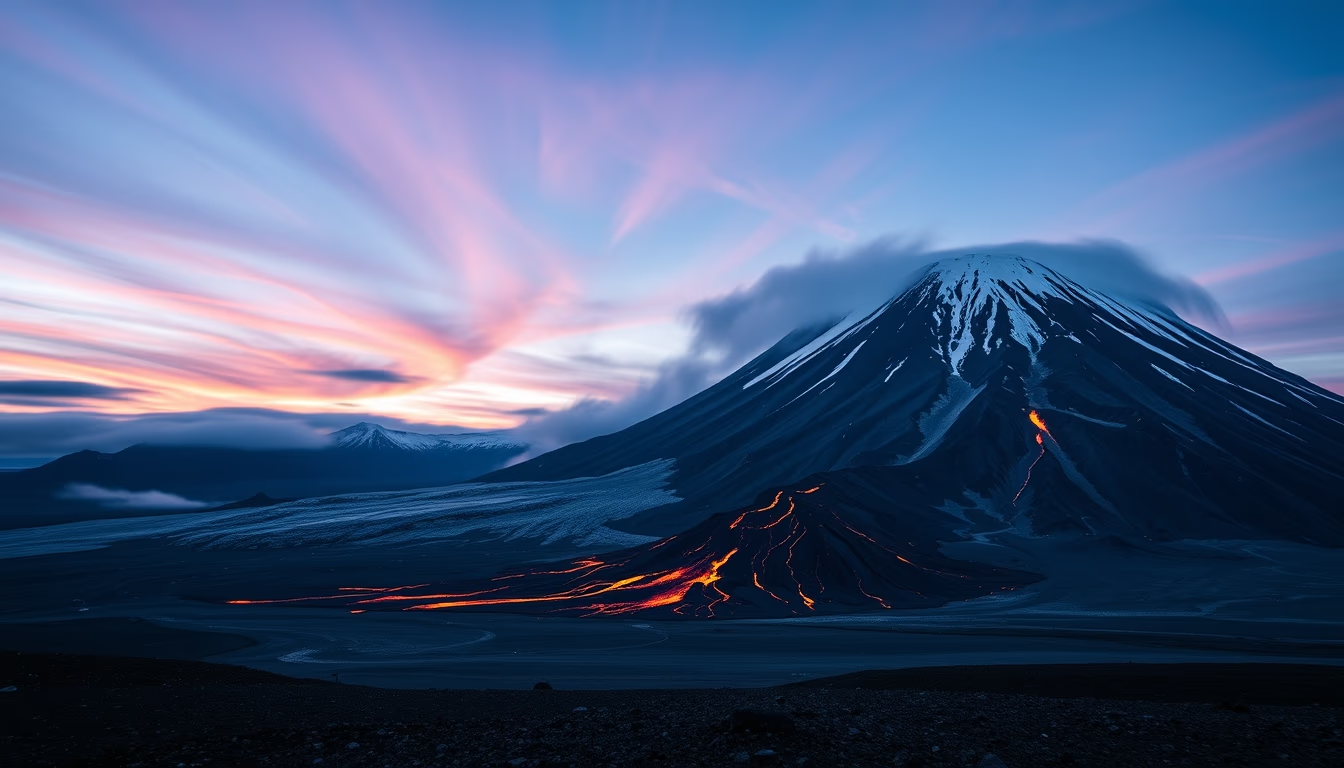
Iceland's Eyjafjallajökull volcano gained global notoriety in 2010 when its eruption disrupted European air travel for weeks.
About this subject
Eyjafjallajökull is one of Iceland's most famous volcanoes, lying beneath a glacier of the same name that covers about 100 km². Its name translates to "island-mountain glacier" in Icelandic, reflecting the rugged landscape of the area. The volcano is part of the larger Katla volcanic system, one of Iceland's most active, and is located in southern Iceland, about 125 km east of Reykjavik.
The 2010 eruption, which began on March 20 and intensified in April, was both effusive and explosive, producing an enormous ash cloud that reached altitudes up to 11 km. The fine ash, composed of silica particles, posed a serious hazard to jet engines, leading to the closure of large parts of European airspace for over two weeks. Approximately 10 million passengers were affected, and the global economy lost billions of dollars.
Geologically, Eyjafjallajökull is a stratovolcano built over thousands of years, with previous eruptions recorded in 920, 1612, and 1821-1823. Its last eruption before 2010 was in 1823, making it relatively dormant. During the 2010 eruption, the interaction between magma and glacial ice intensified ash fragmentation, producing a finer, more persistent plume.
Culturally, the 2010 event thrust Iceland into the global spotlight and significantly boosted volcanic tourism in the country. The volcano's name became a tongue-twister for foreign journalists, inspiring memes, songs, and even a play. Scientists continue to closely monitor the region, as eruptions in the Katla system tend to be more violent and could have even greater global consequences.
Frequently Asked Questions
What does the name Eyjafjallajökull mean?
Eyjafjallajökull is an Icelandic word meaning "island-mountain glacier," combining eyja (islands), fjalla (mountains), and jökull (glacier).
Why did the 2010 eruption disrupt air travel?
The eruption produced very fine ash containing silica, which can melt and solidify inside jet engines, causing failures. European authorities closed airspace to prevent accidents.
Is Eyjafjallajökull still active?
Yes, the volcano remains active, but there are no signs of imminent eruption. It is constantly monitored with seismographs and GPS, especially due to its connection to the more dangerous Katla volcanic system.
Direct URL
https://pub-c7d6a6ea828543ac903a74a341ccb2e1.r2.dev/imagens/eyjafjallajokull-volcano-long-exposure-p11.avifHow to credit
Include a visible link back to UtilizAí. Copy one of the snippets below:
<a href="https://xn--utiliza-eza.com/en/midia/imagens/eyjafjallajokull-volcano-long-exposure-p11">Eyjafjallajökull volcano</a> by <a href="https://xn--utiliza-eza.com">UtilizAí</a>, licensed under <a href="https://creativecommons.org/licenses/by/4.0/">CC BY 4.0</a>.
[Eyjafjallajökull volcano](https://xn--utiliza-eza.com/en/midia/imagens/eyjafjallajokull-volcano-long-exposure-p11) by [UtilizAí](https://xn--utiliza-eza.com), CC BY 4.0
License: CC-BY-4.0