Eyjafjallajökull volcano
1344×768 · AVIF · CC BY 4.0
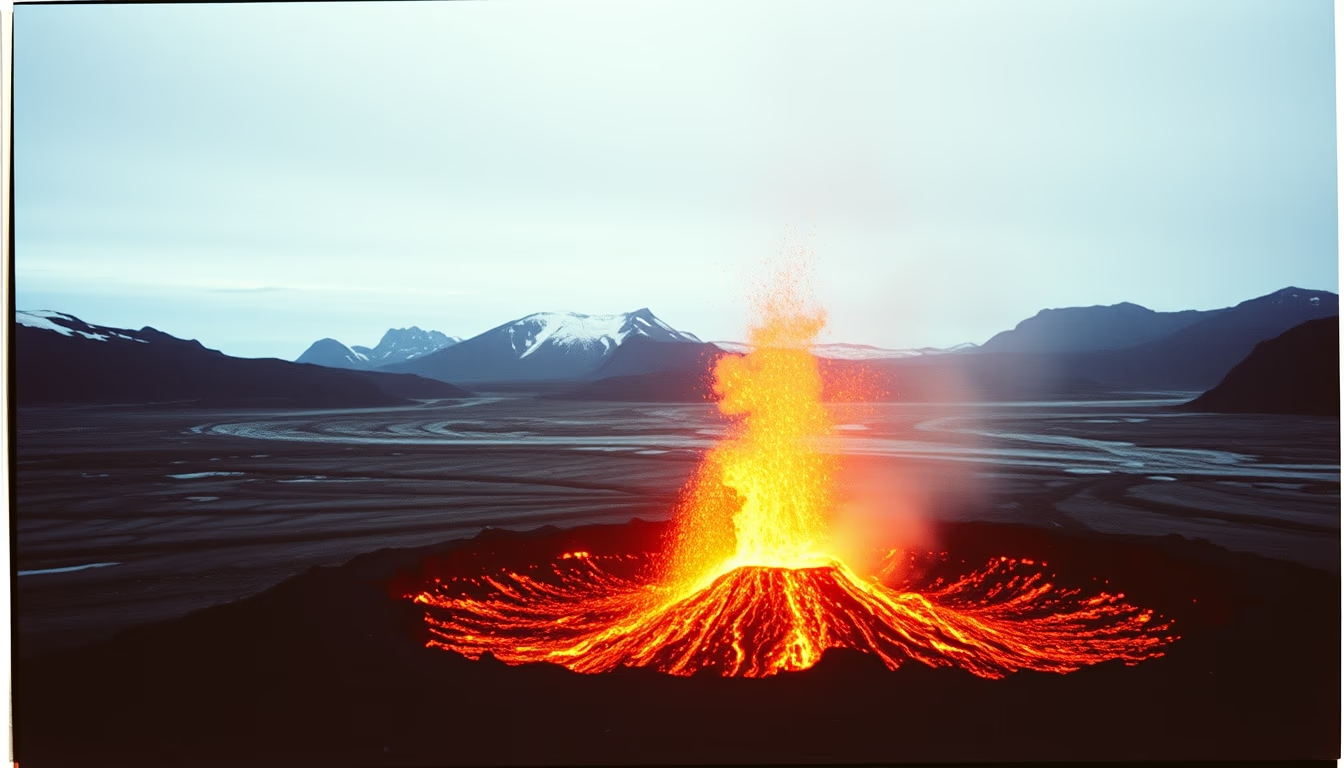
Eyjafjallajökull, a volcano in Iceland, gained worldwide fame in 2010 when its eruption paralyzed European air traffic for weeks.
About this subject
Eyjafjallajökull is a subglacial volcano located in southern Iceland, beneath an ice cap that shares its name. The name means 'glacier of the mountain islands' in Icelandic. Standing at approximately 1,666 meters in height, the volcano is part of Iceland's volcanic belt, a region of intense geothermal activity due to its position on the Mid-Atlantic Ridge. The most notable eruption occurred in 2010, between March and May, following a nearly 200-year dormancy. This eruption was characterized by an explosive interaction between magma and ice, producing vast amounts of fine volcanic ash. The ash was ejected up to 9 kilometers into the atmosphere and carried by winds toward Europe.
The 2010 eruption had a global impact due to the disruption of air travel. Volcanic ash poses a serious risk to aircraft engines, potentially causing mechanical failure and irreversible damage. Consequently, most European countries closed their airspace for six days, from April 15 to 21. An estimated 100,000 flights were canceled, affecting about 10 million passengers. The economic loss for airlines was approximately 1.7 billion US dollars. The event prompted a revision of safety protocols and volcanic monitoring in global aviation.
Culturally, Eyjafjallajökull became a symbol of nature's power and the vulnerability of modern infrastructure. The difficult-to-pronounce name generated numerous memes and curious news stories, but also sparked public interest in geology and volcanology. Iceland, already a popular tourist destination for its volcanic landscapes, saw an increase in visitors eager to see the eruption site. The volcano is currently dormant but remains closely monitored by seismographs and satellite imagery.
From a scientific perspective, the 2010 eruption was a natural laboratory. Detailed studies of ash composition, emitted gases, and eruptive dynamics have helped refine models for predicting eruptions and ash dispersion. The interaction between basaltic magma and meltwater produced unusual phreatic and phreatomagmatic explosions. Researchers continue to analyze ash deposits to better understand eruptive processes in glacial environments, which are common in regions such as Iceland, Alaska, and Patagonia.
Frequently Asked Questions
Why is Eyjafjallajökull so difficult to pronounce?
The name is Icelandic, combining 'eyja' (island), 'fjalla' (mountain), and 'jökull' (glacier). For non-native speakers, the consonant clusters are challenging. An approximate pronunciation is 'AY-uh-fyat-luh-YO-kutl'.
Did the 2010 eruption cause any direct damage in Iceland?
Yes, it caused glacial outburst floods (jökulhlaups) that damaged roads and bridges. Fortunately, no fatalities occurred because the area was sparsely inhabited and evacuated in time.
Is the volcano still active?
Yes, Eyjafjallajökull is considered active but is currently dormant. Seismic and geothermal activity is continuously monitored by Icelandic authorities.
Direct URL
https://pub-c7d6a6ea828543ac903a74a341ccb2e1.r2.dev/imagens/eyjafjallajokull-volcano-lo-fi-disposable-camera-p9.avifHow to credit
Include a visible link back to UtilizAí. Copy one of the snippets below:
<a href="https://xn--utiliza-eza.com/en/midia/imagens/eyjafjallajokull-volcano-lo-fi-disposable-camera-p9">Eyjafjallajökull volcano</a> by <a href="https://xn--utiliza-eza.com">UtilizAí</a>, licensed under <a href="https://creativecommons.org/licenses/by/4.0/">CC BY 4.0</a>.
[Eyjafjallajökull volcano](https://xn--utiliza-eza.com/en/midia/imagens/eyjafjallajokull-volcano-lo-fi-disposable-camera-p9) by [UtilizAí](https://xn--utiliza-eza.com), CC BY 4.0
License: CC-BY-4.0