Eye exam phoropter
1344×768 · AVIF · CC BY 4.0
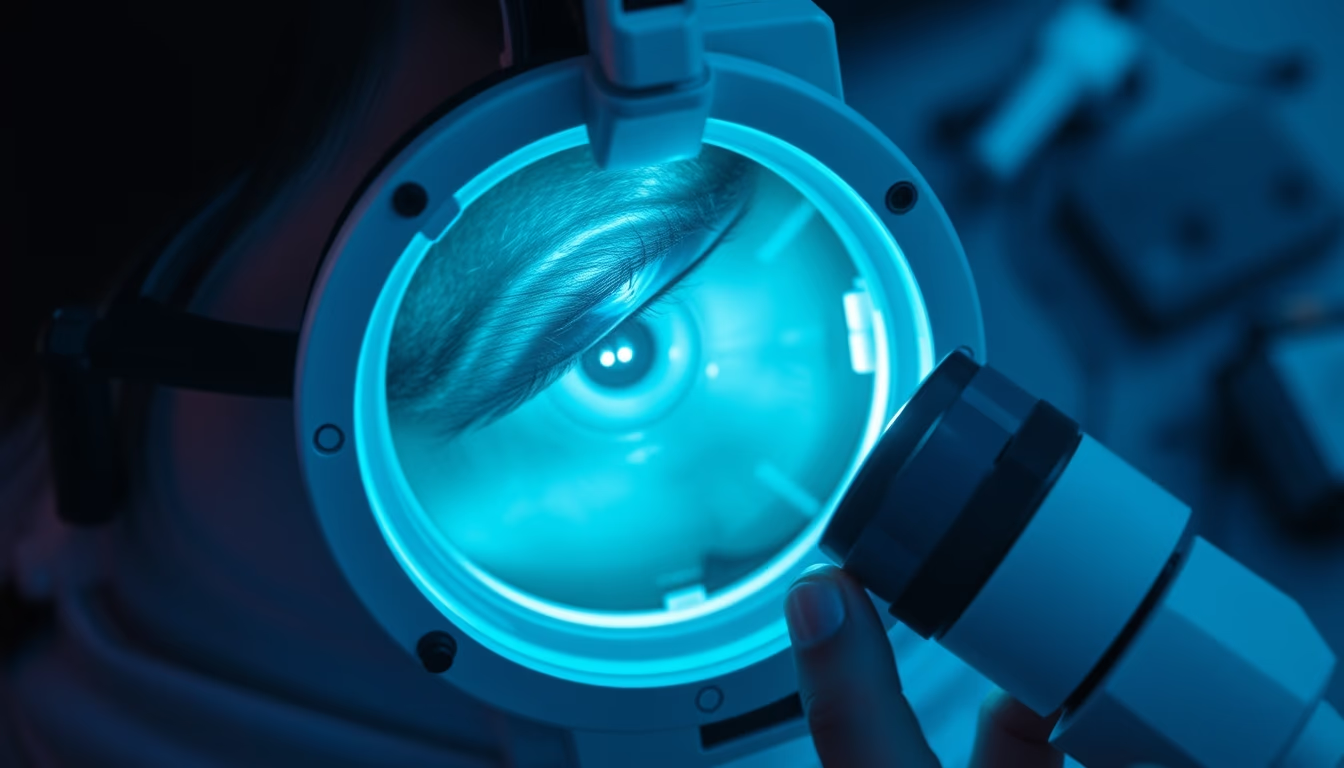
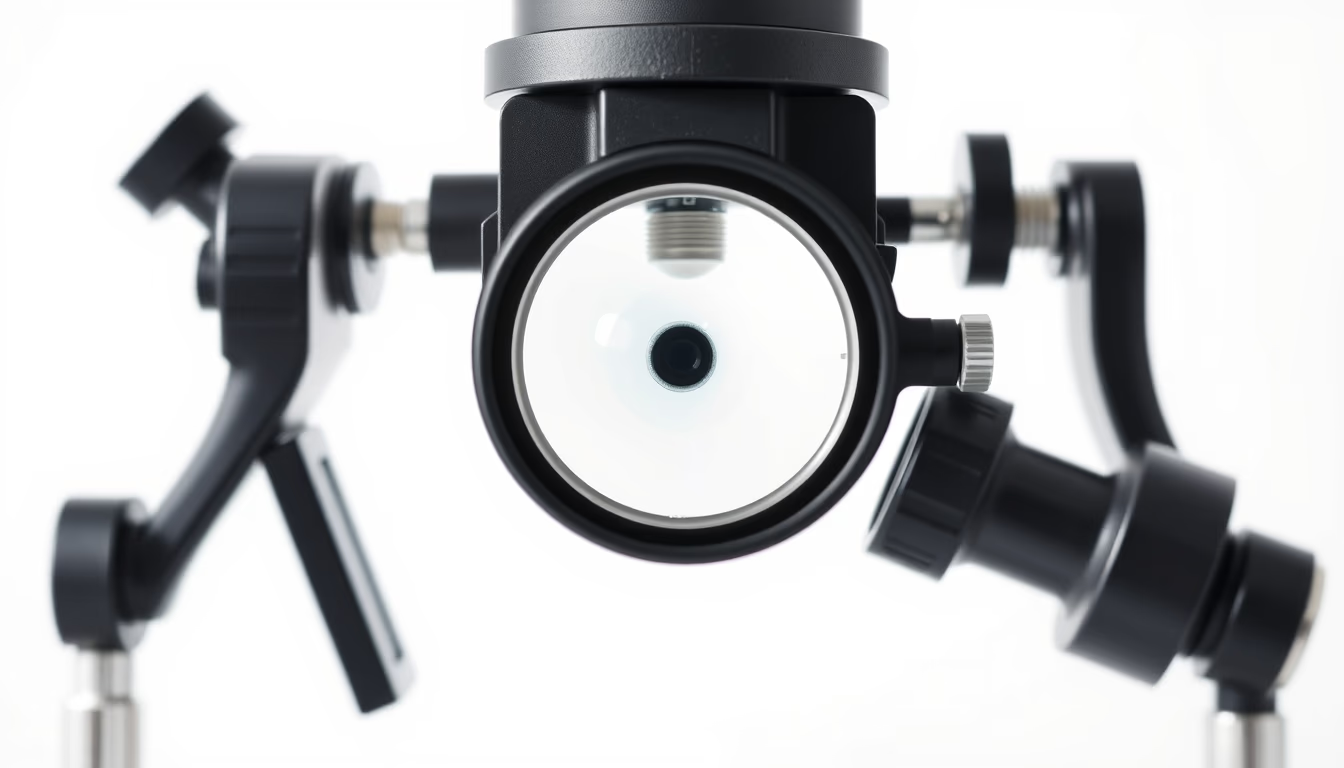
The phoropter is the ophthalmic instrument used to measure the refractive error of the eyes, essential in eye exams.
About this subject
The phoropter, also known as a refractor, is a clinical device used by ophthalmologists and optometrists to determine the prescription for corrective lenses. It allows testing different combinations of spherical and cylindrical lenses while the patient assesses visual clarity. The instrument contains multiple discs with interchangeable lenses, controlled by the professional, who adjusts the power and axis for astigmatism. The patient sits in front of the phoropter and views an eye chart, indicating which lens provides the clearest vision. Despite digital advances, the manual phoropter remains widely used for its accuracy and reliability.
The history of the phoropter dates back to the late 19th century. The first practical model was patented by De Zeng in 1908 and later improved by Henry Ketcham and others. Before that, exams were performed with hand-held test frames, a time-consuming and less precise process. The evolution into the modern phoropter with rotating lenses and numbered scales revolutionized clinical refraction. Today, digital versions that automate part of the process exist, but the basic principle remains the same: rapidly switching lenses to find the best correction.
In clinical practice, the phoropter is indispensable for diagnosing myopia, hyperopia, astigmatism, and presbyopia. It is also used in binocular vision tests and to evaluate focusing and ocular alignment issues. A curious fact: the phoropter is often confused with the retinoscope, but while the former measures subjective refraction with patient input, the latter provides an initial objective measurement. In many countries, including Brazil, refraction testing with a phoropter is a standard part of comprehensive eye exams and is covered by health insurance.
Frequently Asked Questions
How is an eye exam with a phoropter performed?
The patient sits in front of the phoropter and looks at an eye chart. The doctor or optometrist adjusts the lenses in the device, asking the patient which option provides the clearest vision. The process is repeated for each eye separately.
What is the difference between a phoropter and a retinoscope?
The phoropter is used for subjective refraction, where the patient responds about vision quality. The retinoscope provides an initial objective measurement by projecting light into the eye and observing the retinal reflex, without relying on the patient's response.
How long does an eye exam with a phoropter take?
An eye exam with a phoropter typically lasts between 10 and 20 minutes, depending on the complexity of the case and the number of tests performed.
Direct URL
https://pub-c7d6a6ea828543ac903a74a341ccb2e1.r2.dev/imagens/eye-exam-phoropter-aerial-drone-shot-p1.avifHow to credit
Include a visible link back to UtilizAí. Copy one of the snippets below:
<a href="https://xn--utiliza-eza.com/en/midia/imagens/eye-exam-phoropter-aerial-drone-shot-p1">Eye exam phoropter</a> by <a href="https://xn--utiliza-eza.com">UtilizAí</a>, licensed under <a href="https://creativecommons.org/licenses/by/4.0/">CC BY 4.0</a>.
[Eye exam phoropter](https://xn--utiliza-eza.com/en/midia/imagens/eye-exam-phoropter-aerial-drone-shot-p1) by [UtilizAí](https://xn--utiliza-eza.com), CC BY 4.0
License: CC-BY-4.0