Exoplanet earth-like
1344×768 · AVIF · CC BY 4.0
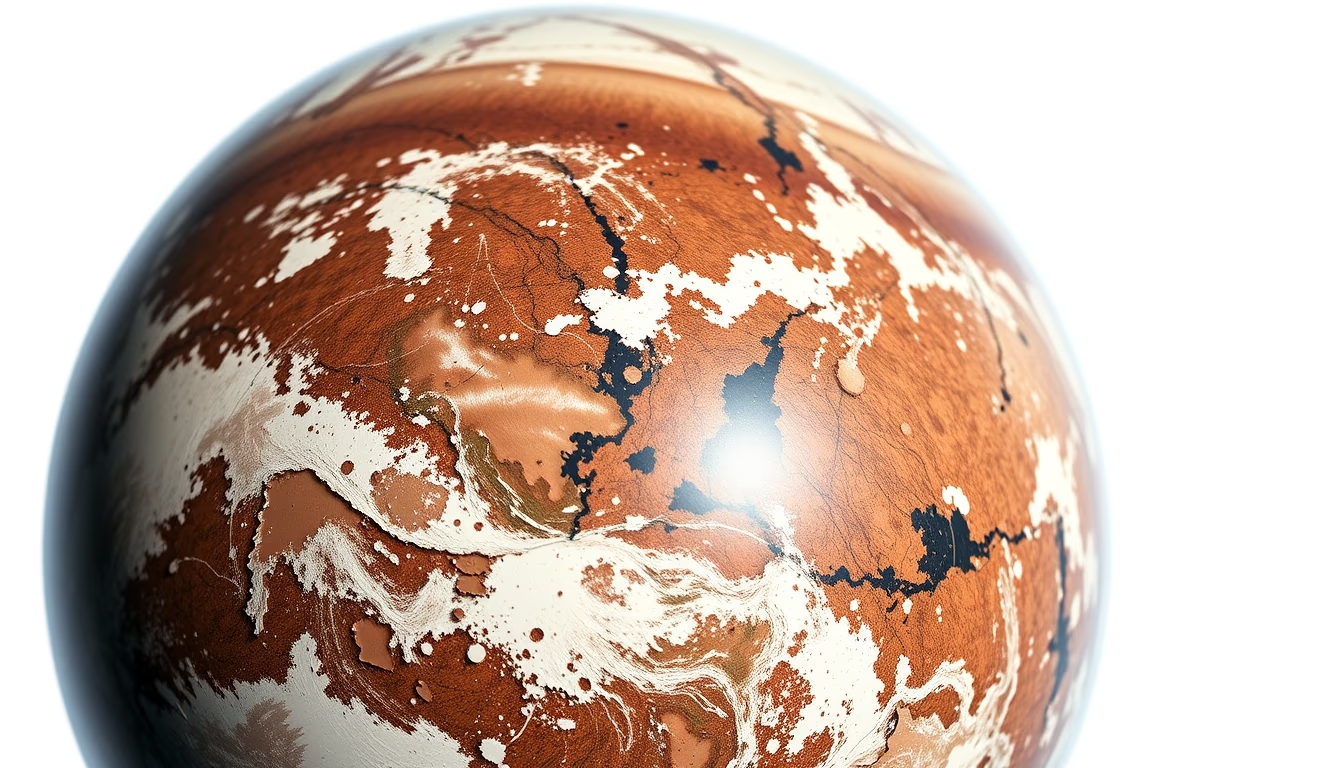
Earth-like exoplanets are rocky worlds in the habitable zone of their stars, where liquid water may exist.
About this subject
Since the discovery of the first exoplanet in 1992, astronomers have identified over 5,000 of these worlds beyond our solar system. Among them, Earth-like exoplanets draw special interest for having similar size and rocky composition to our planet, as well as orbiting within the habitable zone of their stars. This region, also known as the Goldilocks Zone, allows temperatures that maintain liquid water on the surface, a key condition for life as we know it.
NASA's Kepler space telescope was instrumental in this search, monitoring the brightness of thousands of stars and detecting tiny dips caused by passing planets. Notable examples include Kepler-452b, nicknamed "Earth's older cousin," located 1,400 light-years away in the constellation Cygnus. More recently, the TESS telescope and the James Webb Space Telescope have refined the hunt, analyzing atmospheres for biosignatures such as oxygen and methane.
Despite the excitement, no confirmed exoplanet is identical to Earth. Many are larger, with radii up to 50% greater, or orbit cooler red dwarf stars, subject to intense stellar flares. Still, statistical probability suggests there are billions of potentially habitable planets in the Milky Way alone. Future missions like ESA's PLATO and the Habitable Worlds Observatory promise to advance the characterization of these worlds.
Interestingly, the concept of the habitable zone varies by stellar type. Cooler stars have closer zones, while hotter stars extend them farther out. Additionally, geological activity and magnetic fields are crucial to maintain a stable atmosphere. Studying these exoplanets not only expands our cosmic knowledge but also helps us better understand Earth's own history and future.
Frequently Asked Questions
How many exoplanets have been discovered so far?
As of early 2025, over 5,500 exoplanets have been confirmed in more than 4,000 planetary systems. The majority were detected by the transit method, used by the Kepler telescope.
What defines an exoplanet as 'Earth-like'?
Generally, Earth-like exoplanets are rocky worlds with sizes between 0.5 and 1.5 Earth radii that orbit within the habitable zone of their star, where liquid water could exist on the surface.
Is there any exoplanet that is truly habitable for humans?
No confirmed exoplanet is habitable for humans in the short term. Even the most promising ones, like Proxima Centauri b, orbit active stars that could sterilize the surface. The search for atmospheric biosignatures is the next step.
Direct URL
https://pub-c7d6a6ea828543ac903a74a341ccb2e1.r2.dev/imagens/exoplanet-earth-like-commercial-product-photography-p8.avifHow to credit
Include a visible link back to UtilizAí. Copy one of the snippets below:
<a href="https://xn--utiliza-eza.com/en/midia/imagens/exoplanet-earth-like-commercial-product-photography-p8">Exoplanet earth-like</a> by <a href="https://xn--utiliza-eza.com">UtilizAí</a>, licensed under <a href="https://creativecommons.org/licenses/by/4.0/">CC BY 4.0</a>.
[Exoplanet earth-like](https://xn--utiliza-eza.com/en/midia/imagens/exoplanet-earth-like-commercial-product-photography-p8) by [UtilizAí](https://xn--utiliza-eza.com), CC BY 4.0
License: CC-BY-4.0