Ethereum 3D render on dark gradient
1344×768 · AVIF · CC BY 4.0
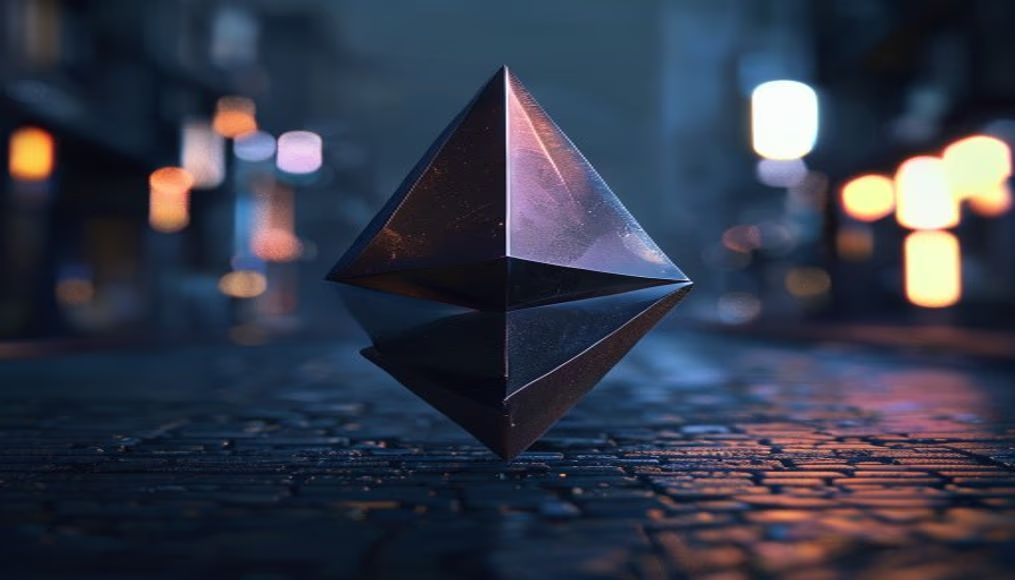
Ethereum is a decentralized platform enabling smart contracts and decentralized applications, revolutionizing finance and beyond.
About this subject
Ethereum was proposed by Vitalik Buterin in 2013 and launched in 2015 as an evolution of the blockchain concept. Unlike Bitcoin, which is primarily a digital currency, Ethereum is a programmable platform that executes smart contracts, self-executing codes that automate agreements without intermediaries. Its blockchain hosts thousands of decentralized applications (dApps) in sectors like decentralized finance (DeFi), non-fungible tokens (NFTs), decentralized autonomous organizations (DAOs), and more.
The Ethereum network operates with its native cryptocurrency, Ether (ETH), used to pay transaction fees (gas) and incentivize miners and validators. In September 2022, Ethereum underwent a major upgrade called The Merge, transitioning from proof-of-work (PoW) to proof-of-stake (PoS) consensus, reducing energy consumption by approximately 99.9%. This shift made the network more scalable and sustainable, paving the way for future improvements such as sharding.
The Ethereum ecosystem is standardized by ERC-20 tokens, which allow the creation of new cryptocurrencies and digital assets on its blockchain. Additionally, scaling solutions like rollups (optimistic and zero-knowledge) have been developed to increase transaction throughput without compromising security. Ethereum remains the leading platform for blockchain innovation, with thousands of developers contributing to its open-source code and decentralized governance.
Frequently Asked Questions
What differentiates Ethereum from Bitcoin?
Bitcoin is primarily a digital currency and store of value, while Ethereum is a programmable platform enabling smart contracts and decentralized applications. Ethereum has a more versatile blockchain capable of executing arbitrary code, and uses Ether as its native cryptocurrency for transaction fees.
How do smart contracts work on Ethereum?
Smart contracts are code stored on the Ethereum blockchain that automatically execute when predefined conditions are met. They eliminate the need for intermediaries, ensuring transparency and immutability. They are written in languages like Solidity and deployed on the network by paying fees in Ether.
What is Ethereum 2.0?
Ethereum 2.0 refers to a set of upgrades aimed at improving scalability, security, and sustainability. The first major step was The Merge, which transitioned consensus from proof-of-work to proof-of-stake. Future phases include the introduction of sharding to increase transaction throughput.
Direct URL
https://pub-c7d6a6ea828543ac903a74a341ccb2e1.r2.dev/imagens/ethereum-3d-render-on-dark-gradient-street-photography-v11.avifHow to credit
Include a visible link back to UtilizAí. Copy one of the snippets below:
<a href="https://xn--utiliza-eza.com/en/midia/imagens/ethereum-3d-render-on-dark-gradient-street-photography-v11">Ethereum 3D render on dark gradient</a> by <a href="https://xn--utiliza-eza.com">UtilizAí</a>, licensed under <a href="https://creativecommons.org/licenses/by/4.0/">CC BY 4.0</a>.
[Ethereum 3D render on dark gradient](https://xn--utiliza-eza.com/en/midia/imagens/ethereum-3d-render-on-dark-gradient-street-photography-v11) by [UtilizAí](https://xn--utiliza-eza.com), CC BY 4.0
License: CC-BY-4.0