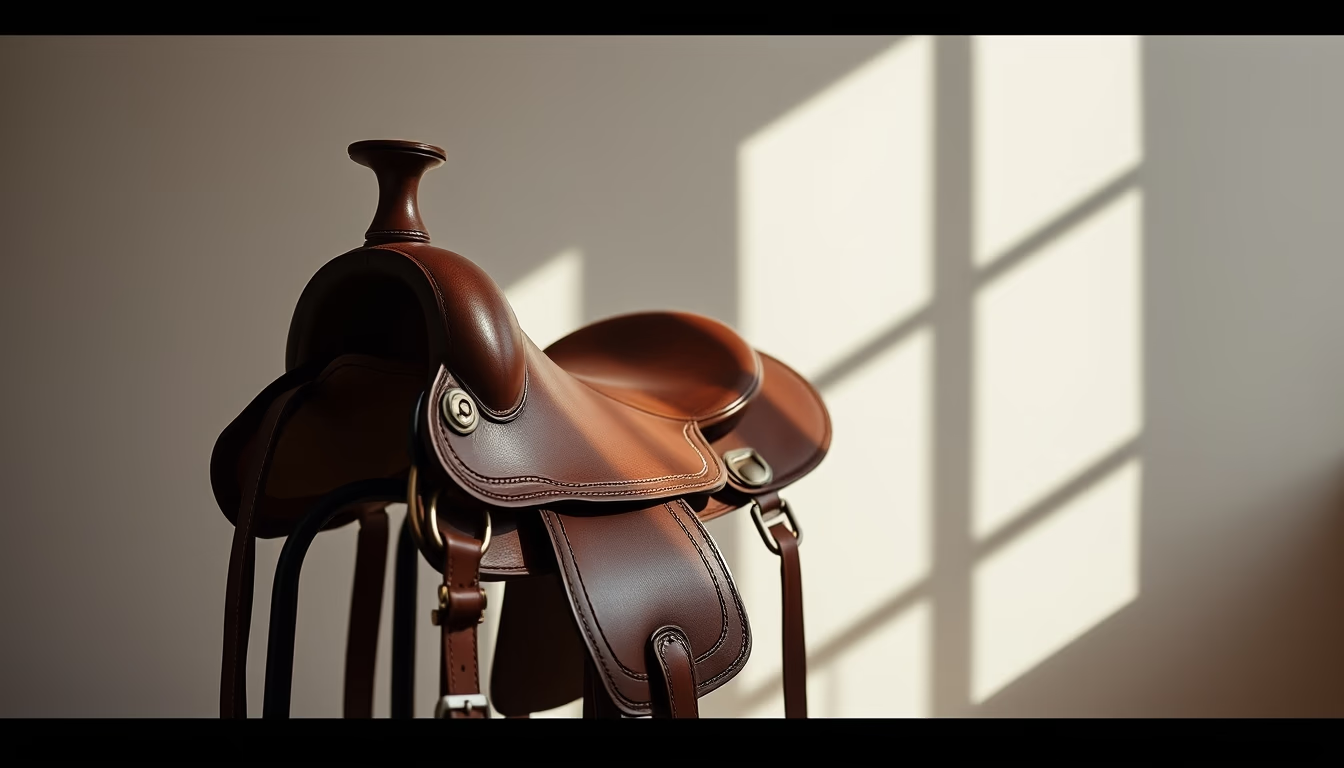
English saddle dressage
1344×768 · AVIF · CC BY 4.0
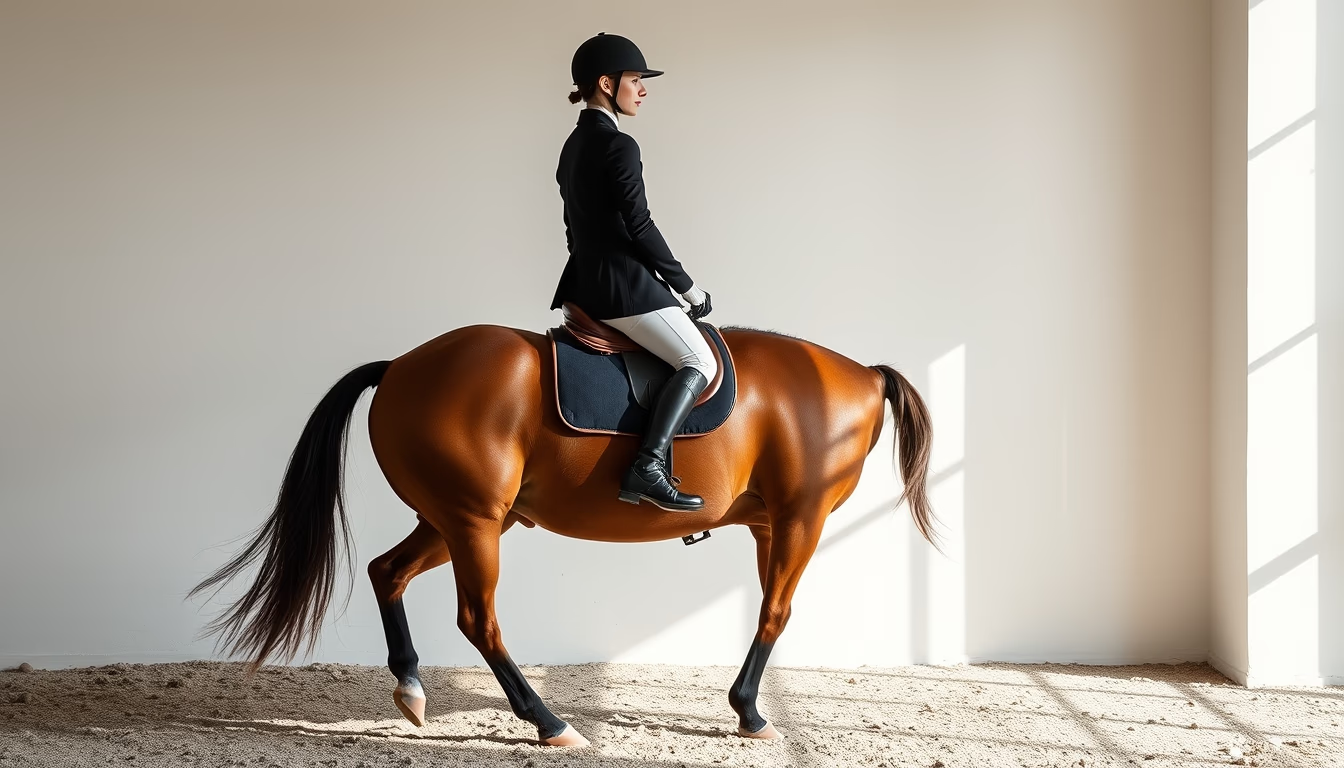
The English dressage saddle is designed for maximum communication between horse and rider, featuring a deep seat and long flaps.
About this subject
The English dressage saddle is an essential tool in classical equestrianism, developed to allow precise and harmonious movements between horse and rider. Unlike jumping or all-purpose saddles, it features a deeper, more rectangular seat that positions the rider in balance over the horse's center of gravity. The flaps are long and straight, providing greater leg contact with the horse's flank, facilitating the subtle aids required in dressage. The tree (internal structure) is often narrower at the withers and wider along the back, distributing weight evenly. Historically, dressage traces its roots to classical riding teachings from institutions like the Spanish Riding School in Vienna and the Cadre Noir in Saumur. The saddle evolved over centuries, with design influenced by masters such as François Robichon de La Guérinière. Today, dressage saddles are either custom-fitted or adjustable, made from high-quality leather or lightweight synthetic materials. Proper fit is crucial: a poorly positioned saddle can restrict shoulder movement and reduce performance. In competitions, the saddle must be discreet, often dark-colored, with minimal ornamentation. The dressage saddle is also used in basic training and general riding, as it provides stability for the rider to execute movements such as piaffe, passage, and half-pass.
Frequently Asked Questions
What is the difference between a dressage saddle and a jumping saddle?
A dressage saddle has a deeper seat and long, straight flaps, encouraging a long leg and close contact with the horse. A jumping saddle has a flatter seat and shorter, forward-cut flaps to allow greater freedom of movement for jumping.
How should a dressage saddle be fitted?
The saddle should sit level on the horse's back, without pressure on the withers or restriction of the shoulders. The tree must match the horse's back width, and the panels should distribute weight evenly with no pressure points.
Why does a dressage saddle have such long flaps?
Long flaps allow the rider's leg to rest naturally along the horse's flank, facilitating the subtle, consistent contact needed for precise dressage aids.
Direct URL
https://pub-c7d6a6ea828543ac903a74a341ccb2e1.r2.dev/imagens/english-saddle-dressage-minimalist-composition-fresh17.avifHow to credit
Include a visible link back to UtilizAí. Copy one of the snippets below:
<a href="https://xn--utiliza-eza.com/en/midia/imagens/english-saddle-dressage-minimalist-composition-fresh17">English saddle dressage</a> by <a href="https://xn--utiliza-eza.com">UtilizAí</a>, licensed under <a href="https://creativecommons.org/licenses/by/4.0/">CC BY 4.0</a>.
[English saddle dressage](https://xn--utiliza-eza.com/en/midia/imagens/english-saddle-dressage-minimalist-composition-fresh17) by [UtilizAí](https://xn--utiliza-eza.com), CC BY 4.0
License: CC-BY-4.0