Egyptian hieroglyphs detail
1344×768 · AVIF · CC BY 4.0
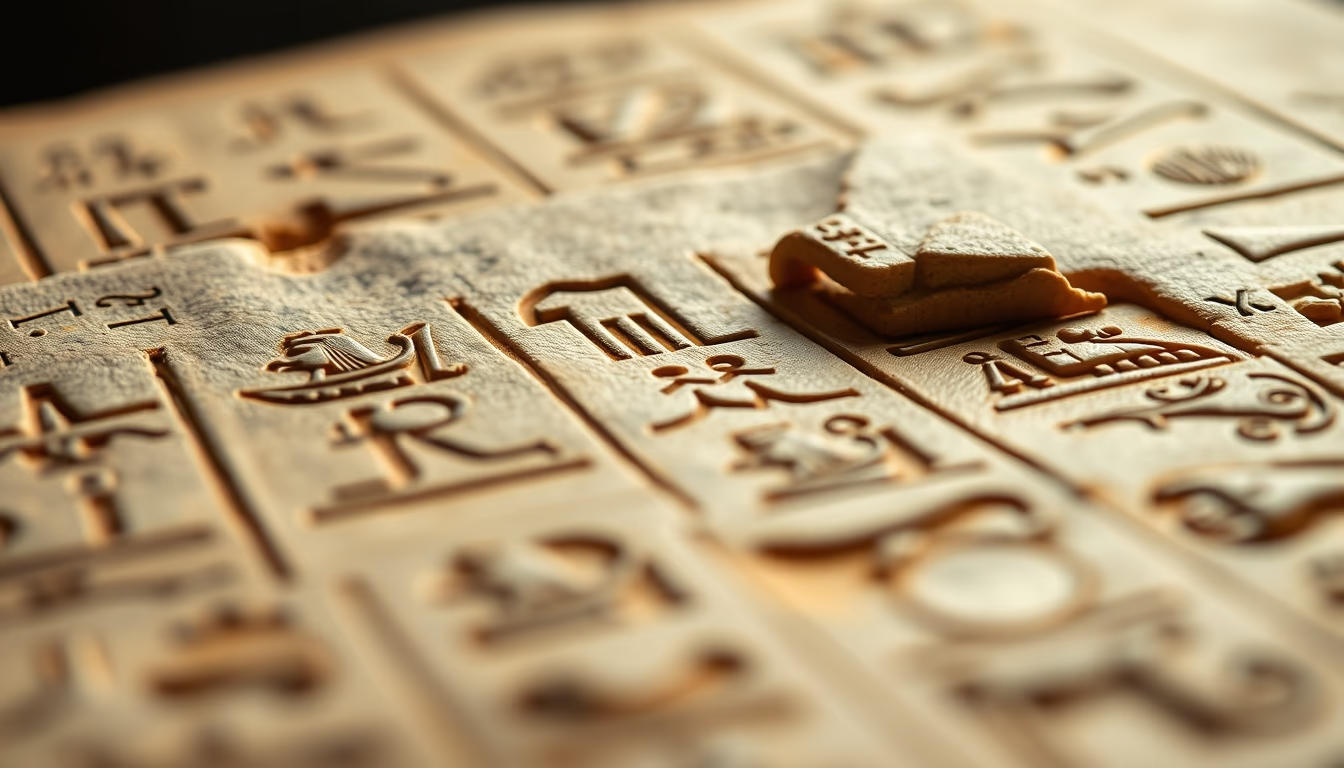
Egyptian hieroglyphs are a complex writing system combining logographic and alphabetic elements, used for over 3,500 years in ancient Egypt.
About this subject
Egyptian hieroglyphs are one of the oldest writing systems in the world, dating back to approximately 3200 BCE. This system was used to record religious, administrative, and literary texts throughout ancient Egyptian history. Unlike modern alphabets, hieroglyphs combine signs that represent words (logograms), sounds (phonograms), and determinatives that indicate the semantic category of the term.
The famous Rosetta Stone, discovered in 1799, was crucial for deciphering hieroglyphs. It contained the same text inscribed in hieroglyphs, demotic, and ancient Greek, allowing scholars like Jean-François Champollion in 1822 to unlock the system. Hieroglyphic writing was typically carved on stone monuments or painted on tombs and papyri, but there was also a cursive version called hieratic, used for everyday writing.
Hieroglyphs could be written left to right, right to left, or top to bottom, with the direction indicated by the orientation of human and animal figures. Knowledge of writing was believed to confer power and protection, so texts were often placed in tombs to aid the deceased in the afterlife. Around 700 signs were used during the classical period, but this could exceed 5,000 in later times.
Interestingly, the term “hieroglyph” comes from the Greek “hieros” (sacred) and “gliphō” (carve), meaning “sacred carving”. The Egyptians called their writing “medu netjer”, meaning “words of the gods”. Despite its decline after the Roman conquest, hieroglyphs continued to be used in ritual contexts until around the 4th century CE, when Christianity became established in the region.
Frequently Asked Questions
How were Egyptian hieroglyphs deciphered?
Decipherment was made possible by the Rosetta Stone, which contained the same text in three scripts: hieroglyphs, demotic, and ancient Greek. Jean-François Champollion in 1822 used Greek as a key to identify royal names and then understood the phonetic and symbolic system of hieroglyphs.
Were hieroglyphs used only for religious purposes?
No, although they were frequently used in religious and funerary contexts, hieroglyphs also served for administrative records, laws, literary texts, and public monument inscriptions. The cursive version, hieratic, was used for everyday writing on papyri.
How many hieroglyphic symbols are there?
In the classical period (Middle Kingdom), about 700 signs were common. Over time, the number grew to over 5,000 in the Greco-Roman period, including variations and combinations. However, most texts used a smaller recurring set of signs.
Direct URL
https://pub-c7d6a6ea828543ac903a74a341ccb2e1.r2.dev/imagens/egyptian-hieroglyphs-detail-studio-still-life-p6.avifHow to credit
Include a visible link back to UtilizAí. Copy one of the snippets below:
<a href="https://xn--utiliza-eza.com/en/midia/imagens/egyptian-hieroglyphs-detail-studio-still-life-p6">Egyptian hieroglyphs detail</a> by <a href="https://xn--utiliza-eza.com">UtilizAí</a>, licensed under <a href="https://creativecommons.org/licenses/by/4.0/">CC BY 4.0</a>.
[Egyptian hieroglyphs detail](https://xn--utiliza-eza.com/en/midia/imagens/egyptian-hieroglyphs-detail-studio-still-life-p6) by [UtilizAí](https://xn--utiliza-eza.com), CC BY 4.0
License: CC-BY-4.0