Dragonfly eye closeup
1344×768 · AVIF · CC BY 4.0
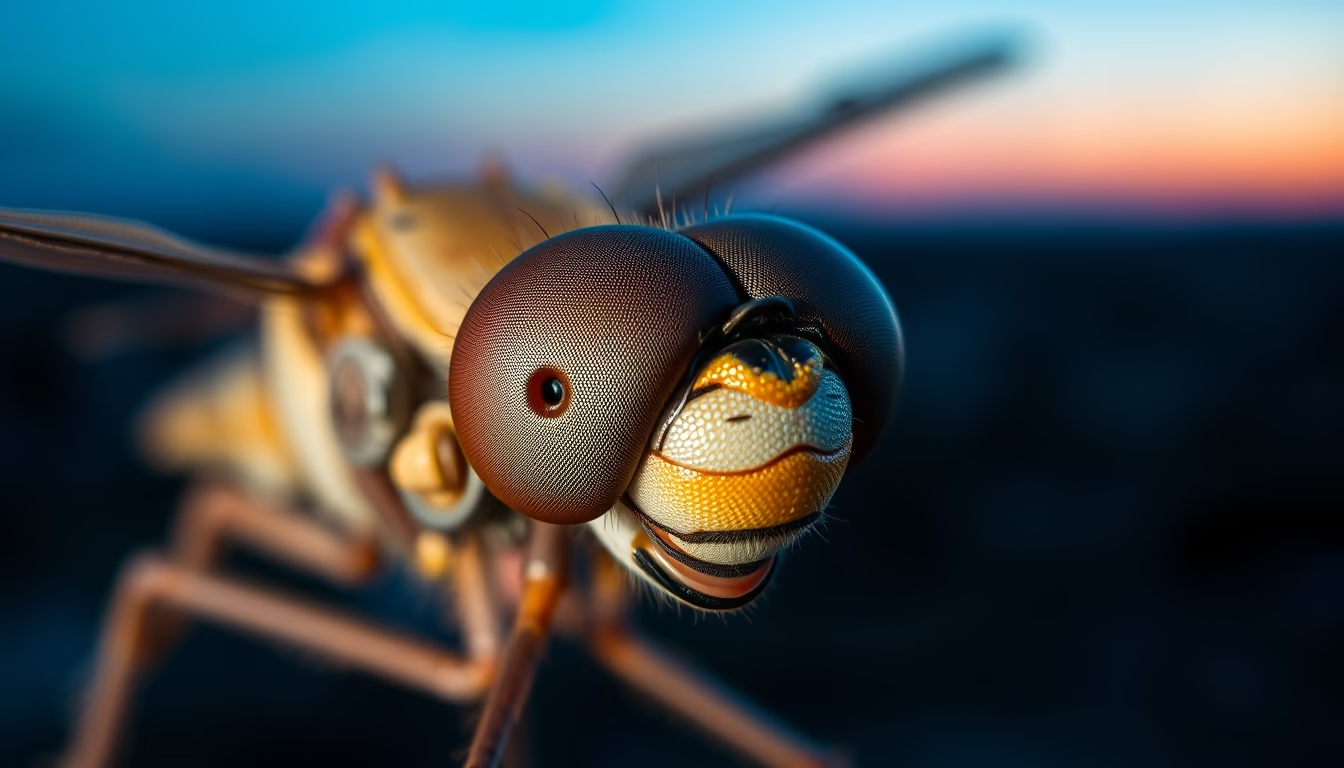
Close-up of a dragonfly eye reveals a compound structure with thousands of ommatidia, enabling nearly 360-degree vision and rapid motion detection.
About this subject
Dragonfly eyes are considered among the most complex and efficient in the insect world. Each compound eye consists of thousands of individual units called ommatidia, which function as tiny independent eyes. In some species, the number of ommatidia can reach 30,000 per eye, offering an impressive visual resolution for a small insect. This structure allows the dragonfly to see in almost every direction, providing a nearly 360-degree field of view, with only a small blind spot directly behind the head.
Dragonfly vision is specially adapted for hunting in flight. They can detect extremely fast movements, such as the wing beats of a fly, and calculate trajectories with millimeter precision. Moreover, their compound eyes are sensitive to ultraviolet light, enabling them to see patterns and colors invisible to humans. This ability is crucial for identifying prey, mates, and even reflections on water surfaces where they lay their eggs.
These insects spend most of their life in the aquatic larval stage, where vision is already sophisticated. When they emerge as adults, the eyes are fully formed and functional. The eye structure is also an example of evolution: each ommatidium contains a crystalline cone and photoreceptor cells that capture light from specific angles, forming a mosaic image. Although not as sharp as human vision, their motion detection and light sensitivity make dragonflies formidable predators in the insect world.
Frequently Asked Questions
How many eyes does a dragonfly have?
Dragonflies have two large compound eyes, each composed of thousands of ommatidia, totaling up to 60,000 visual units.
Can dragonflies see 360 degrees?
Yes, their field of vision covers nearly 360 degrees, with only a small blind spot at the back of the head.
Why are dragonfly eyes so large relative to their body?
Large eyes accommodate more ommatidia, increasing visual resolution and motion sensitivity, which is crucial for hunting in flight.
Direct URL
https://pub-c7d6a6ea828543ac903a74a341ccb2e1.r2.dev/imagens/dragonfly-eye-closeup-aerial-drone-shot-p1.avifHow to credit
Include a visible link back to UtilizAí. Copy one of the snippets below:
<a href="https://xn--utiliza-eza.com/en/midia/imagens/dragonfly-eye-closeup-aerial-drone-shot-p1">Dragonfly eye closeup</a> by <a href="https://xn--utiliza-eza.com">UtilizAí</a>, licensed under <a href="https://creativecommons.org/licenses/by/4.0/">CC BY 4.0</a>.
[Dragonfly eye closeup](https://xn--utiliza-eza.com/en/midia/imagens/dragonfly-eye-closeup-aerial-drone-shot-p1) by [UtilizAí](https://xn--utiliza-eza.com), CC BY 4.0
License: CC-BY-4.0