Diving regulator detail
1344×768 · AVIF · CC BY 4.0
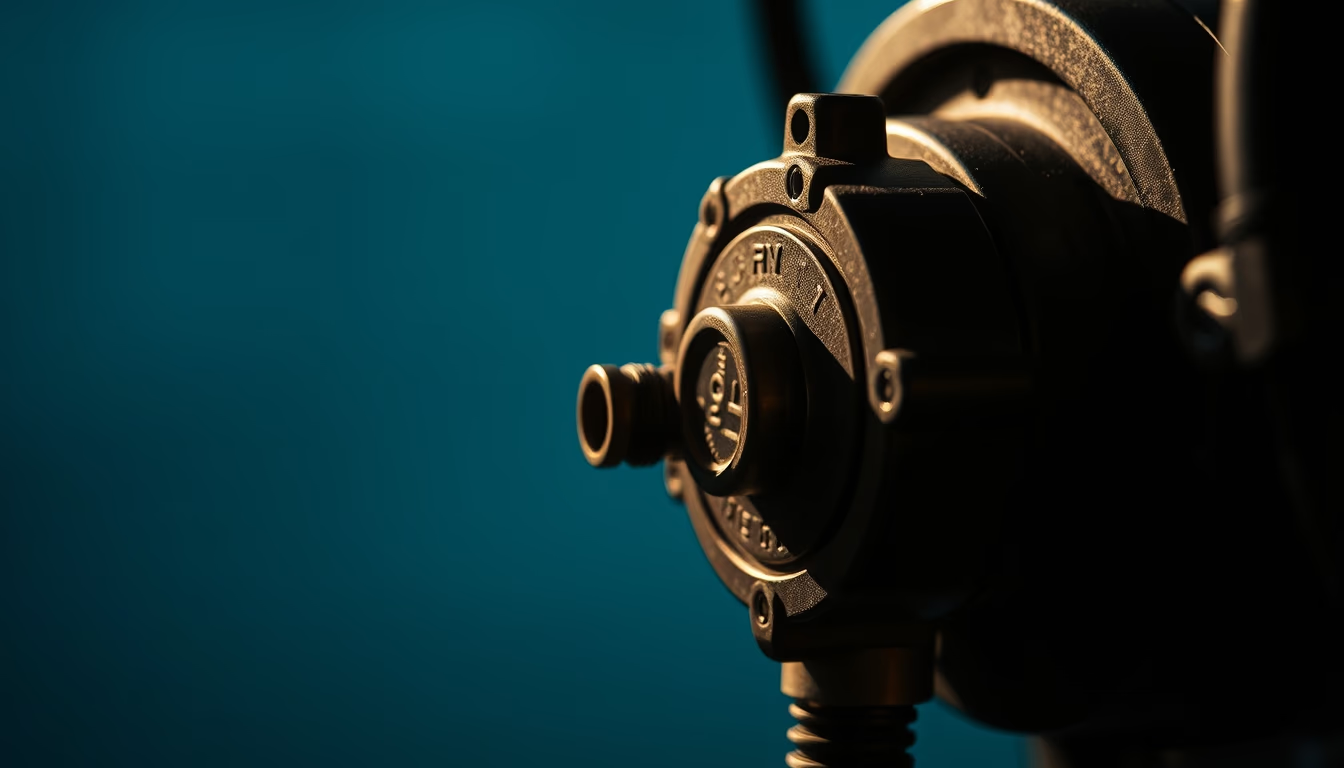
The diving regulator reduces the pressure of compressed air from the tank to ambient pressure, enabling underwater breathing.
About this subject
The diving regulator is a vital piece of scuba equipment that connects the high-pressure air tank to the diver's mouthpiece, reducing the cylinder pressure (typically 200, 300 bar) to ambient pressure at depth. This reduction occurs in two stages: the first stage drops pressure to an intermediate level (usually 8, 10 bar above ambient), and the second stage delivers air at exactly the surrounding pressure, allowing natural breathing.
There are two main types of regulators: piston and diaphragm. Piston regulators are simpler and more rugged, while diaphragm regulators perform better in cold water due to reduced risk of freezing. The choice depends on diving conditions and personal preference. Key components include the first stage, second stage, hose, and octopus (an extra second stage for emergency sharing). All are standardized for safety and compatibility.
Regular maintenance is crucial for safety. Regulators should be serviced annually by certified technicians, involving cleaning, seal replacement, and lubrication. The modern regulator traces its origins to the 1940s when Jacques Cousteau and Émile Gagnan invented the Aqua-Lung, which revolutionized recreational diving. Since then, materials like titanium and advanced polymers have made regulators lighter and more reliable.
Modern regulators often feature balanced systems that ensure consistent air delivery regardless of depth. Many also include adjustments for breathing resistance to minimize effort and prevent free-flow. Proper function of the regulator is a cornerstone of dive safety, and pre-dive inspections are mandatory.
Frequently Asked Questions
What is the function of the first stage of a diving regulator?
The first stage reduces the high cylinder pressure (200, 300 bar) to an intermediate pressure (about 8, 10 bar above ambient) and supplies hoses for the second stage and pressure gauge.
How do I choose between a piston and a diaphragm regulator?
Piston regulators are more rugged and suitable for temperate waters. Diaphragm regulators are better for cold water because they are less prone to freezing. The choice depends on diving conditions.
How often should I service my diving regulator?
Regulators should be serviced annually or every 100 dives, whichever comes first, by a certified technician. Servicing includes cleaning, seal replacement, and lubrication.
Direct URL
https://pub-c7d6a6ea828543ac903a74a341ccb2e1.r2.dev/imagens/diving-regulator-detail-rembrandt-lighting-dramatic-shadows-fresh0.avifHow to credit
Include a visible link back to UtilizAí. Copy one of the snippets below:
<a href="https://xn--utiliza-eza.com/en/midia/imagens/diving-regulator-detail-rembrandt-lighting-dramatic-shadows-fresh0">Diving regulator detail</a> by <a href="https://xn--utiliza-eza.com">UtilizAí</a>, licensed under <a href="https://creativecommons.org/licenses/by/4.0/">CC BY 4.0</a>.
[Diving regulator detail](https://xn--utiliza-eza.com/en/midia/imagens/diving-regulator-detail-rembrandt-lighting-dramatic-shadows-fresh0) by [UtilizAí](https://xn--utiliza-eza.com), CC BY 4.0
License: CC-BY-4.0