Director chair empty studio
1344×768 · AVIF · CC BY 4.0
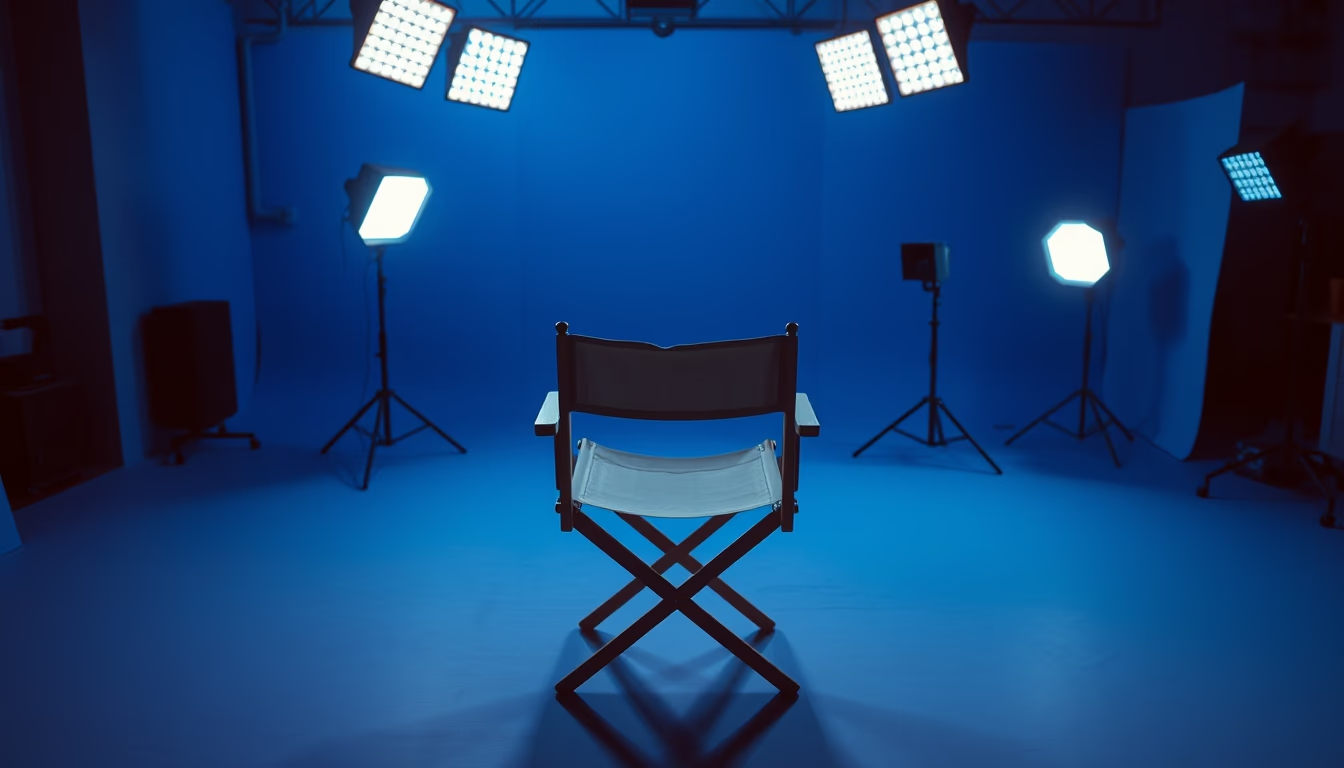
An empty director's chair in a film studio, captured from an aerial drone perspective, symbolizes the creative pause and the anticipation of the next command.
About this subject
The director's chair is one of the most recognizable icons of film production. With its foldable wood and canvas design, it became standard on film sets in the 1950s, popularized by the Hollywood industry. Originally, directors used this model to oversee filming with mobility, easily relocated between scenes. An empty chair, as shown from this aerial shot, often evokes the concept of 'creative limbo', the moment between action and cut, when the director evaluates the previous take and plans the team's next move.
In a studio, an empty director's chair represents both the director's absence and readiness for work. Film studios, from major Hollywood complexes to newly built facilities in Brazil (like Quanta Studio in São Paulo), keep dozens of these chairs for daily use. The aerial drone angle, a growing trend since 2020, offers a perspective that humanizes the industrial environment: the solitude of command surrounded by cables, reflectors, and equipment.
Interestingly, the director's chair is also used in other contexts like outdoor events and music video production, but in cinema it carries symbolic weight. Sitting in it is a ritual that separates the director from the rest of the crew, reinforcing creative authority. In 2024, exhibitions at the Museum of Image and Sound in São Paulo highlighted the design evolution of these chairs, which now include materials like aluminum and padded seats, though the classic model remains preferred.
Frequently Asked Questions
Why does the director's chair have that characteristic design?
The folding wood and canvas design was chosen for being lightweight, sturdy, and easy to transport between locations. It allows the director to move quickly around the set without losing a privileged view of the scene.
What does an empty director's chair on a set signify?
It symbolizes a production pause, whether for scene review, team meetings, or technical breaks. It also represents the director's momentary absence, but with the expectation of an imminent return.
How has drone usage changed the way studios are filmed?
Drones enable aerial angles previously impossible without helicopters or cranes, offering wide and cost-effective shots. In studios, they capture the scale of the environment and equipment layout, enriching behind-the-scenes and documentaries.
Direct URL
https://pub-c7d6a6ea828543ac903a74a341ccb2e1.r2.dev/imagens/director-chair-empty-studio-aerial-drone-shot-p4.avifHow to credit
Include a visible link back to UtilizAí. Copy one of the snippets below:
<a href="https://xn--utiliza-eza.com/en/midia/imagens/director-chair-empty-studio-aerial-drone-shot-p4">Director chair empty studio</a> by <a href="https://xn--utiliza-eza.com">UtilizAí</a>, licensed under <a href="https://creativecommons.org/licenses/by/4.0/">CC BY 4.0</a>.
[Director chair empty studio](https://xn--utiliza-eza.com/en/midia/imagens/director-chair-empty-studio-aerial-drone-shot-p4) by [UtilizAí](https://xn--utiliza-eza.com), CC BY 4.0
License: CC-BY-4.0