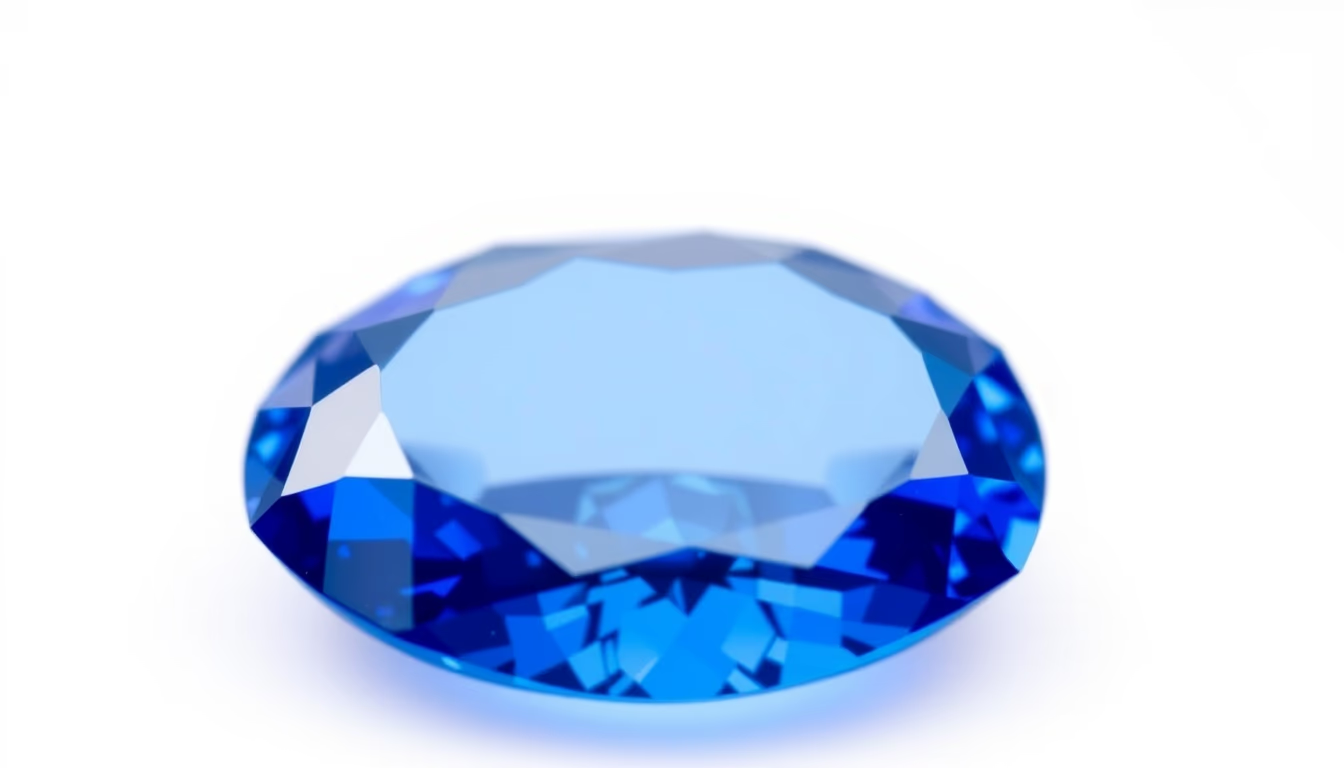
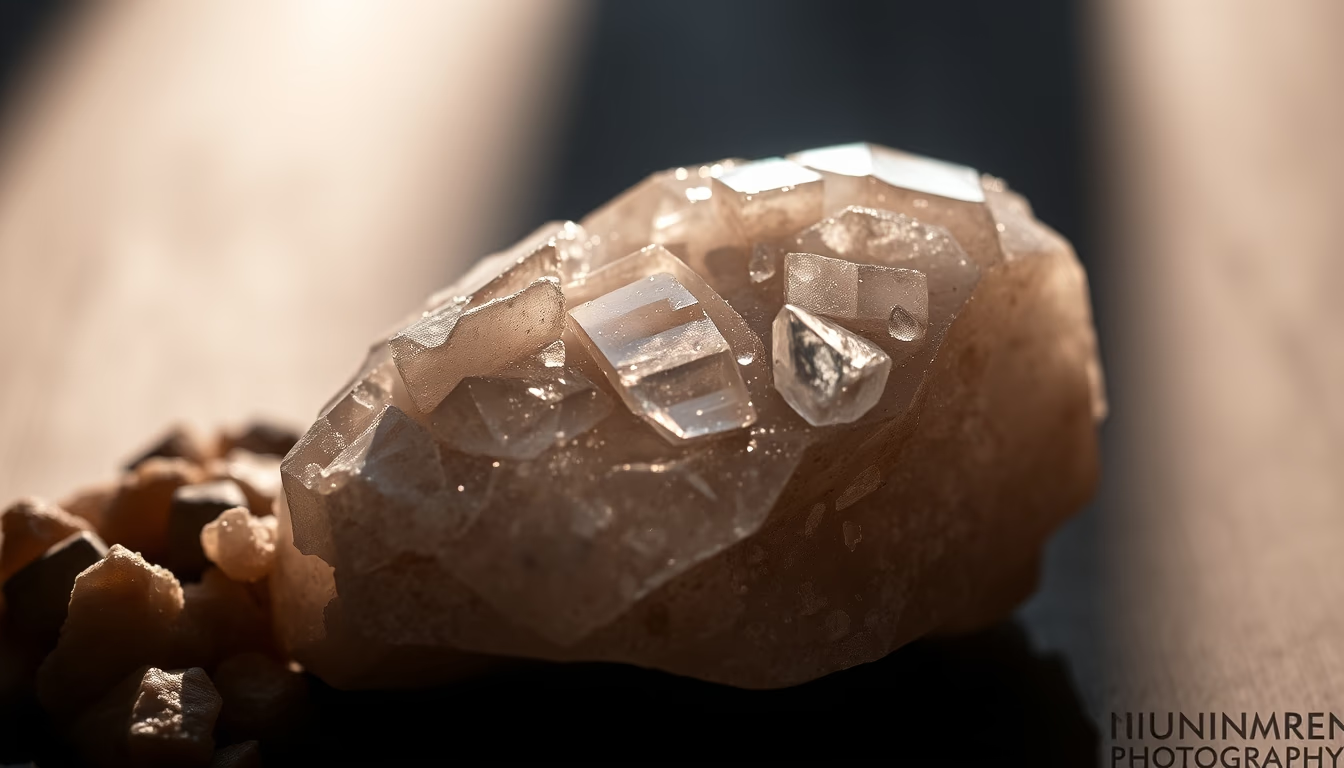
Diamond rough crystal
1344×768 · AVIF · CC BY 4.0
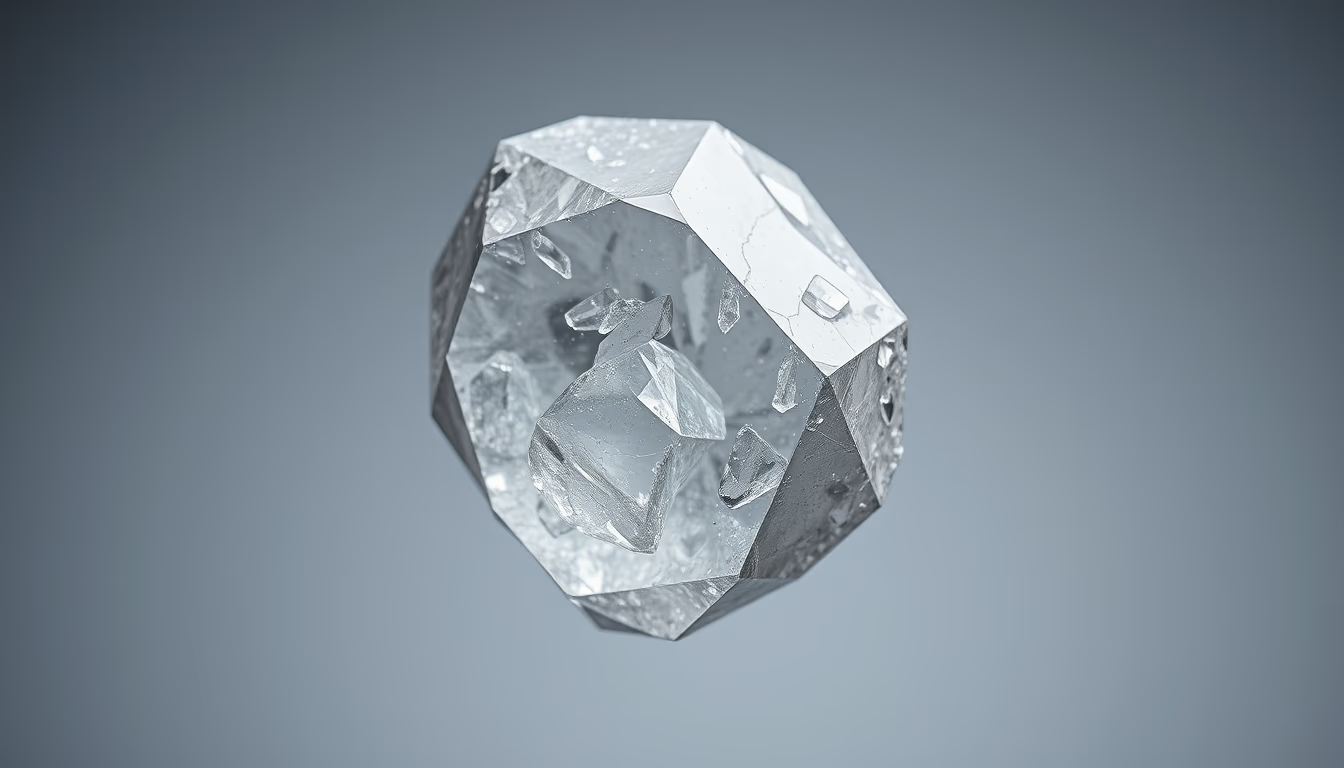
Rough diamond crystal in its natural form before any cutting. Learn about its formation, characteristics, and uses.
About this subject
Rough diamond is the natural form of diamond before cutting and polishing. Composed entirely of carbon, it crystallizes in the cubic system and is the hardest known natural material, rating 10 on the Mohs scale. Formation occurs in the Earth's mantle at depths of 150 to 200 kilometers, under temperatures of 900 to 1300 °C and extremely high pressures of about 45 to 60 kilobars. These conditions allow carbon atoms to bond into a tetrahedral structure, creating the crystal. Diamonds are brought to the surface by explosive volcanic eruptions through conduits known as kimberlite or lamproite pipes. Major sources of rough diamonds include the Jwaneng mine (Botswana), Udachnaya (Russia), Argyle (Australia), and Catoca (Angola). Besides primary kimberlite deposits, diamonds can be found in alluvial deposits, where they have been transported by erosion over millions of years. The value of a rough diamond is determined by carat weight, color, clarity, and crystal shape. About 70% of global rough diamond production is used for jewelry; the rest goes to industrial applications such as abrasives, cutting tools, and drill bits, thanks to its extreme hardness and thermal conductivity. Historically, the first diamond discoveries were in India over 2,000 years ago, followed by Brazil and South Africa. Rough diamonds are traded in specific bourses and markets, such as Antwerp (Belgium) and Mumbai (India), where experts evaluate them before cutting.
Frequently Asked Questions
How is rough diamond formed?
Rough diamond forms in the Earth's mantle, 150, 200 km deep, under high pressure (45, 60 kb) and temperature (900, 1300 °C). Carbon atoms crystallize into a cubic structure. Volcanic eruptions bring them to the surface through kimberlite pipes.
Where are rough diamonds found?
They are found in primary deposits (kimberlite and lamproite pipes) and alluvial deposits. Major producing countries are Botswana, Russia, Canada, Angola, and Australia.
What are the uses of rough diamond?
About 70% are cut for jewelry. The remainder is used industrially: drill bits, saw blades, abrasives, and heat sinks due to their hardness and thermal conductivity.
Direct URL
https://pub-c7d6a6ea828543ac903a74a341ccb2e1.r2.dev/imagens/diamond-rough-crystal-studio-editorial-portrait-p7.avifHow to credit
Include a visible link back to UtilizAí. Copy one of the snippets below:
<a href="https://xn--utiliza-eza.com/en/midia/imagens/diamond-rough-crystal-studio-editorial-portrait-p7">Diamond rough crystal</a> by <a href="https://xn--utiliza-eza.com">UtilizAí</a>, licensed under <a href="https://creativecommons.org/licenses/by/4.0/">CC BY 4.0</a>.
[Diamond rough crystal](https://xn--utiliza-eza.com/en/midia/imagens/diamond-rough-crystal-studio-editorial-portrait-p7) by [UtilizAí](https://xn--utiliza-eza.com), CC BY 4.0
License: CC-BY-4.0