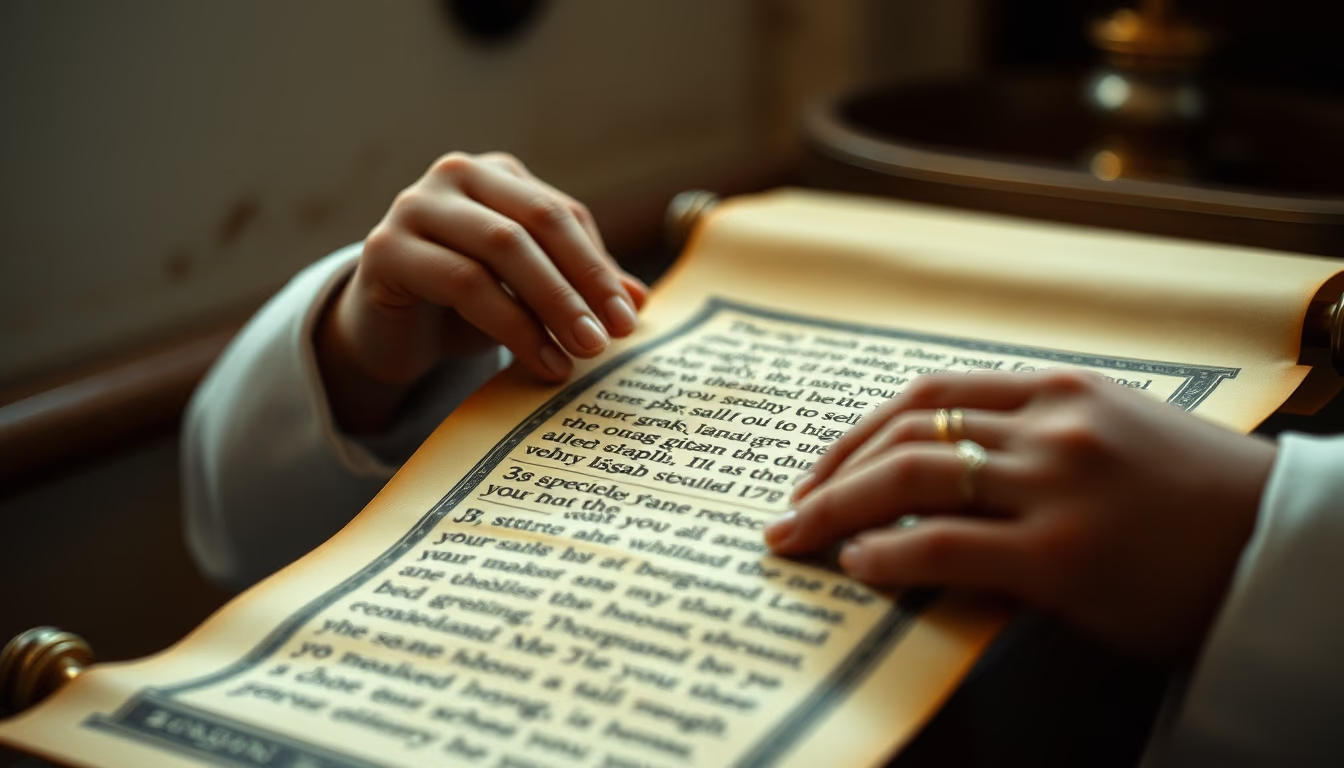
Dead sea scrolls fragment
1344×768 · AVIF · CC BY 4.0
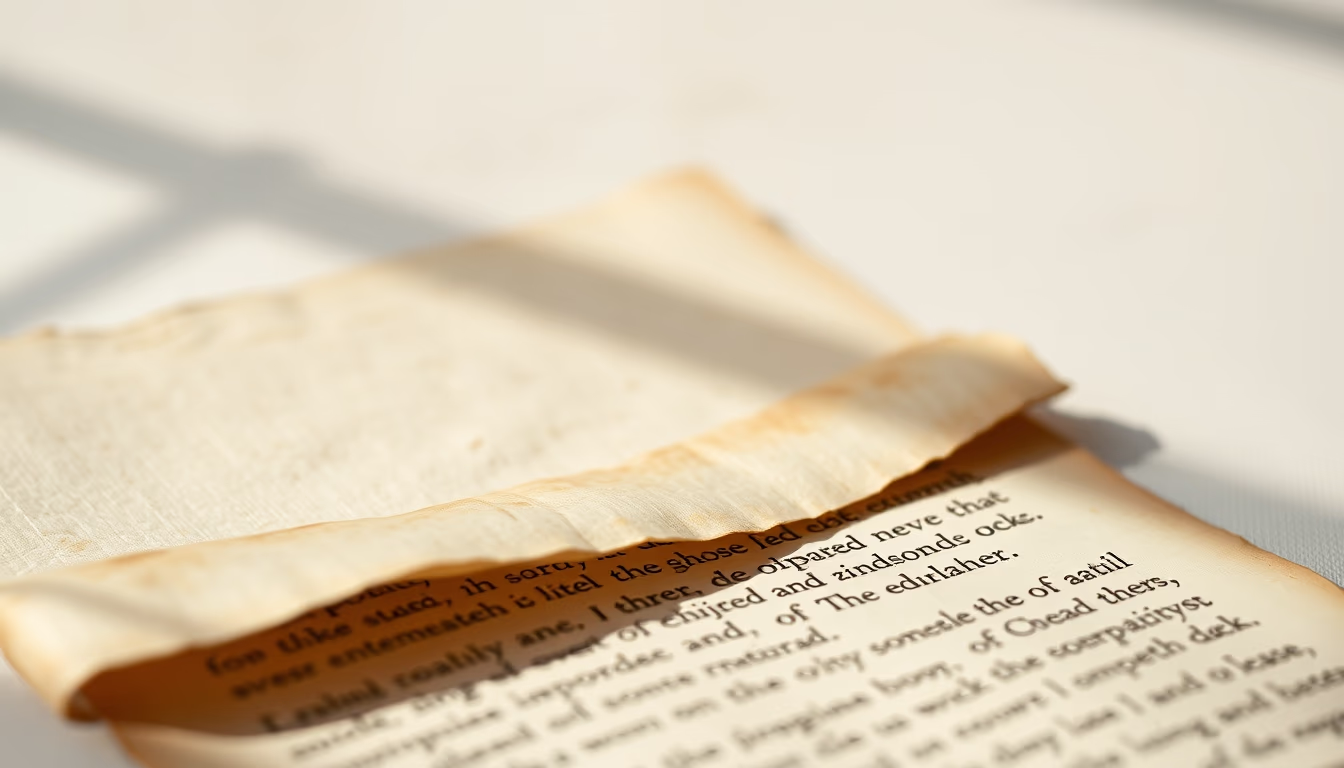
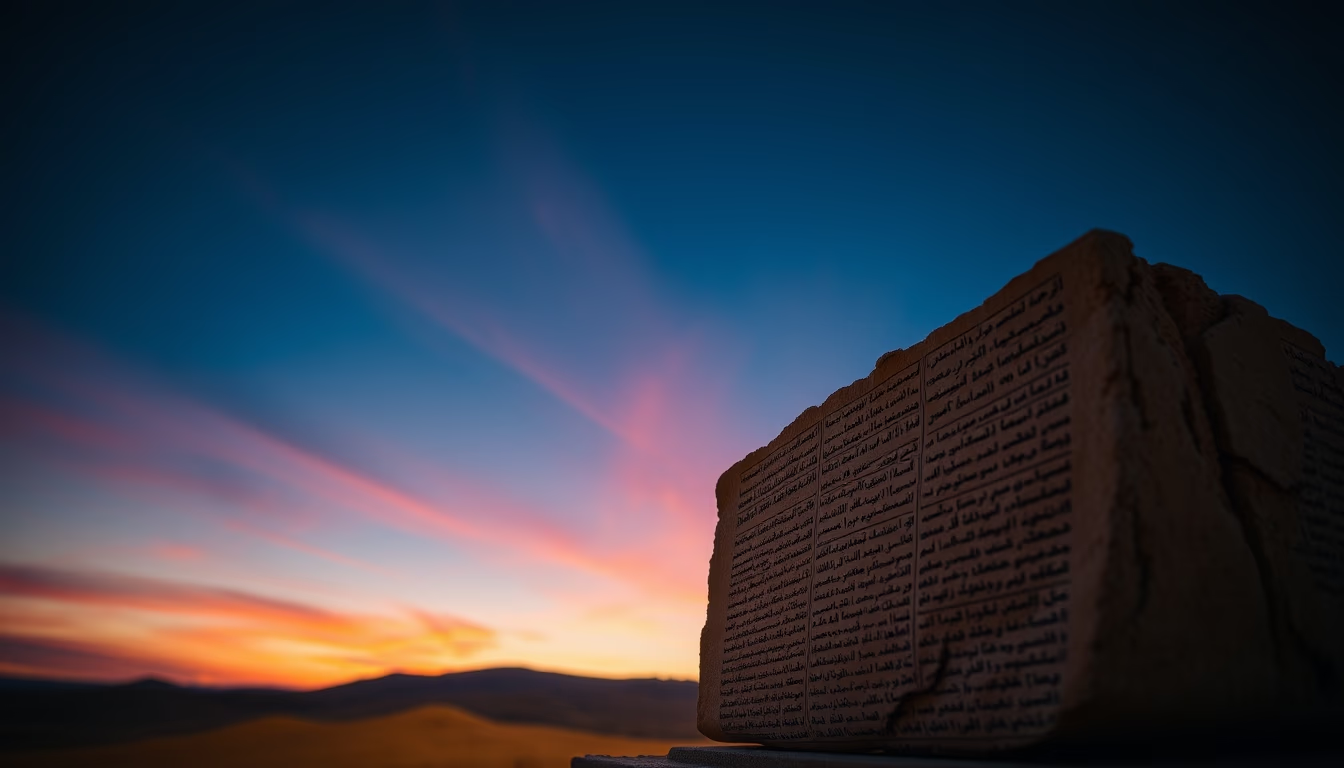
A fragment of the Dead Sea Scrolls, ancient religious texts discovered at Qumran that revolutionized the study of Judaism and Christianity.
About this subject
The Dead Sea Scrolls are a collection of approximately 900 documents, including biblical and sectarian texts, discovered between 1947 and 1956 in caves near the archaeological site of Qumran in the West Bank. These scrolls and papyri, dating from the 3rd century BCE to the 1st century CE, are primarily written in Hebrew, Aramaic, and Greek. Among the fragments are copies of Old Testament books such as Isaiah and Psalms, as well as apocryphal works and community rules of the Essenes, a Jewish group likely inhabiting the area.
The discovery of the Dead Sea Scrolls is considered one of the most important archaeological finds of the 20th century. They provide textual evidence that allows comparison of later versions of the Hebrew Bible with copies over a thousand years older than the traditional Masoretic manuscripts. This has helped scholars confirm the accuracy of textual transmission over centuries, while also revealing variations and different traditions.
The fragments were preserved thanks to the dry climate of the caves. Many were deteriorated, requiring careful restoration and conservation techniques. Currently, most scrolls are housed in the Shrine of the Book at the Israel Museum in Jerusalem, where they are kept under controlled conditions. Ongoing study of these texts continues to generate academic debates about the origins of Christianity and Jewish religious practices during the Second Temple period.
Frequently Asked Questions
Where were the Dead Sea Scrolls found?
They were discovered in caves near Qumran, on the West Bank, along the Dead Sea, between 1947 and 1956.
Why are these scrolls important for religion?
They provide ancient copies of biblical books and sectarian texts, helping scholars understand the development of Judaism and the origins of Christianity.
In which languages were the scrolls written?
Most are in Hebrew, but there are also texts in Aramaic and Greek.
Direct URL
https://pub-c7d6a6ea828543ac903a74a341ccb2e1.r2.dev/imagens/dead-sea-scrolls-fragment-minimalist-composition-fresh8.avifHow to credit
Include a visible link back to UtilizAí. Copy one of the snippets below:
<a href="https://xn--utiliza-eza.com/en/midia/imagens/dead-sea-scrolls-fragment-minimalist-composition-fresh8">Dead sea scrolls fragment</a> by <a href="https://xn--utiliza-eza.com">UtilizAí</a>, licensed under <a href="https://creativecommons.org/licenses/by/4.0/">CC BY 4.0</a>.
[Dead sea scrolls fragment](https://xn--utiliza-eza.com/en/midia/imagens/dead-sea-scrolls-fragment-minimalist-composition-fresh8) by [UtilizAí](https://xn--utiliza-eza.com), CC BY 4.0
License: CC-BY-4.0