Dead sea scrolls fragment
1344×768 · AVIF · CC BY 4.0
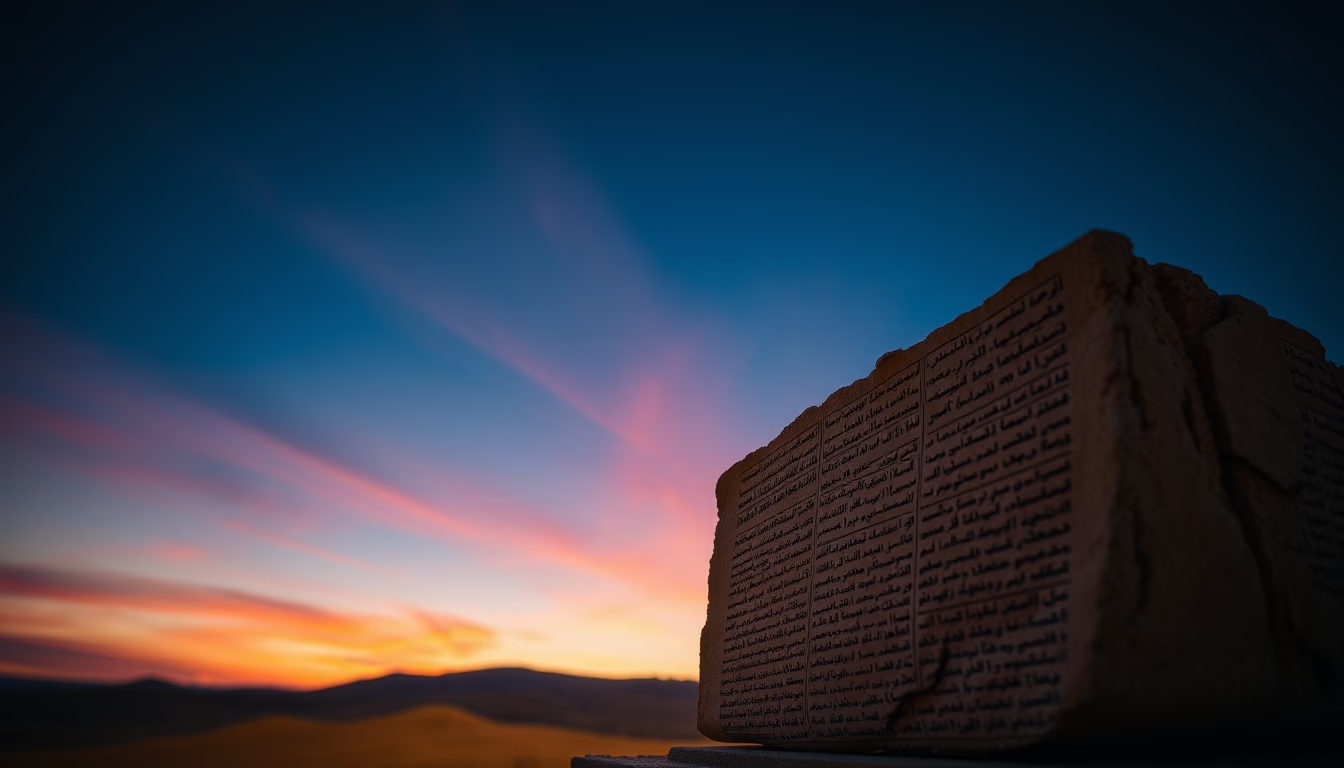
A Dead Sea Scrolls fragment, dating to the Second Temple period, discovered in the Qumran caves in the West Bank around 1947.
About this subject
The Dead Sea Scrolls are a collection of about 900 texts discovered between 1947 and 1956 in caves near the archaeological site of Qumran, in the West Bank. They include copies of Hebrew biblical books such as Isaiah, Psalms, and Deuteronomy, as well as sectarian writings like the Community Rule and the War Scroll. They date from the 3rd century BCE to the 1st century CE, a period of intense religious and political ferment in Judea.
The fragments are mainly written in Hebrew, Aramaic, and Greek, on materials such as parchment and papyrus. Many were preserved thanks to the dry climate of the caves, located about 20 km east of Jerusalem. The discovery revolutionized biblical and historical studies, providing textual evidence earlier than medieval Hebrew manuscripts. The most famous fragment is perhaps the Great Isaiah Scroll, nearly complete and dated to around 125 BCE.
The Qumran community is often associated with the Essenes, an ascetic Jewish group. The texts reveal liturgical practices, messianic beliefs, and unique interpretations of the Torah. Today, most fragments are under the custody of the Israel Antiquities Authority, displayed at the Shrine of the Book in Jerusalem. High-resolution digitization has allowed global access to these documents, essential for understanding the origins of Judaism and Christianity.
Frequently Asked Questions
What are the Dead Sea Scrolls?
They are about 900 ancient texts, mostly in Hebrew, Aramaic, and Greek, discovered in caves at Qumran in the West Bank. They include biblical copies and writings from a Jewish community, likely Essene, dating from the 3rd century BCE to the 1st century CE.
Where are the Dead Sea Scrolls fragments kept?
Most are under the custody of the Israel Antiquities Authority at the Shrine of the Book in Jerusalem. Small fragments are also held by museums and universities worldwide.
Why are the Dead Sea Scrolls important for biblical studies?
They provide copies of Hebrew biblical texts a thousand years older than previously available, allowing scholars to verify textual transmission accuracy and better understand the religious context of Second Temple Judaism.
Direct URL
https://pub-c7d6a6ea828543ac903a74a341ccb2e1.r2.dev/imagens/dead-sea-scrolls-fragment-macro-closeup-fresh7.avifHow to credit
Include a visible link back to UtilizAí. Copy one of the snippets below:
<a href="https://xn--utiliza-eza.com/en/midia/imagens/dead-sea-scrolls-fragment-macro-closeup-fresh7">Dead sea scrolls fragment</a> by <a href="https://xn--utiliza-eza.com">UtilizAí</a>, licensed under <a href="https://creativecommons.org/licenses/by/4.0/">CC BY 4.0</a>.
[Dead sea scrolls fragment](https://xn--utiliza-eza.com/en/midia/imagens/dead-sea-scrolls-fragment-macro-closeup-fresh7) by [UtilizAí](https://xn--utiliza-eza.com), CC BY 4.0
License: CC-BY-4.0