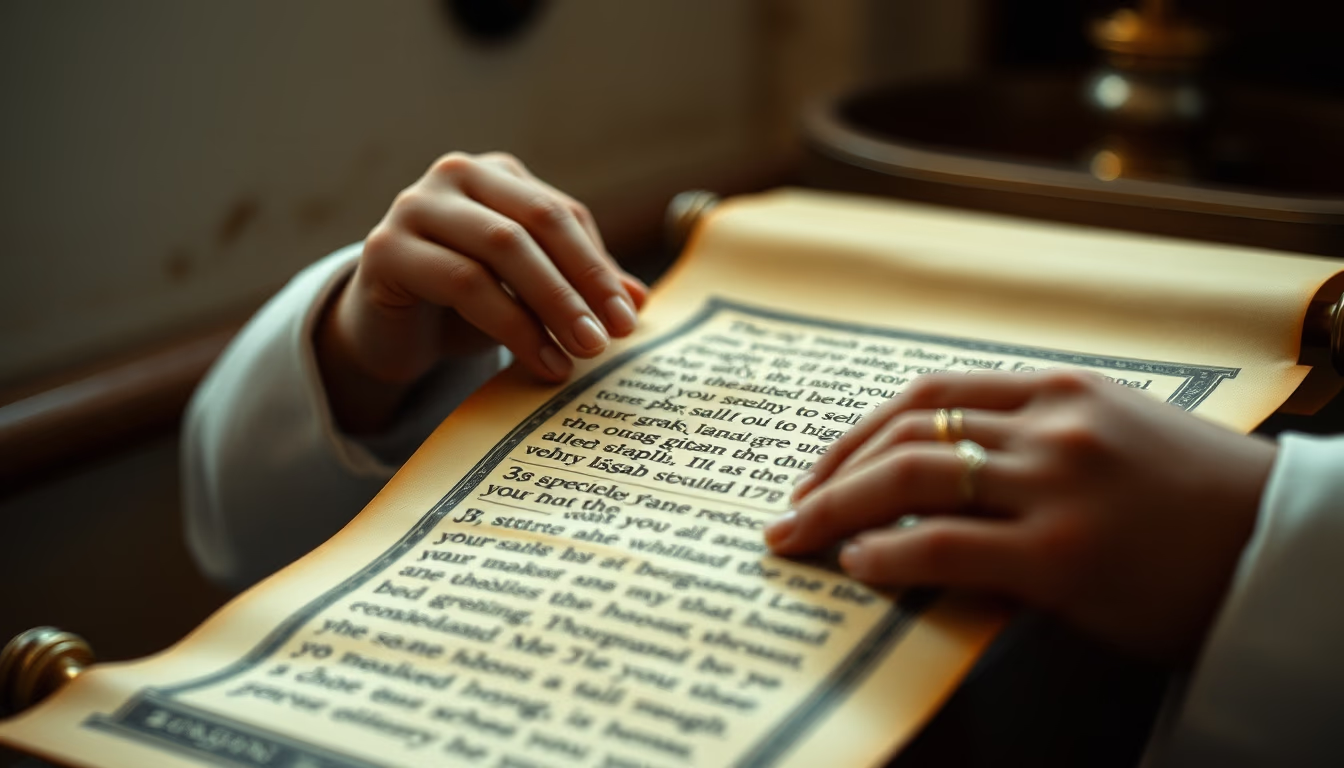
Dead sea scrolls fragment
1344×768 · AVIF · CC BY 4.0
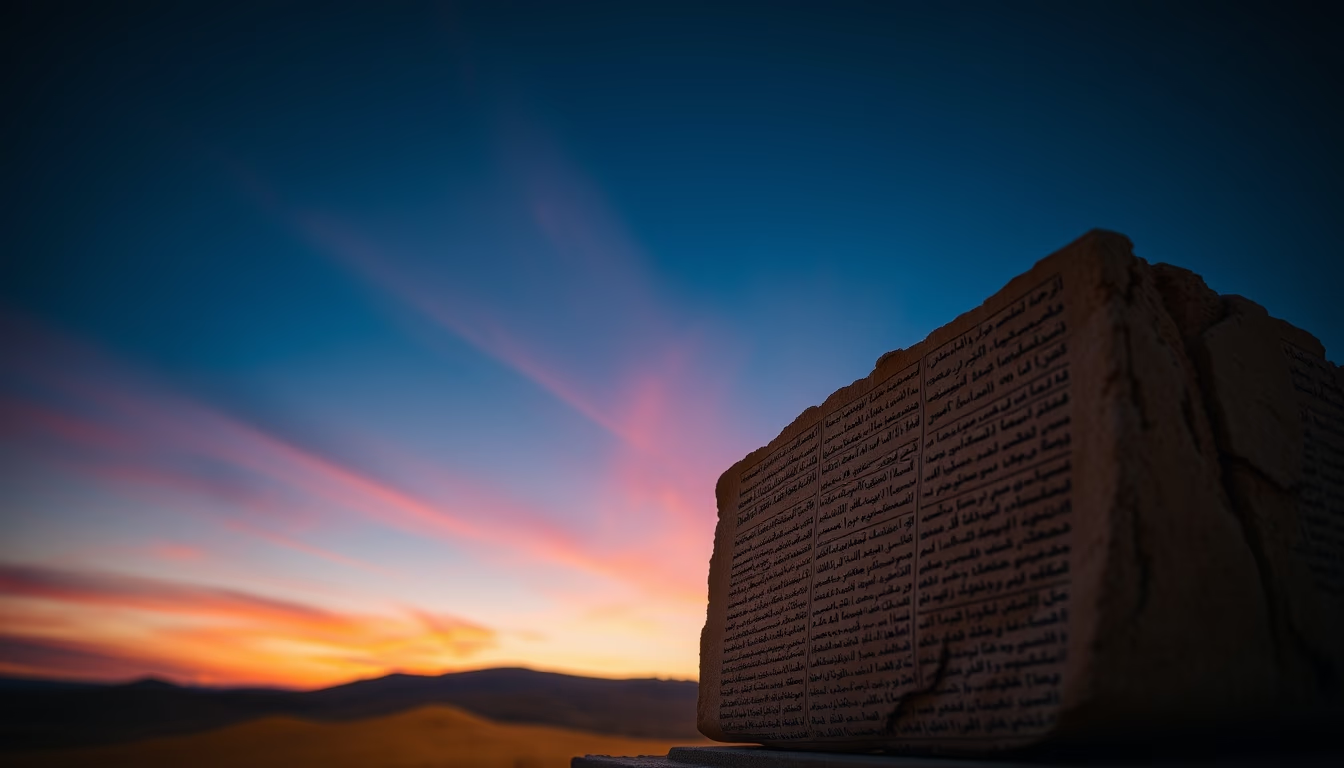
Fragments of the Dead Sea Scrolls are copies of biblical and sectarian texts from the Second Temple period, discovered in caves at Qumran.
About this subject
The Dead Sea Scrolls are a collection of about 900 texts, mostly on parchment and papyrus, dating from 250 BCE to 68 CE. They were discovered between 1947 and 1956 in 11 caves near the archaeological site of Qumran in the West Bank, on the shores of the Dead Sea. The fragments include copies of every book of the Old Testament except Esther, along with apocryphal works, biblical commentaries, and community rules of a Jewish sect, likely the Essenes.
The historical and religious significance of the scrolls is immense. They are the oldest known biblical manuscripts, predating the Masoretic texts by more than a thousand years. Before their discovery, the oldest Hebrew copies dated from the 10th century CE. The scrolls provide evidence for the textual transmission of the Bible and reveal the diversity of Second Temple Judaism. Among the most famous texts are the Great Isaiah Scroll, the Community Rule, and the Damascus Document.
Preservation of the fragments is an ongoing challenge due to the fragility of the material and environmental conditions. Many fragments are held by the Israel Museum in Jerusalem and the Israel Antiquities Authority. Recent studies use techniques like multispectral imaging to decipher faded or damaged texts. The authenticity of some fragments has been contested; in 2020, the Museum of the Bible in Washington announced that several of its fragments were modern forgeries. This case underscores the need for rigorous analysis to preserve the integrity of the corpus.
Frequently Asked Questions
Where were the Dead Sea Scrolls found?
They were found in 11 caves near the archaeological site of Qumran in the West Bank, on the shores of the Dead Sea, between 1947 and 1956.
Why are the Dead Sea Scrolls important for Bible study?
They are the oldest known biblical manuscripts, dating from before 68 CE, providing crucial evidence for the textual transmission of the Old Testament and the diversity of ancient Judaism.
Are all Dead Sea Scroll fragments authentic?
Most are authentic, but some fragments that appeared on the antiquities market have been identified as modern forgeries. Institutions like the Museum of the Bible have removed suspected pieces from display after analysis.
Direct URL
https://pub-c7d6a6ea828543ac903a74a341ccb2e1.r2.dev/imagens/dead-sea-scrolls-fragment-fine-art-photography-fresh9.avifHow to credit
Include a visible link back to UtilizAí. Copy one of the snippets below:
<a href="https://xn--utiliza-eza.com/en/midia/imagens/dead-sea-scrolls-fragment-fine-art-photography-fresh9">Dead sea scrolls fragment</a> by <a href="https://xn--utiliza-eza.com">UtilizAí</a>, licensed under <a href="https://creativecommons.org/licenses/by/4.0/">CC BY 4.0</a>.
[Dead sea scrolls fragment](https://xn--utiliza-eza.com/en/midia/imagens/dead-sea-scrolls-fragment-fine-art-photography-fresh9) by [UtilizAí](https://xn--utiliza-eza.com), CC BY 4.0
License: CC-BY-4.0