Cyrillic script medieval
1344×768 · AVIF · CC BY 4.0
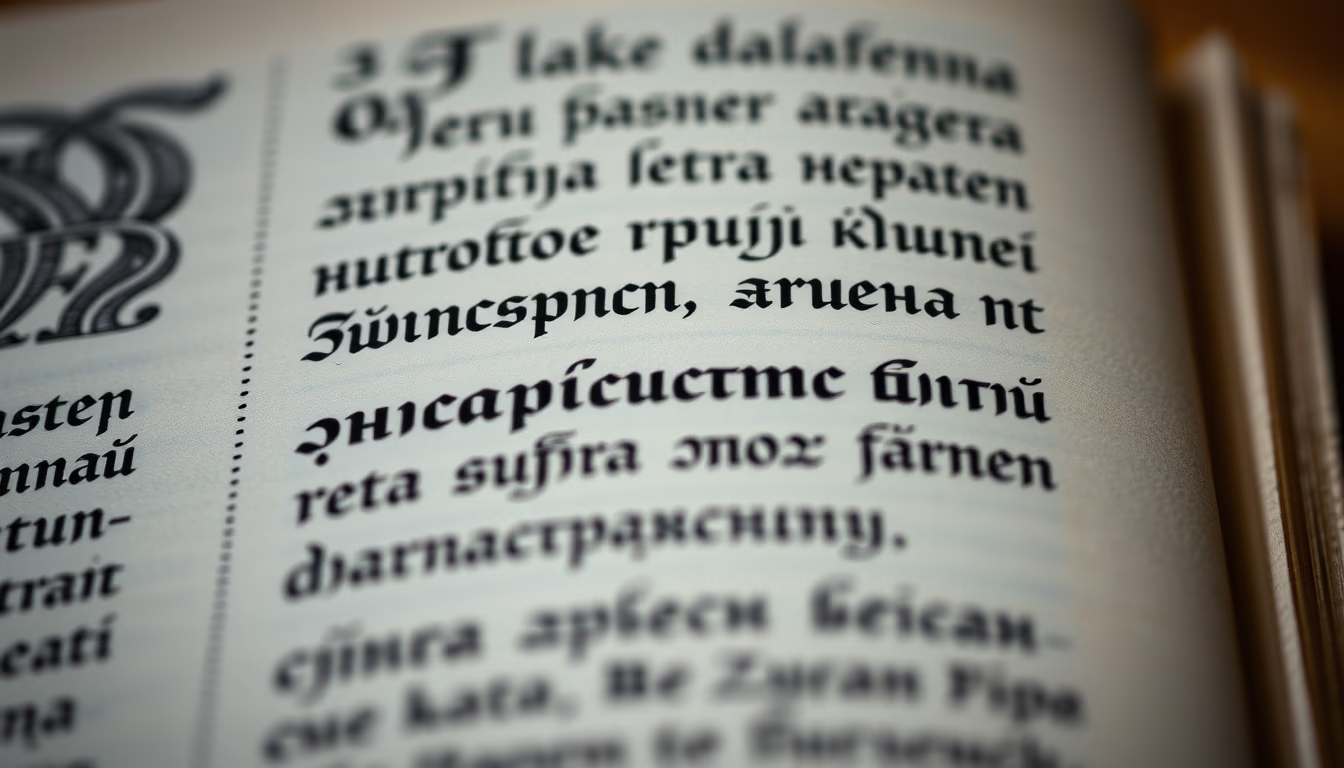
Medieval Cyrillic script, developed in the First Bulgarian Empire, is a calligraphic system that influenced Orthodox Slavic culture for centuries.
About this subject
Medieval Cyrillic script originated in the 9th century when disciples of Saints Cyril and Methodius, especially Clement of Ohrid, created a new alphabet based on Glagolitic and Greek uncial. Named after Saint Cyril, the script was adopted by the First Bulgarian Empire as a liturgical and official language, gradually replacing Glagolitic. It quickly spread among Orthodox Slavic peoples such as Serbs, Russians, and Romanians.
Medieval Cyrillic manuscripts include fundamental religious works like the Ostromir Gospels (1056-1057), one of the oldest dated Russian books, and the Codex Suprasliensis (11th century), a Bulgarian manuscript containing hagiographies. Cyrillic paleography is distinguished by angular letters, complex ligatures, and abbreviations marked by titlo (overlines). Two main variations existed: uncial (capital, more formal) and semi-uncial (less angular, for running text).
Byzantine influence is evident in letter shapes, often mimicking Greek calligraphy. Each region developed its own style: in Kievan Rus', Cyrillic became more rounded, while in Serbia and Bulgaria it retained angular features. The script was used for liturgical texts, legal documents, chronicles, and inscriptions on icons and frescoes.
The legacy of medieval Cyrillic persists in Slavic ecclesiastical texts. Although Peter the Great reformed the alphabet in the 18th century, creating the modern civil script, the medieval version remains studied by paleographers and linguists. Its preservation in illuminated manuscripts and epigraphic monuments offers a window into the cultural and religious history of the medieval Slavic world.
Frequently Asked Questions
When and where was the medieval Cyrillic script created?
It was created in the 9th century in the First Bulgarian Empire by disciples of Cyril and Methodius, such as Clement of Ohrid.
What is the difference between medieval and modern Cyrillic?
Medieval Cyrillic has more letters, angular calligraphic forms, and uses ligatures and abbreviations. Modern Cyrillic was simplified and reformed by Peter the Great in the 18th century.
Why is the script called Cyrillic?
In honor of Saint Cyril, who created the Glagolitic alphabet, the precursor to Cyrillic, although he did not develop Cyrillic itself.
Direct URL
https://pub-c7d6a6ea828543ac903a74a341ccb2e1.r2.dev/imagens/cyrillic-script-medieval-macro-closeup-fresh2.avifHow to credit
Include a visible link back to UtilizAí. Copy one of the snippets below:
<a href="https://xn--utiliza-eza.com/en/midia/imagens/cyrillic-script-medieval-macro-closeup-fresh2">Cyrillic script medieval</a> by <a href="https://xn--utiliza-eza.com">UtilizAí</a>, licensed under <a href="https://creativecommons.org/licenses/by/4.0/">CC BY 4.0</a>.
[Cyrillic script medieval](https://xn--utiliza-eza.com/en/midia/imagens/cyrillic-script-medieval-macro-closeup-fresh2) by [UtilizAí](https://xn--utiliza-eza.com), CC BY 4.0
License: CC-BY-4.0