Cuneiform tablet sumerian
1344×768 · AVIF · CC BY 4.0
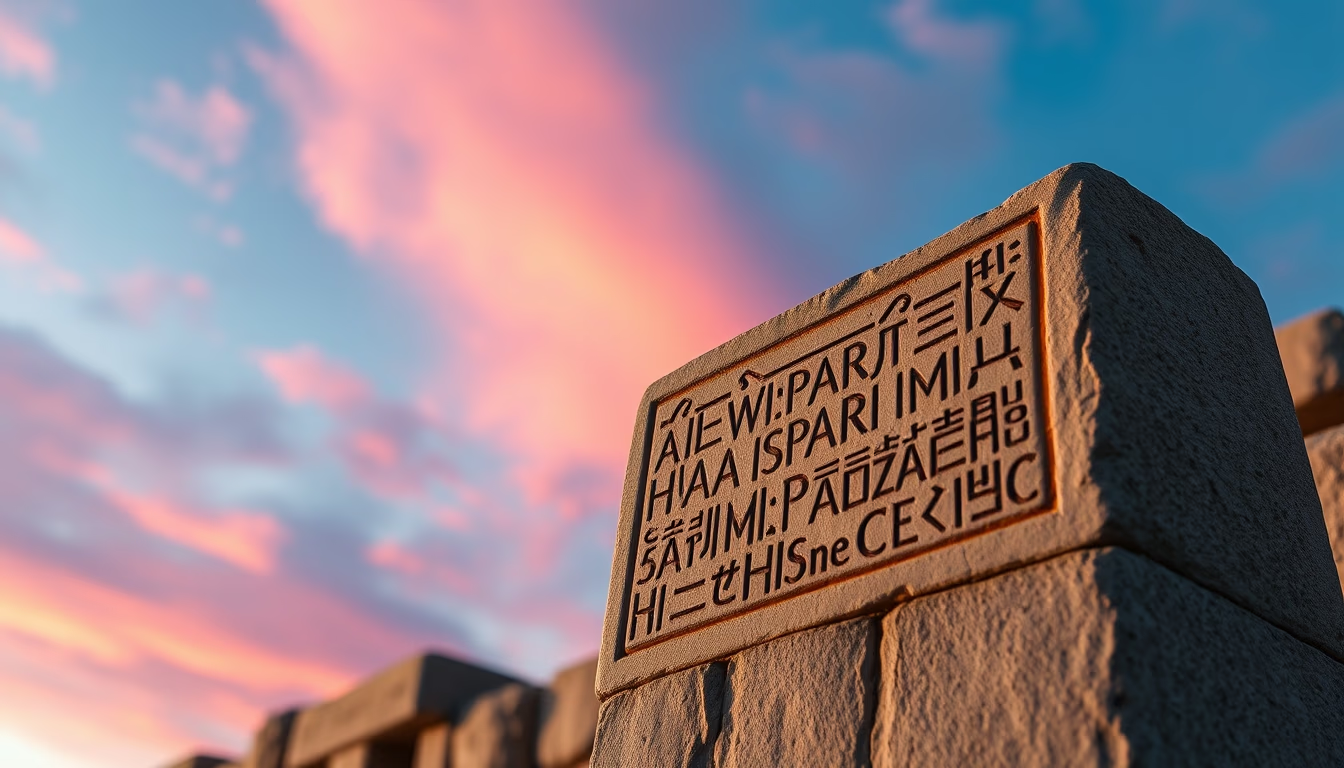
Clay tablet with Sumerian cuneiform script, one of humanity's earliest writing systems, dating back to the 4th millennium BCE.
About this subject
Cuneiform script was developed by the Sumerians in Mesopotamia, modern-day Iraq, around 3400 BCE. Initially used for administrative and commercial records, it quickly expanded to literary, religious, and legal texts. Tablets were made from moist clay, impressed with a reed stylus in wedge-shaped strokes, giving the script its Latin name "cuneiform" (from cuneus, wedge).
The Sumerians were pioneers in urbanization, irrigated agriculture, and mathematics, and their writing system influenced later peoples such as the Akkadians, Babylonians, and Assyrians. Thousands of tablets have survived, many still undeciphered, providing invaluable insights into daily life, laws (like the Code of Ur-Nammu), and epic works such as the Epic of Gilgamesh.
Cuneiform tablets were typically stored in archives or libraries, such as the famous Library of Ashurbanipal in Nineveh. The writing technique allowed tablets to be reused after being softened in water, but many were accidentally fired during building fires, preserving them to the present day. They range from small 5 cm tablets to large 30 cm plates, with text arranged in columns read from left to right.
The decipherment of cuneiform was a gradual process, with contributions from scholars like Henry Rawlinson and Edward Hincks in the 19th century. Today, Sumerology continues to uncover aspects of the Sumerian language, an isolate with no known relatives, making each tablet a crucial piece for understanding the origins of civilization.
Frequently Asked Questions
What does the word 'cuneiform' mean?
It comes from Latin cuneus (wedge), referring to the shape of the marks made with a reed stylus on clay.
How many cuneiform tablets exist today?
An estimated more than 500,000 tablets and fragments have been discovered, scattered in museums and collections worldwide.
Why is the Epic of Gilgamesh significant?
It is one of the earliest known literary works, written in Akkadian cuneiform, and explores themes of friendship, mortality, and the search for immortality.
Direct URL
https://pub-c7d6a6ea828543ac903a74a341ccb2e1.r2.dev/imagens/cuneiform-tablet-sumerian-long-exposure-p8.avifHow to credit
Include a visible link back to UtilizAí. Copy one of the snippets below:
<a href="https://xn--utiliza-eza.com/en/midia/imagens/cuneiform-tablet-sumerian-long-exposure-p8">Cuneiform tablet sumerian</a> by <a href="https://xn--utiliza-eza.com">UtilizAí</a>, licensed under <a href="https://creativecommons.org/licenses/by/4.0/">CC BY 4.0</a>.
[Cuneiform tablet sumerian](https://xn--utiliza-eza.com/en/midia/imagens/cuneiform-tablet-sumerian-long-exposure-p8) by [UtilizAí](https://xn--utiliza-eza.com), CC BY 4.0
License: CC-BY-4.0