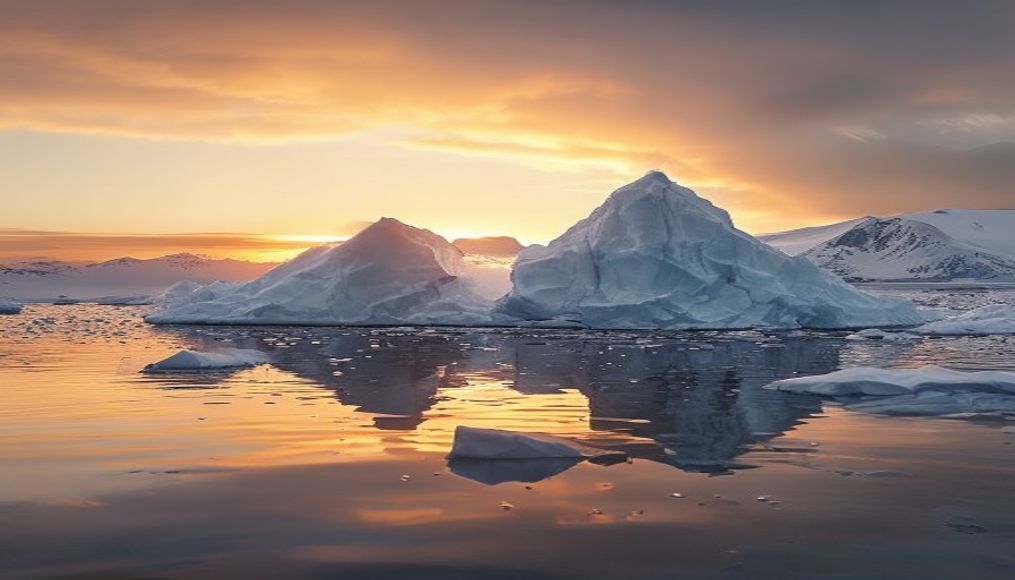
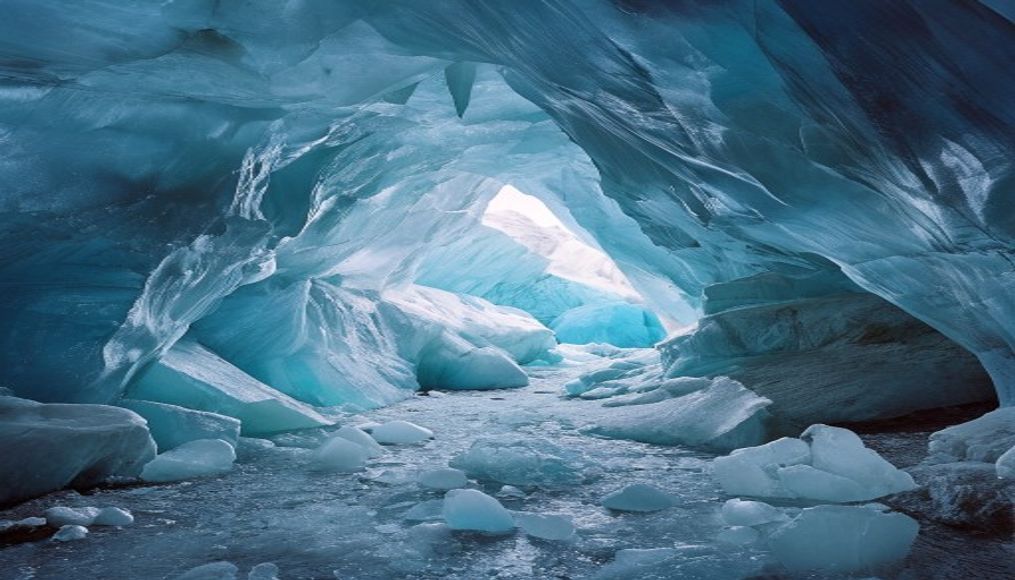
Crevasse glacier deep
1344×768 · AVIF · CC BY 4.0
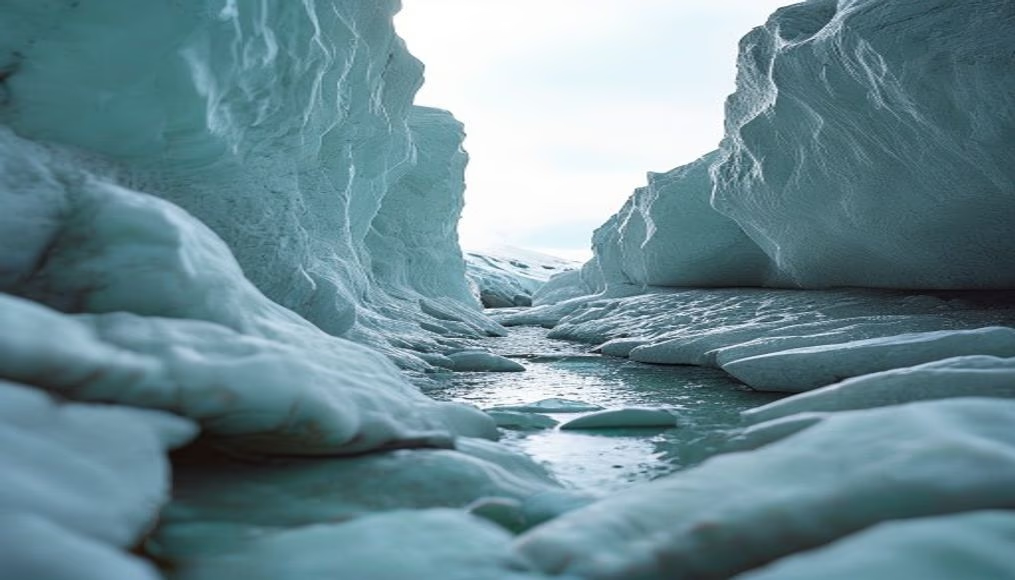
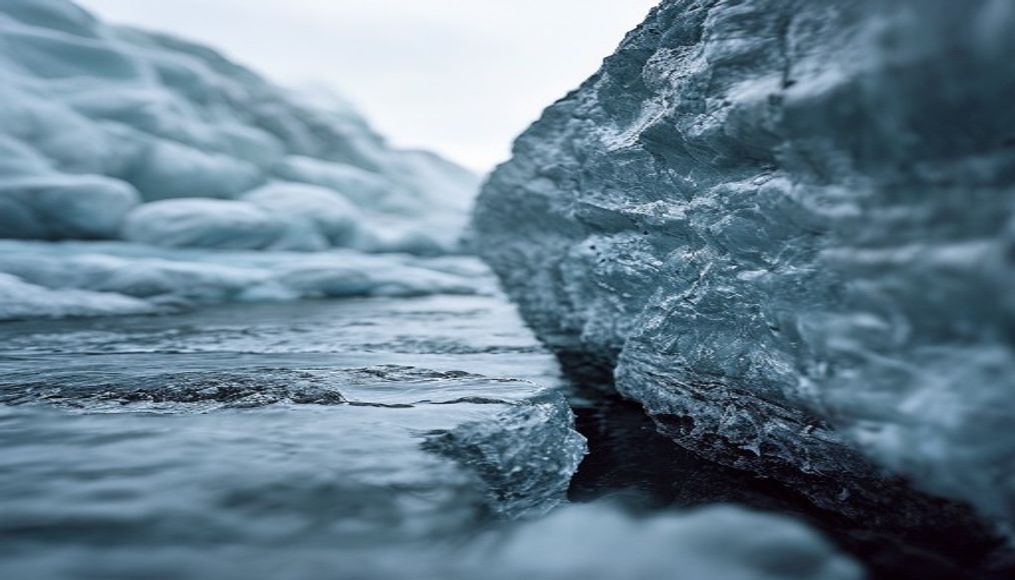
Deep crevasse in a glacier, revealing blue ice layers and natural glacial movement processes.
About this subject
Crevasses are deep fractures that form on glacier surfaces due to stress from ice movement. They occur when tensile strain exceeds the ice's deformability, creating cracks that can reach tens of meters in depth. The exposed ice often exhibits an intense blue color, resulting from selective absorption of red light by dense, compacted ice over millennia.
Different types of crevasses are classified by their orientation relative to glacial flow. Transverse crevasses are perpendicular to movement and common in areas of acceleration or terrain unevenness. Longitudinal crevasses form parallel to flow, usually at glacier margins where friction with bedrock generates tension. Marginal crevasses appear along lateral edges, while radial crevasses spread from a central point.
Crevasses formation is directly linked to climate and glacial dynamics. In valley glaciers like those in the Andes or Alps, seasonal temperature and precipitation changes influence flow speed and the opening of new cracks. In polar regions such as Greenland and Antarctica, crevasses can extend for kilometers, representing one of the greatest challenges for scientific expeditions and mountaineers.
Beyond the obvious danger to explorers, crevasses hold scientific importance. They allow the study of ancient ice layers, revealing past climate information through isotopes and trapped air bubbles. Ice cores extracted from crevasses have helped reconstruct the atmospheric history of the last 800,000 years, providing crucial data for understanding climate change.
Frequently Asked Questions
How do crevasses form in glaciers?
Crevasses form when the movement of ice creates tension that exceeds the ice's ability to deform, causing cracks. They are common in areas of steep slope, flow bends, or where the glacier accelerates.
What is the typical depth of a crevasse?
Crevasses typically have depths between 10 and 50 meters, but in large polar glaciers they can reach up to 150 meters. Depth is limited by ice pressure, which tends to close the cracks below a certain point.
Do crevasses offer any benefits to science?
Yes. Crevasses expose deep ice layers, which can be studied to analyze chemical composition and trapped air bubbles, providing climate records spanning thousands of years.
Direct URL
https://pub-c7d6a6ea828543ac903a74a341ccb2e1.r2.dev/imagens/crevasse-glacier-deep-documentary-photography-p0.avifHow to credit
Include a visible link back to UtilizAí. Copy one of the snippets below:
<a href="https://xn--utiliza-eza.com/en/midia/imagens/crevasse-glacier-deep-documentary-photography-p0">Crevasse glacier deep</a> by <a href="https://xn--utiliza-eza.com">UtilizAí</a>, licensed under <a href="https://creativecommons.org/licenses/by/4.0/">CC BY 4.0</a>.
[Crevasse glacier deep](https://xn--utiliza-eza.com/en/midia/imagens/crevasse-glacier-deep-documentary-photography-p0) by [UtilizAí](https://xn--utiliza-eza.com), CC BY 4.0
License: CC-BY-4.0