Cpu socket lga
1344×768 · AVIF · CC BY 4.0
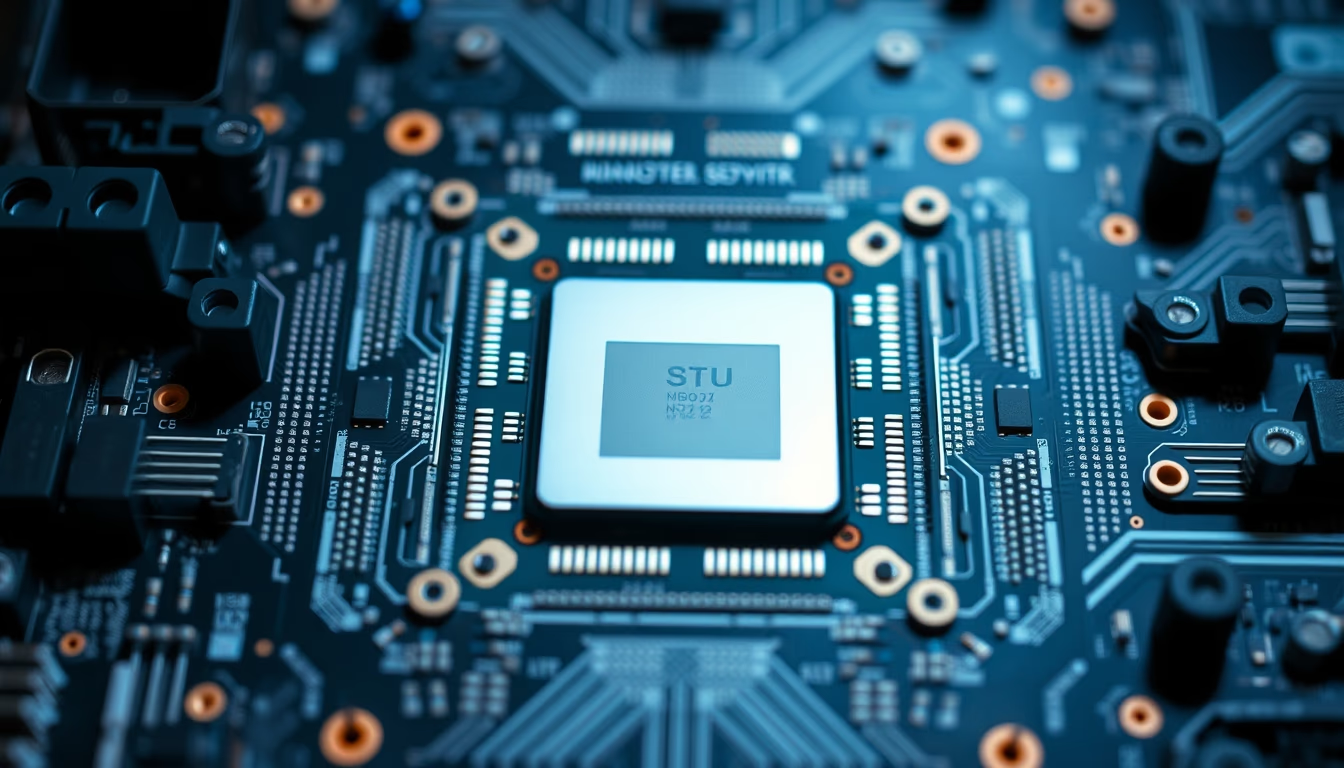
Soquete LGA (Land Grid Array) é o padrão de conexão entre processador e placa-mãe usado por Intel e AMD em CPUs modernas.
Sobre o tema
O soquete LGA, sigla para Land Grid Array, é um tipo de encaixe para processadores onde os pinos de contato estão localizados no próprio soquete da placa-mãe, e não no processador. Essa configuração inverte o design dos antigos soquetes PGA, nos quais os pinos ficavam no chip. A principal vantagem do LGA é a redução do risco de danificar os pinos durante a instalação ou remoção do processador, além de oferecer melhor integridade de sinal elétrico em altas frequências.
A Intel foi a primeira a adotar o padrão LGA em larga escala, introduzindo o soquete LGA 775 em 2004 para a plataforma Pentium 4 e Core 2 Duo. Desde então, a empresa lançou diversas variantes, como LGA 1156, LGA 1155, LGA 1150, LGA 1151, LGA 1200 e, mais recentemente, o LGA 1700 para os processadores Alder Lake e Raptor Lake. Já a AMD utilizou soquetes PGA (como AM3 e AM4) por muitos anos, mas migrou para LGA com o soquete AM5 (LGA 1718) a partir da série Ryzen 7000 em 2022.
Cada soquete LGA possui um número específico de contatos, que determina a compatibilidade com determinados processadores. Por exemplo, o LGA 1700 possui 1700 pinos e suporta as 12ª e 13ª gerações Intel Core (Alder Lake e Raptor Lake). O soquete LGA 2066, por sua vez, é voltado para a plataforma de alto desempenho Intel X299. É fundamental que o usuário verifique a compatibilidade entre o soquete da placa-mãe e o processador antes da compra, pois cada geração de CPUs exige um soquete específico.
Curiosamente, a nomenclatura dos soquetes LGA nem sempre segue um padrão numérico exato: o LGA 1151, por exemplo, tinha 1151 contatos, mas o LGA 1200 conta com 1200. A evolução dos soquetes reflete o aumento na demanda por energia e largura de banda, especialmente com a introdução de interfaces como PCI Express 4.0 e 5.0. Além disso, os soquetes LGA modernos incorporam suporte a memórias DDR5 e tecnologias como Intel Turbo Boost e AMD Precision Boost.
Perguntas frequentes
Qual a diferença entre soquete LGA e PGA?
No soquete LGA, os pinos estão no soquete da placa-mãe; no PGA, os pinos estão no processador. O LGA reduz o risco de danificar os pinos e oferece melhor desempenho elétrico, enquanto o PGA é mais comum em processadores mais antigos.
Como identificar qual soquete LGA minha placa-mãe possui?
O modelo do soquete geralmente está impresso próximo ao encaixe do processador na placa-mãe. Também é possível consultar o manual da placa ou usar softwares como CPU-Z para identificar o soquete.
Quais processadores usam soquete LGA atualmente?
Processadores Intel Core de 12ª e 13ª geração usam LGA 1700; Intel Core de 10ª e 11ª usam LGA 1200. Processadores AMD Ryzen 7000 usam AM5 (LGA 1718). Modelos mais antigos usam LGA 1151, LGA 2066, entre outros.
URL direta
https://pub-c7d6a6ea828543ac903a74a341ccb2e1.r2.dev/imagens/cpu-socket-lga-architectural-photography-p7.avifComo creditar
Inclua um link visível de volta pro UtilizAí. Copie um dos snippets abaixo:
<a href="https://xn--utiliza-eza.com/midia/imagens/cpu-socket-lga-architectural-photography-p7">Cpu socket lga</a> by <a href="https://xn--utiliza-eza.com">UtilizAí</a>, licensed under <a href="https://creativecommons.org/licenses/by/4.0/">CC BY 4.0</a>.
[Cpu socket lga](https://xn--utiliza-eza.com/midia/imagens/cpu-socket-lga-architectural-photography-p7) by [UtilizAí](https://xn--utiliza-eza.com), CC BY 4.0
Licença: CC-BY-4.0