Cpu chip pin grid
1344×768 · AVIF · CC BY 4.0
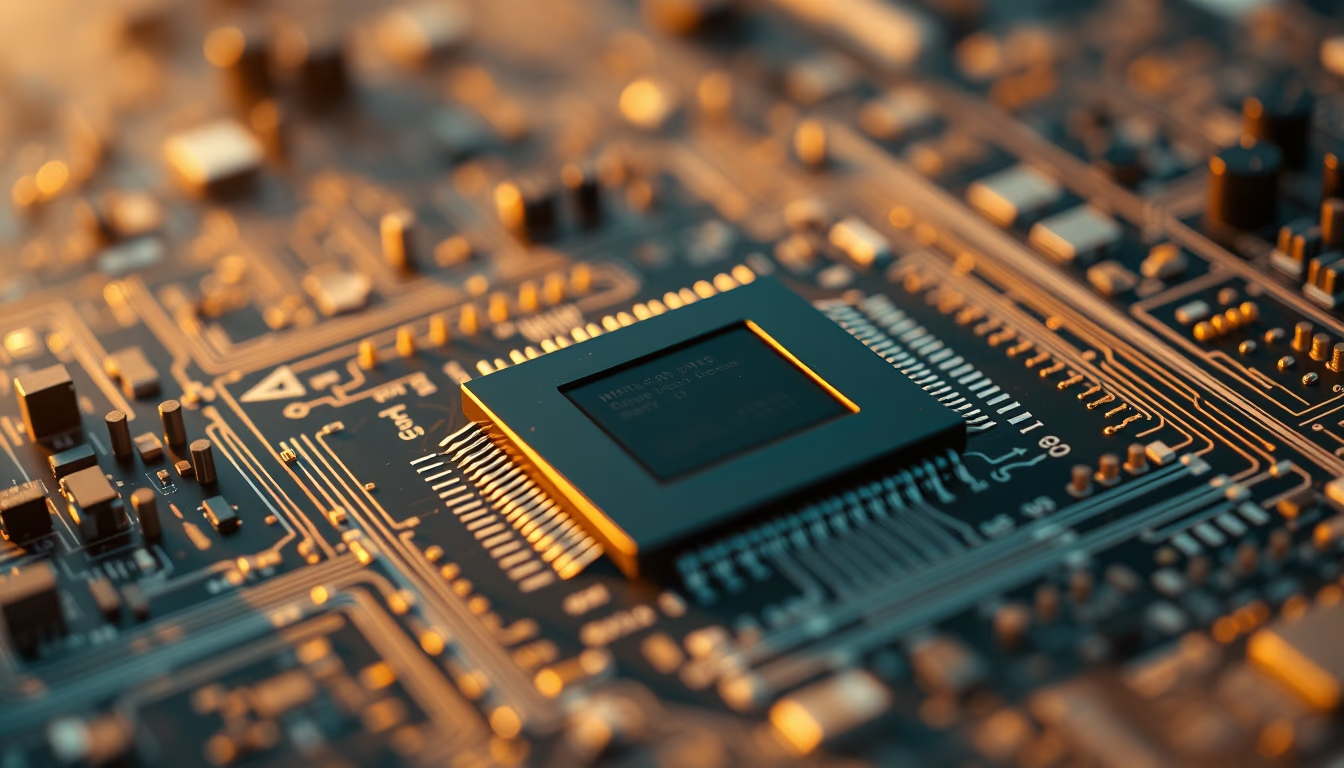
The pin grid of a CPU chip is the physical interface connecting the processor to the motherboard, essential for data and power transfer.
About this subject
The pin grid array (PGA) is one of the most traditional CPU packaging formats. It features hundreds of metallic pins arranged in orderly rows on the underside of the chip. These pins fit into corresponding sockets on the motherboard, establishing electrical connections for data, addresses, and power. PGA was widely used in Intel processors up to the Pentium 4 series and in many AMD models, such as Athlon and Ryzen (though AMD has moved to LGA for recent sockets like AM5). Pin counts vary by socket: an LGA 1151 socket has 1151 contacts, while a PGA 478 has 478 pins. The precise layout follows patterns like the staggered grid, which prevents short circuits and aids heat dissipation. The transition to land grid array (LGA), where pins are on the socket rather than the chip, brought advantages like higher contact density and reduced risk of pin damage during handling. In modern high-performance CPUs, especially server models, the pin count can exceed 4,000 (e.g., Intel Xeon LGA 4189). The grid design also affects electrical impedance and signal integrity at high frequencies, a critical factor for processors operating above 5 GHz.
Frequently Asked Questions
What is the difference between PGA and LGA?
In PGA (pin grid array), pins are on the processor and fit into holes on the socket. In LGA (land grid array), pins are on the socket and the chip has flat contacts (lands). LGA allows higher connection density and is safer against pin damage.
How many pins does a modern processor have?
Current desktop processors like the Intel Core i9 LGA 1700 have 1700 pins. Servers can have over 4,000 pins, such as the Intel Xeon LGA 4189 with 4189 contacts.
Why are pins arranged in a grid?
The grid arrangement organizes connections efficiently, enabling signal routing on the motherboard and avoiding interference. The staggered pattern increases spacing between pins, reducing shorts and facilitating soldering.
Direct URL
https://pub-c7d6a6ea828543ac903a74a341ccb2e1.r2.dev/imagens/cpu-chip-pin-grid-travel-photography-p2.avifHow to credit
Include a visible link back to UtilizAí. Copy one of the snippets below:
<a href="https://xn--utiliza-eza.com/en/midia/imagens/cpu-chip-pin-grid-travel-photography-p2">Cpu chip pin grid</a> by <a href="https://xn--utiliza-eza.com">UtilizAí</a>, licensed under <a href="https://creativecommons.org/licenses/by/4.0/">CC BY 4.0</a>.
[Cpu chip pin grid](https://xn--utiliza-eza.com/en/midia/imagens/cpu-chip-pin-grid-travel-photography-p2) by [UtilizAí](https://xn--utiliza-eza.com), CC BY 4.0
License: CC-BY-4.0