Corn cob fresh harvest in farmer hands
1344×768 · AVIF · CC BY 4.0
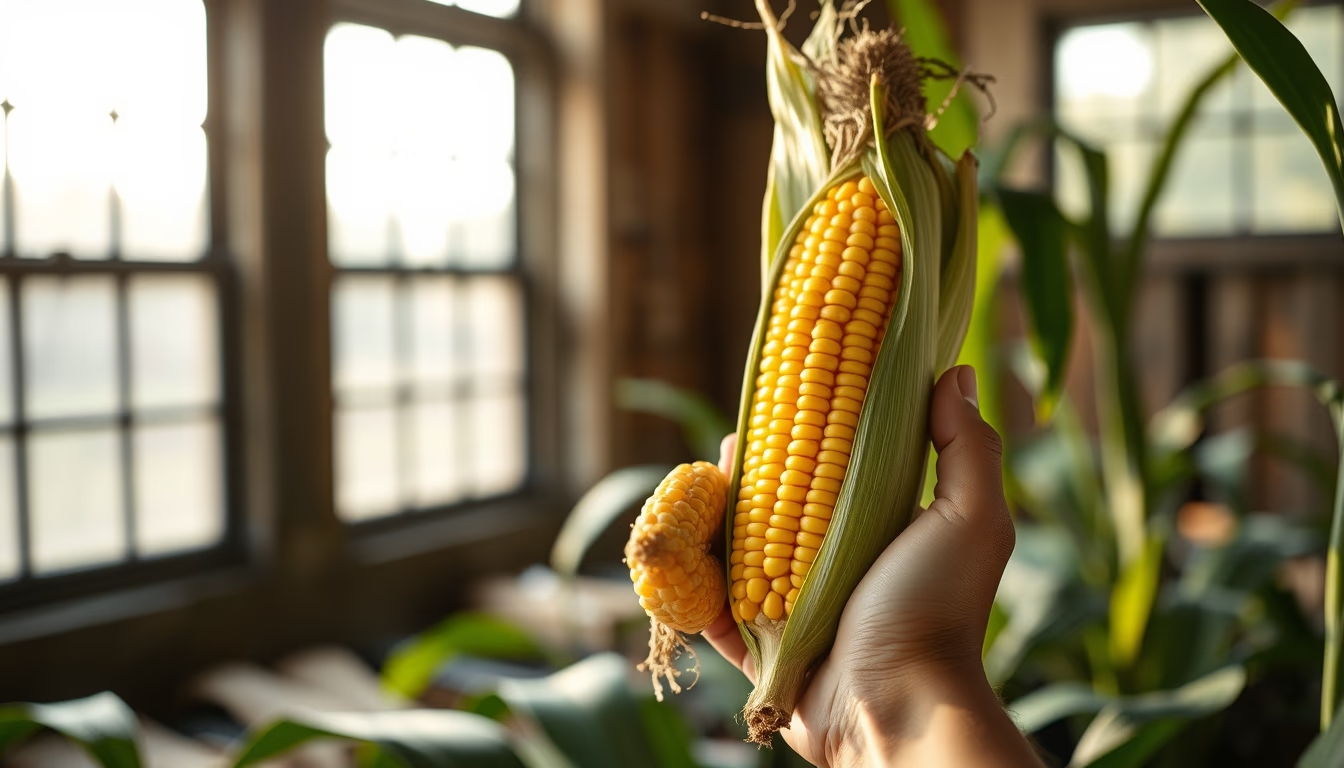
Freshly harvested corn cob in a farmer's hands, symbol of Brazilian harvest and family farming.
About this subject
Corn is one of the pillars of Brazilian agriculture. Brazil is the third largest corn producer in the world, behind only the United States and China, with an annual harvest exceeding 100 million tons. The freshly harvested corn cob represents not only a staple food in human and animal diets but also a source of income for millions of small family farmers, who are responsible for about 70% of the food that reaches Brazilian tables.
Corn harvesting in Brazil predominantly occurs between February and April in the Midwest and Southeast regions, but can extend until July in areas of late planting, known as safrinha. The farmer holding the ear of corn usually performs manual harvesting on small properties, maintaining traditions passed down through generations. Brazilian corn is used both for fresh consumption and for animal feed, ethanol production, and various industrial by-products.
The most common corn variety in Brazil is dent corn, but hundreds of landrace varieties are maintained by traditional communities. A perfect ear with aligned grains and golden coloration indicates good cultivation practices and favorable weather conditions. Brazil also stands out in transgenic corn production, which occupies about 90% of the planted area, sparking debates on sustainability and food safety.
Family farming, which includes manual corn harvesting, faces challenges such as access to credit, technical assistance, and marketing. However, government programs like the Food Acquisition Program (PAA) and the National School Feeding Program (PNAE) encourage direct purchases from small producers, strengthening local economies and food security.
Frequently Asked Questions
What is the importance of corn in Brazilian agriculture?
Corn is the second most important crop in Brazil, after soybeans. It is essential for human and animal food, besides being used for ethanol production and various industrial products. Brazil is the third largest producer worldwide.
How is manual corn harvesting done?
In manual harvesting, the farmer walks through the rows of plants, twists and pulls the mature ears, which are then placed in bags or baskets. This method is common in family farming and small properties.
What does the term 'safrinha' mean in corn cultivation?
Safrinha is the second corn crop planted right after the soybean harvest, usually between January and March. It represents a significant portion of national production and helps maximize land use.
Direct URL
https://pub-c7d6a6ea828543ac903a74a341ccb2e1.r2.dev/imagens/corn-cob-fresh-harvest-in-farmer-hands-documentary-morning-5.avifHow to credit
Include a visible link back to UtilizAí. Copy one of the snippets below:
<a href="https://xn--utiliza-eza.com/en/midia/imagens/corn-cob-fresh-harvest-in-farmer-hands-documentary-morning-5">Corn cob fresh harvest in farmer hands</a> by <a href="https://xn--utiliza-eza.com">UtilizAí</a>, licensed under <a href="https://creativecommons.org/licenses/by/4.0/">CC BY 4.0</a>.
[Corn cob fresh harvest in farmer hands](https://xn--utiliza-eza.com/en/midia/imagens/corn-cob-fresh-harvest-in-farmer-hands-documentary-morning-5) by [UtilizAí](https://xn--utiliza-eza.com), CC BY 4.0
License: CC-BY-4.0