Concrete texture grey
1344×768 · AVIF · CC BY 4.0
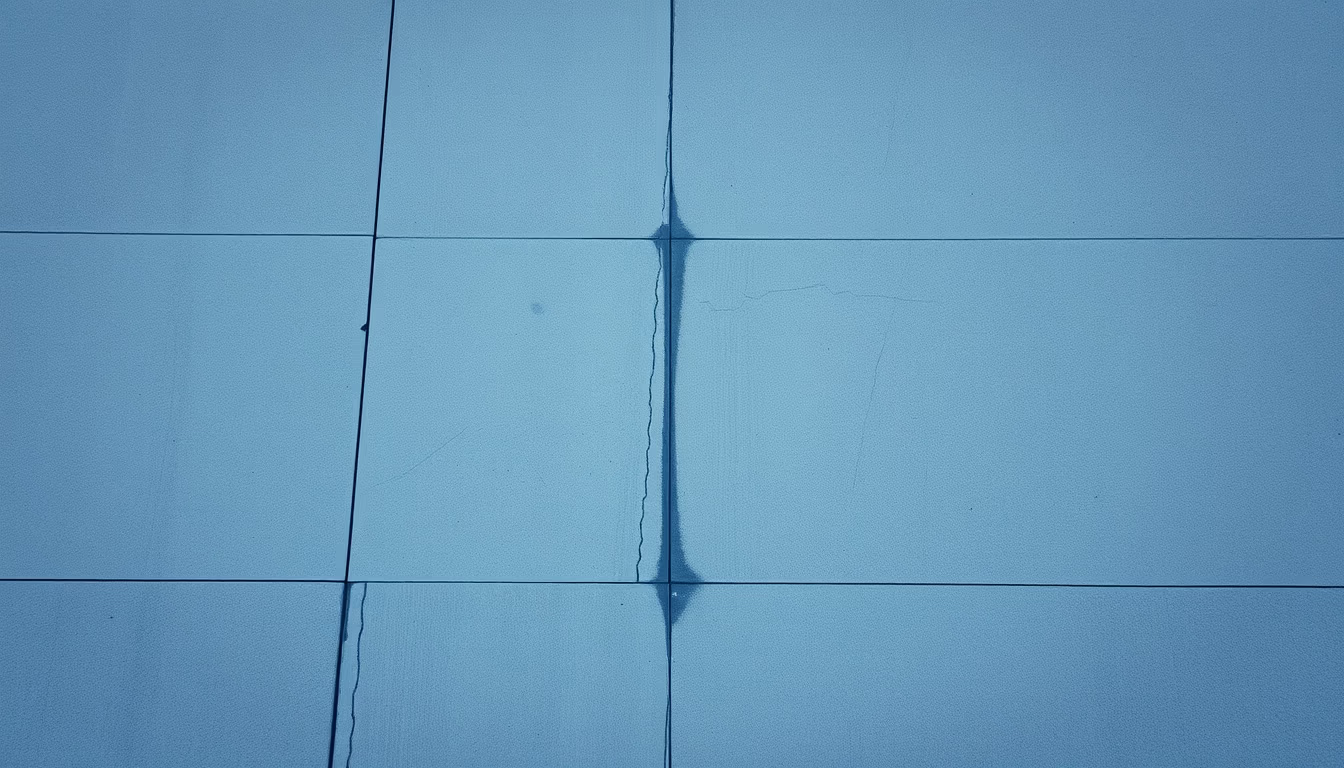
Concreto cinza: textura versátil e onipresente na arquitetura urbana, com nuances que revelam sua composição e processo de cura.
Sobre o tema
O concreto cinza é o material de construção mais utilizado no mundo, com produção anual superior a 4 bilhões de toneladas. Sua textura característica resulta da mistura de cimento Portland, agregados miúdos e graúdos, água e, em alguns casos, aditivos. A cor cinza varia conforme a origem do cimento e dos agregados: cinzas claros, médios ou escuros. A textura superficial depende do método de acabamento, pode ser lisa, áspera, com marcas de fôrma ou com exposição dos agregados (concreto aparente).
Na arquitetura contemporânea, o concreto aparente ganhou destaque a partir do movimento brutalista das décadas de 1950 e 1970, com arquitetos como Le Corbusier, Oscar Niemeyer e Paul Rudolph. No Brasil, o concreto armado foi amplamente empregado em obras modernistas, como o Palácio da Alvorada e o edifício do Ministério da Educação. A textura do concreto não é apenas estética; ela reflete a técnica construtiva, o tempo de cura e as condições climáticas. Cada superfície conta a história de sua execução.
Curiosamente, a textura do concreto cinza pode ser manipulada para criar padrões decorativos. Existem técnicas como o jateamento, que revela os agregados, ou o uso de fôrmas texturizadas, que imprimem relevos na superfície. Além disso, o concreto pode ser pigmentado com óxidos para adquirir tonalidades, mas o cinza natural ainda é o mais comum por sua neutralidade e baixo custo. A manutenção do concreto aparente exige cuidados contra a carbonatação e a ação de sais, que alteram sua textura ao longo do tempo.
Em contextos urbanos, a textura cinza do concreto é tão familiar que muitas vezes passa despercebida. Ela está em calçadas, muros, pontes e edifícios. A variação de porosidade, fissuras e manchas de umidade cria uma paleta visual rica para fotografia e design. Estudos de materiais mostram que a microtextura do concreto influencia a aderência de tintas e revestimentos, sendo um fator crítico em restauros. Para arquitetos e engenheiros, compreender essa textura é essencial para garantir durabilidade e desempenho estrutural.
Perguntas frequentes
Por que o concreto é cinza?
A cor cinza do concreto vem do cimento Portland, que contém compostos de ferro e silício. A tonalidade exata depende da quantidade de óxido de ferro, da cor dos agregados e das condições de cura.
Como a textura do concreto afeta sua durabilidade?
A textura superficial influencia a aderência de revestimentos e a permeabilidade. Superfícies mais rugosas podem reter mais água e sujeira, acelerando a degradação se não forem tratadas adequadamente.
Qual a diferença entre concreto aparente e concreto comum?
O concreto aparente é deixado sem revestimento, valorizando sua textura e marcas de fôrma. Já o concreto comum geralmente recebe pintura ou revestimento, e sua textura final é menos relevante esteticamente.
URL direta
https://pub-c7d6a6ea828543ac903a74a341ccb2e1.r2.dev/imagens/concrete-texture-grey-aerial-drone-shot-p2.avifComo creditar
Inclua um link visível de volta pro UtilizAí. Copie um dos snippets abaixo:
<a href="https://xn--utiliza-eza.com/midia/imagens/concrete-texture-grey-aerial-drone-shot-p2">Concrete texture grey</a> by <a href="https://xn--utiliza-eza.com">UtilizAí</a>, licensed under <a href="https://creativecommons.org/licenses/by/4.0/">CC BY 4.0</a>.
[Concrete texture grey](https://xn--utiliza-eza.com/midia/imagens/concrete-texture-grey-aerial-drone-shot-p2) by [UtilizAí](https://xn--utiliza-eza.com), CC BY 4.0
Licença: CC-BY-4.0