Compost bin kitchen
1344×768 · AVIF · CC BY 4.0
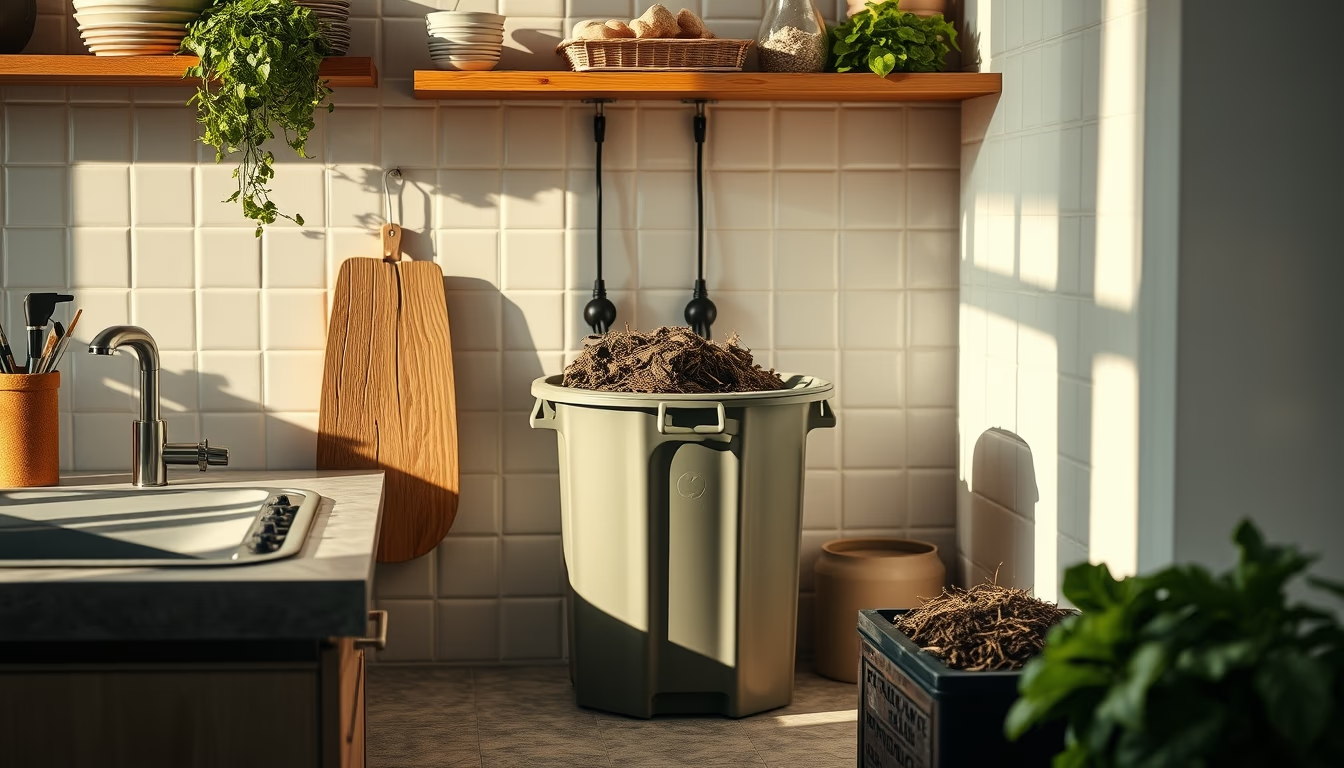
Learn how to use a kitchen compost bin to reduce organic waste, produce homemade fertilizer, and contribute to the environment.
About this subject
A kitchen compost bin is a practical system for transforming household organic waste into nutrient-rich fertilizer. With growing environmental concerns, more people globally are adopting this method to reduce the volume of waste sent to landfills. Organic waste makes up about half of household trash in many countries, and home composting can significantly cut that portion.
Various models exist, from simple buckets with lids to worm composting systems (vermicomposting). Vermicomposters are popular because they are compact and odor-free when properly maintained. They use red wiggler worms to accelerate decomposition. To start, layer dry materials like leaves or shredded paper with kitchen scraps such as fruit and vegetable peels, eggshells, and coffee grounds. Avoid meat, dairy, and oily foods to prevent smells and pests.
Composting is a continuous process: each addition of scraps is covered with dry material. The liquid produced, often called compost tea, can be diluted and used as plant fertilizer. Within a few months, you get humus, a dark, fertile soil amendment. Studies from the EPA indicate that home composting can reduce methane emissions from landfills and improve soil health in gardens and urban farms.
The habit is gaining traction in cities where municipal organic collection is limited. In New York City, community composting programs offer bins and workshops. It also aligns with UN Sustainable Development Goals on responsible consumption. The resulting compost can nourish houseplants or community gardens, creating a closed-loop system at home.
Frequently Asked Questions
What can I put in a kitchen compost bin?
Fruit and vegetable scraps, crushed eggshells, coffee grounds with filters, tea bags, dry leaves, and shredded paper. Avoid meat, dairy, oily foods, and heavily salted items.
Does a kitchen compost bin smell bad?
If managed correctly, it does not. Balance wet food scraps with dry carbon material (leaves, paper) and maintain proper moisture. A healthy worm bin smells like damp earth.
How long does it take for the compost to be ready?
With a worm bin, you can get vermicompost in about 2 to 3 months. In traditional bins, it takes 3 to 6 months, depending on temperature and moisture.
Direct URL
https://pub-c7d6a6ea828543ac903a74a341ccb2e1.r2.dev/imagens/compost-bin-kitchen-magazine-editorial-p1.avifHow to credit
Include a visible link back to UtilizAí. Copy one of the snippets below:
<a href="https://xn--utiliza-eza.com/en/midia/imagens/compost-bin-kitchen-magazine-editorial-p1">Compost bin kitchen</a> by <a href="https://xn--utiliza-eza.com">UtilizAí</a>, licensed under <a href="https://creativecommons.org/licenses/by/4.0/">CC BY 4.0</a>.
[Compost bin kitchen](https://xn--utiliza-eza.com/en/midia/imagens/compost-bin-kitchen-magazine-editorial-p1) by [UtilizAí](https://xn--utiliza-eza.com), CC BY 4.0
License: CC-BY-4.0