Community garden plots
1344×768 · AVIF · CC BY 4.0
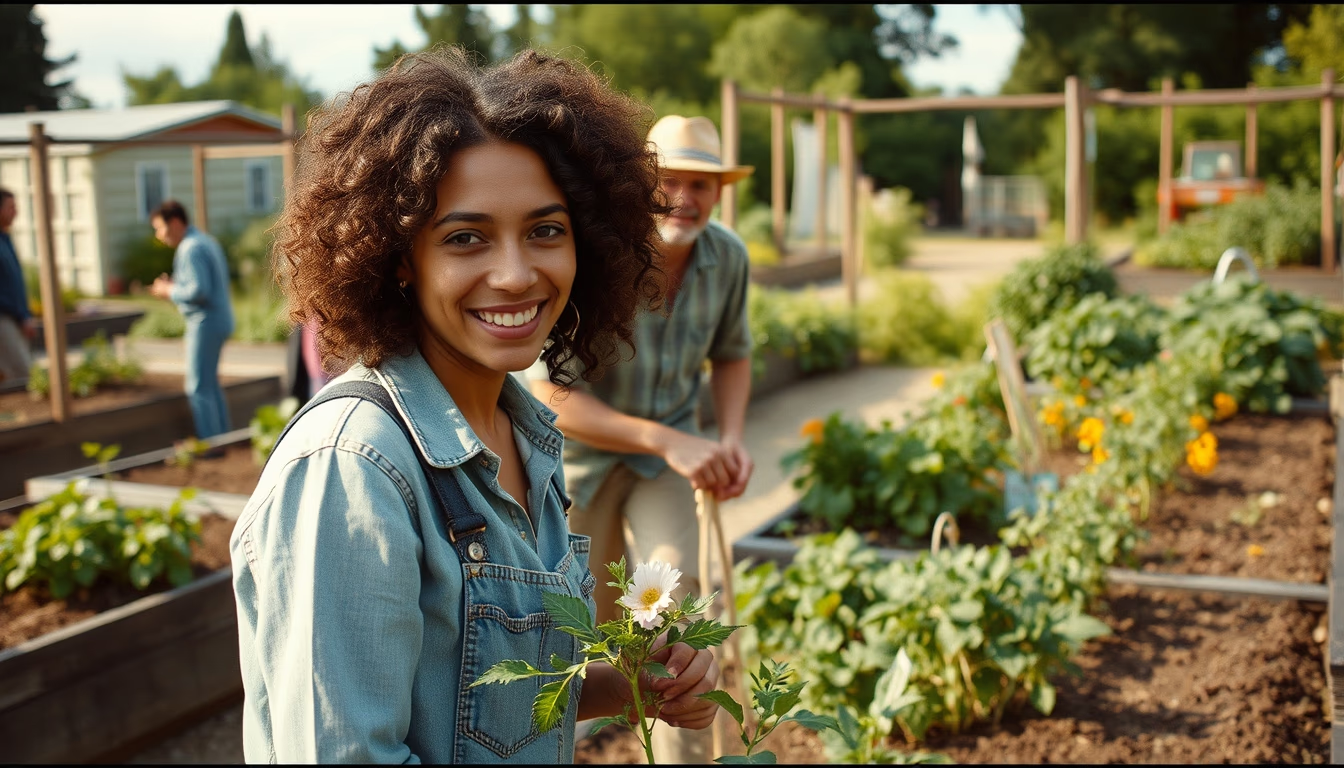
Community garden plots transform idle urban spaces into productive areas, promoting food security and social cohesion in cities worldwide.
About this subject
Community garden plots are collectively cultivated spaces managed by local residents, often on public or private land. Their modern roots trace back to victory gardens during World Wars, when citizens were urged to grow their own food. In recent decades, they have resurged as a response to food insecurity, environmental degradation, and social isolation in cities.
In Brazil, projects like São Paulo's urban gardens and Rio de Janeiro's Hortas Cariocas program showcase their potential. The community garden at Parque da Água Branca in São Paulo involves dozens of families producing organic food for the local community. Globally, New York City has over 550 community gardens, many under the GreenThumb program, while London's Capital Growth network has supported more than 2,000 projects.
Benefits extend beyond food. Studies indicate that participation in community gardens increases fruit and vegetable intake, reduces stress, and strengthens neighborhood ties. Environmentally, they enhance urban biodiversity, mitigate heat islands, and encourage composting organic waste. Challenges such as water access, land tenure security, and technical training persist, but the movement continues to expand.
Frequently Asked Questions
How do you start a community garden?
Gather a group of interested people and identify a suitable plot, which can be public or private with permission. Conduct a soil test, plan the layout, and establish collective management rules. Seeking support from local government, NGOs, or universities can provide resources and technical guidance.
What are the environmental benefits of community gardens?
They increase vegetation in urban areas, reducing heat islands and improving air quality. They also promote rainwater harvesting, composting of organic waste, and biodiversity conservation by providing habitats for pollinators and other wildlife.
Are community gardens common in Brazil?
Yes, there are many initiatives across the country, especially in large cities like São Paulo, Rio de Janeiro, and Belo Horizonte. Municipal programs such as Hortas Cariocas and São Paulo's Community Garden Network encourage these spaces, which produce healthy food and strengthen communities.
Direct URL
https://pub-c7d6a6ea828543ac903a74a341ccb2e1.r2.dev/imagens/community-garden-plots-film-grain-authentic-p0.avifHow to credit
Include a visible link back to UtilizAí. Copy one of the snippets below:
<a href="https://xn--utiliza-eza.com/en/midia/imagens/community-garden-plots-film-grain-authentic-p0">Community garden plots</a> by <a href="https://xn--utiliza-eza.com">UtilizAí</a>, licensed under <a href="https://creativecommons.org/licenses/by/4.0/">CC BY 4.0</a>.
[Community garden plots](https://xn--utiliza-eza.com/en/midia/imagens/community-garden-plots-film-grain-authentic-p0) by [UtilizAí](https://xn--utiliza-eza.com), CC BY 4.0
License: CC-BY-4.0