Community garden plots
1344×768 · AVIF · CC BY 4.0
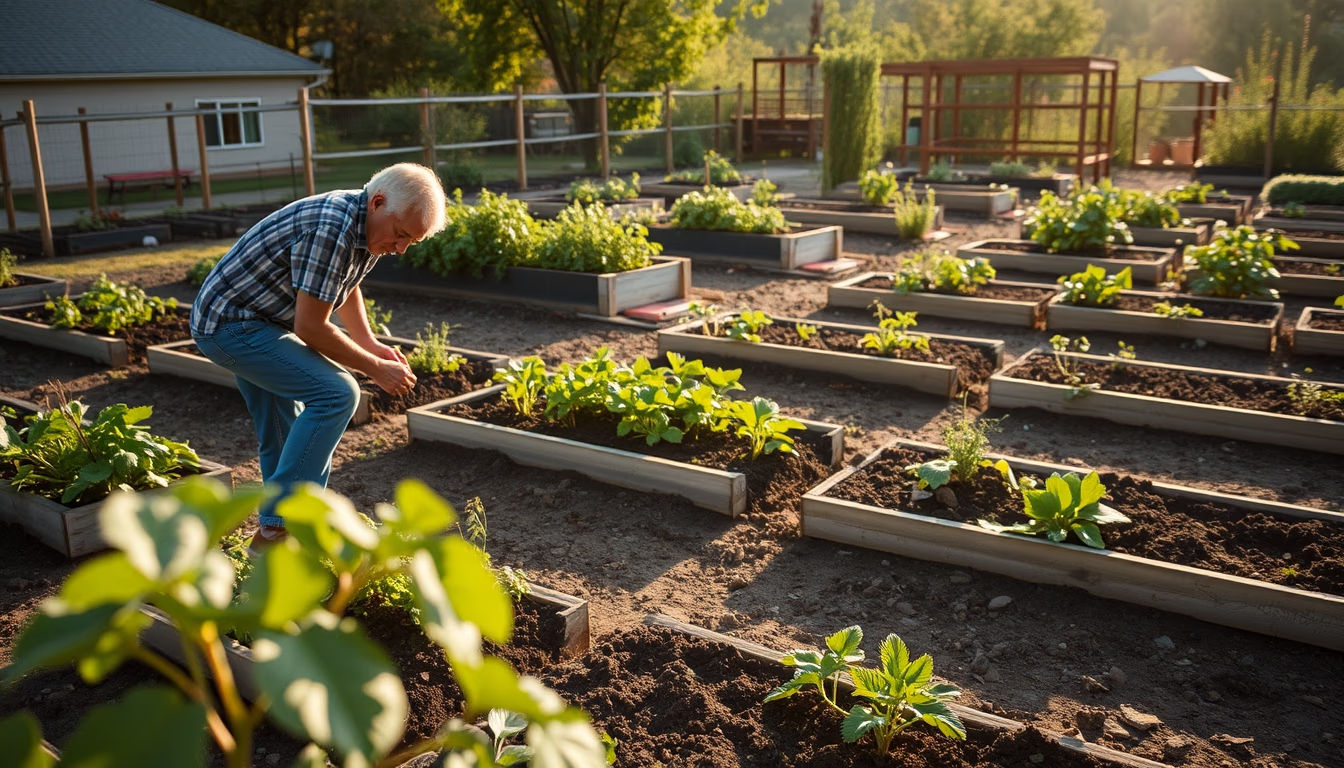
Community garden plots are shared food-growing spaces that strengthen food security and social bonds in urban areas.
About this subject
Community gardens emerged as a response to the need for fresh food access and reconnection with the land, especially in urban centers. These spaces, typically managed by residents in partnership with associations or local governments, transform vacant lots or underutilized areas into productive sources of vegetables, herbs, and fruits. The movement gained momentum in the 1970s, with iconic examples like guerrilla gardens in New York City, where citizens took over abandoned lots. Today, cities such as São Paulo, London, and Tokyo host hundreds of community gardens that go beyond food production: they serve as educational, recreational, and social integration spaces. Studies show that participation in community gardening reduces stress, improves diet, and promotes sustainability by shortening the distance between production and consumption. In Brazil, initiatives like the Community Gardens program of São Paulo’s city hall and the Landless Workers Movement (MST) in peri-urban areas exemplify how collective cultivation can generate income and autonomy. Each plot, typically 1 to 10 square meters, is cared for by a family or group, who decide what to plant based on the season and local needs. Crop rotation and composting are common practices, reinforcing regenerative agriculture. In 2023, it is estimated that there are over 18,000 community gardens in the United States alone, and the number continues to grow. Photographic documentation of such projects helps highlight their social and environmental impact, recording everything from soil preparation to shared harvests.
Frequently Asked Questions
How can I start a community garden in my city?
Look for neighborhood associations, city halls, or NGOs that support urban agriculture. Gather a group of interested people and identify a suitable plot. You need to obtain permission from the owner (public or private) and create a plan for cultivation and shared management.
What are the main benefits of community gardens?
They promote food security with fresh and organic produce, strengthen social bonds, improve mental and physical health, and contribute to urban sustainability by reducing heat islands and increasing biodiversity.
Is it difficult to maintain a plot in a community garden?
Maintenance requires regular dedication, about 1 to 3 hours per week, including watering, weeding, and harvesting. Beginners can rely on support from experienced gardeners and workshops offered on site.
Direct URL
https://pub-c7d6a6ea828543ac903a74a341ccb2e1.r2.dev/imagens/community-garden-plots-documentary-photography-p2.avifHow to credit
Include a visible link back to UtilizAí. Copy one of the snippets below:
<a href="https://xn--utiliza-eza.com/en/midia/imagens/community-garden-plots-documentary-photography-p2">Community garden plots</a> by <a href="https://xn--utiliza-eza.com">UtilizAí</a>, licensed under <a href="https://creativecommons.org/licenses/by/4.0/">CC BY 4.0</a>.
[Community garden plots](https://xn--utiliza-eza.com/en/midia/imagens/community-garden-plots-documentary-photography-p2) by [UtilizAí](https://xn--utiliza-eza.com), CC BY 4.0
License: CC-BY-4.0