Community garden plots
1344×768 · AVIF · CC BY 4.0
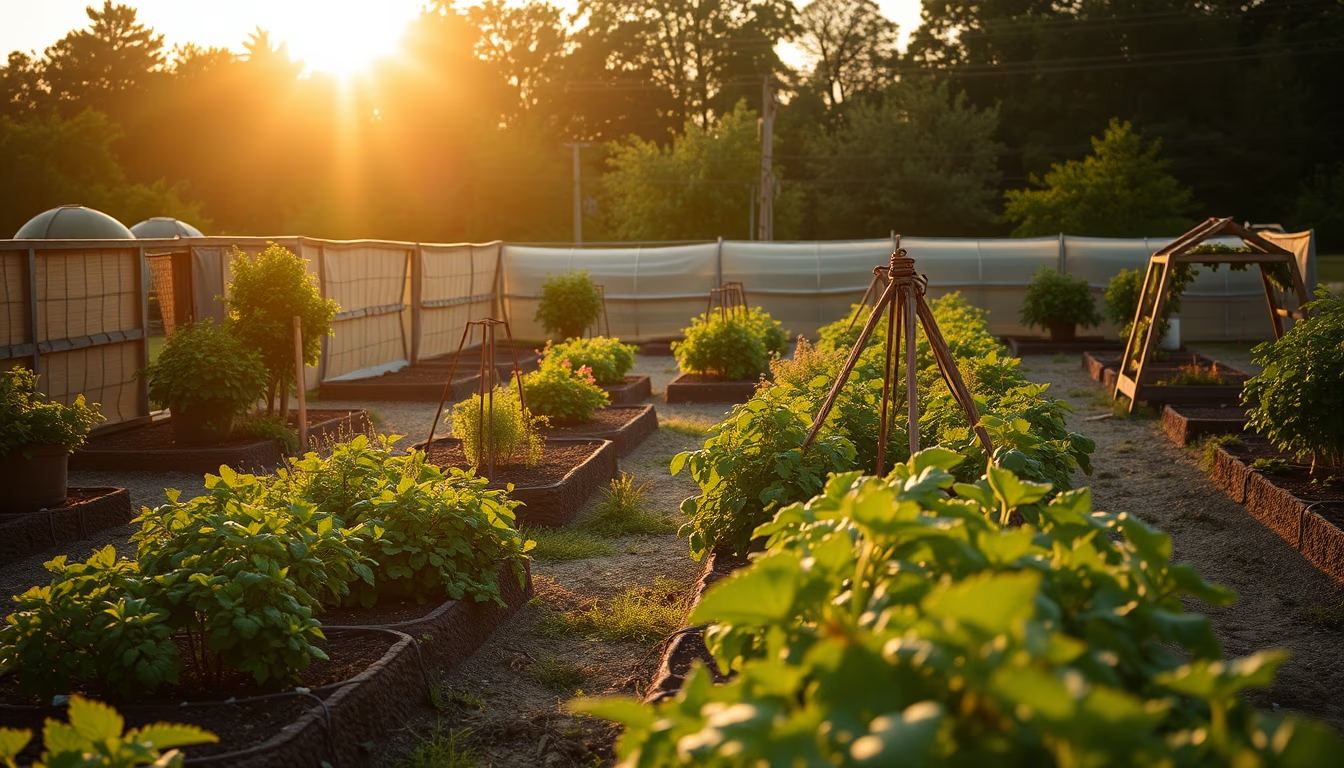
Community gardens transform vacant lots into productive spaces for collective cultivation, promoting food security and social integration.
About this subject
Community gardens are patches of land cultivated collectively by neighborhood residents, usually on public or donated plots. They emerged as a response to food shortages during wars and economic crises, but today they are cornerstones of urban agriculture and sustainability movements. In Brazil, examples like the Community Garden of São Mateus in São Paulo produce organic food that supplies local families and school feeding programs. Each bed is divided among participants, who decide in assemblies what to plant and how to manage the soil.
These spaces go beyond food production: they reduce heat islands, promote biodiversity, improve urban drainage, and strengthen social ties. Studies indicate that community gardens increase fresh vegetable consumption and reduce food insecurity by up to 30% among participants. Cities like Detroit and Havana have adopted them as urban resilience strategies, turning vacant lots into green oases.
The popularization of community gardens also reflects a demand for healthier food and reconnection with nature. In the Brazilian context, they are encouraged by policies such as the National Program for Urban and Periurban Agriculture, which provides technical assistance and inputs. Each plot typically ranges from 10 to 50 square meters, with crops including lettuce, tomatoes, medicinal herbs, and native plants. Participatory management and tool sharing are key features, along with compost bins and rainwater harvesting systems.
Frequently Asked Questions
How can I start a community garden in my city?
First, gather a group of interested people and identify an available plot, which can be public or private. Then, contact the city hall or local associations to obtain authorization and technical support. It is essential to create an internal agreement with rules for use and maintenance.
What are the main benefits of a community garden?
Besides providing fresh and organic food, they strengthen community bonds, reduce stress, improve food security, and contribute to urban sustainability by shortening the distance food travels.
What types of plants are best for a community garden?
Short-cycle vegetables like lettuce, arugula, and spinach, along with fruits like tomatoes, zucchini, and beans. Aromatic herbs and medicinal plants are also popular. Choose species adapted to the local climate and easy to manage.
Direct URL
https://pub-c7d6a6ea828543ac903a74a341ccb2e1.r2.dev/imagens/community-garden-plots-cinematic-wide-shot-p3.avifHow to credit
Include a visible link back to UtilizAí. Copy one of the snippets below:
<a href="https://xn--utiliza-eza.com/en/midia/imagens/community-garden-plots-cinematic-wide-shot-p3">Community garden plots</a> by <a href="https://xn--utiliza-eza.com">UtilizAí</a>, licensed under <a href="https://creativecommons.org/licenses/by/4.0/">CC BY 4.0</a>.
[Community garden plots](https://xn--utiliza-eza.com/en/midia/imagens/community-garden-plots-cinematic-wide-shot-p3) by [UtilizAí](https://xn--utiliza-eza.com), CC BY 4.0
License: CC-BY-4.0