Comic books silver age
1344×768 · AVIF · CC BY 4.0
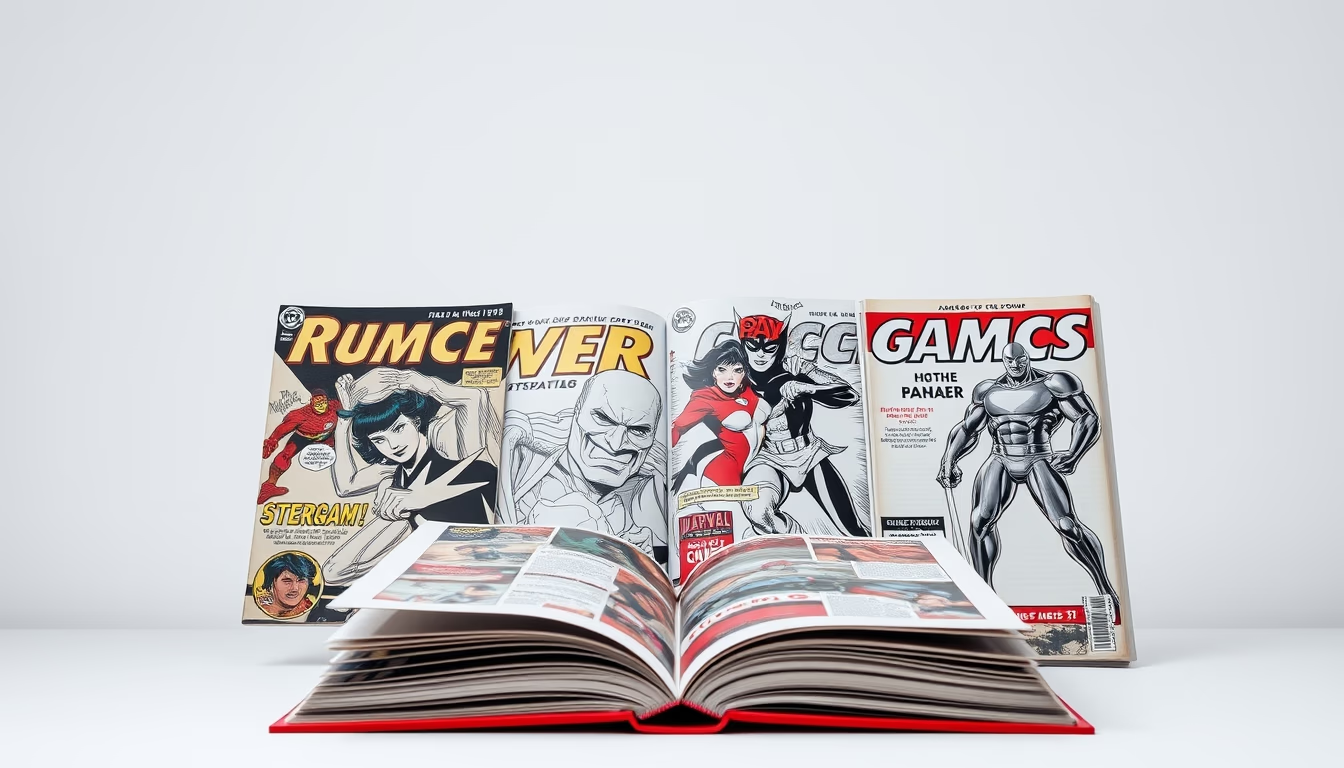
The Silver Age of comic books (1956-1970) marked the rebirth of superheroes and narrative innovation that shaped the industry.
About this subject
The Silver Age of American comic books began in 1956 with the debut of the new Flash in DC Comics’ Showcase #4. This period, lasting until about 1970, was marked by a creative explosion that revitalized the superhero genre, then in decline after the Golden Age. Publishers emphasized science-based origins for powers instead of magic, and crafted more complex plots with strong youth appeal.
DC Comics led the revival with characters like the Justice League, but it was Marvel Comics, under Stan Lee, Jack Kirby, and Steve Ditko, that revolutionized the medium. Titles such as Fantastic Four (1961), Spider-Man (1962), X-Men (1963), and The Avengers (1963) introduced heroes with personal problems and moral dilemmas, humanizing them in unprecedented ways. This approach resonated deeply with the teenage audience of the 1960s.
The Silver Age was also defined by the strict Comics Code Authority (CCA) seal, established in 1954 after moral panic sparked by psychiatrist Fredric Wertham’s book “Seduction of the Innocent.” The code censored violence, horror, and adult themes, forcing writers to be creative within boundaries. This led to plots involving scientific gimmicks and eccentric villains like the Riddler and the Green Goblin. Despite restrictions, the era produced classics such as “The Clone Saga” and introduced iconic characters like Black Widow and Black Panther.
Interestingly, the term “Silver Age” was coined by fans in the 1970s, drawing from Greek mythology’s ages of man. Comic book sales in the United States reportedly peaked at 50 million copies per month during this period. The cultural influence of the Silver Age persists today, with films and TV series adapting its stories for new generations.
Frequently Asked Questions
What were the major superhero creations of the Silver Age?
Key debuts include the Fantastic Four (1961), Spider-Man (1962), X-Men (1963), The Avengers (1963), Daredevil (1964), and Black Panther (1966). DC Comics relaunched the Flash (1956) and introduced the Justice League (1960) and Green Lantern Hal Jordan (1959).
How did the Comics Code Authority shape Silver Age stories?
The Code banned explicit violence, gore, horror, and adult themes. Writers circumvented restrictions by using science-based origins for powers and devising eccentric villains, resulting in creative plots that still adhered to the rules.
Why is the Silver Age considered a revolutionary period for comics?
It revived the superhero genre after a post-Golden Age slump, introduced flawed heroes with real-life problems, and established Marvel as a strong competitor to DC. Serialized storytelling and long-term character development made comics more compelling.
Direct URL
https://pub-c7d6a6ea828543ac903a74a341ccb2e1.r2.dev/imagens/comic-books-silver-age-studio-still-life-fresh9.avifHow to credit
Include a visible link back to UtilizAí. Copy one of the snippets below:
<a href="https://xn--utiliza-eza.com/en/midia/imagens/comic-books-silver-age-studio-still-life-fresh9">Comic books silver age</a> by <a href="https://xn--utiliza-eza.com">UtilizAí</a>, licensed under <a href="https://creativecommons.org/licenses/by/4.0/">CC BY 4.0</a>.
[Comic books silver age](https://xn--utiliza-eza.com/en/midia/imagens/comic-books-silver-age-studio-still-life-fresh9) by [UtilizAí](https://xn--utiliza-eza.com), CC BY 4.0
License: CC-BY-4.0