Coffee plantation worker picking ripe coffee cherries by hand
1344×768 · AVIF · CC BY 4.0
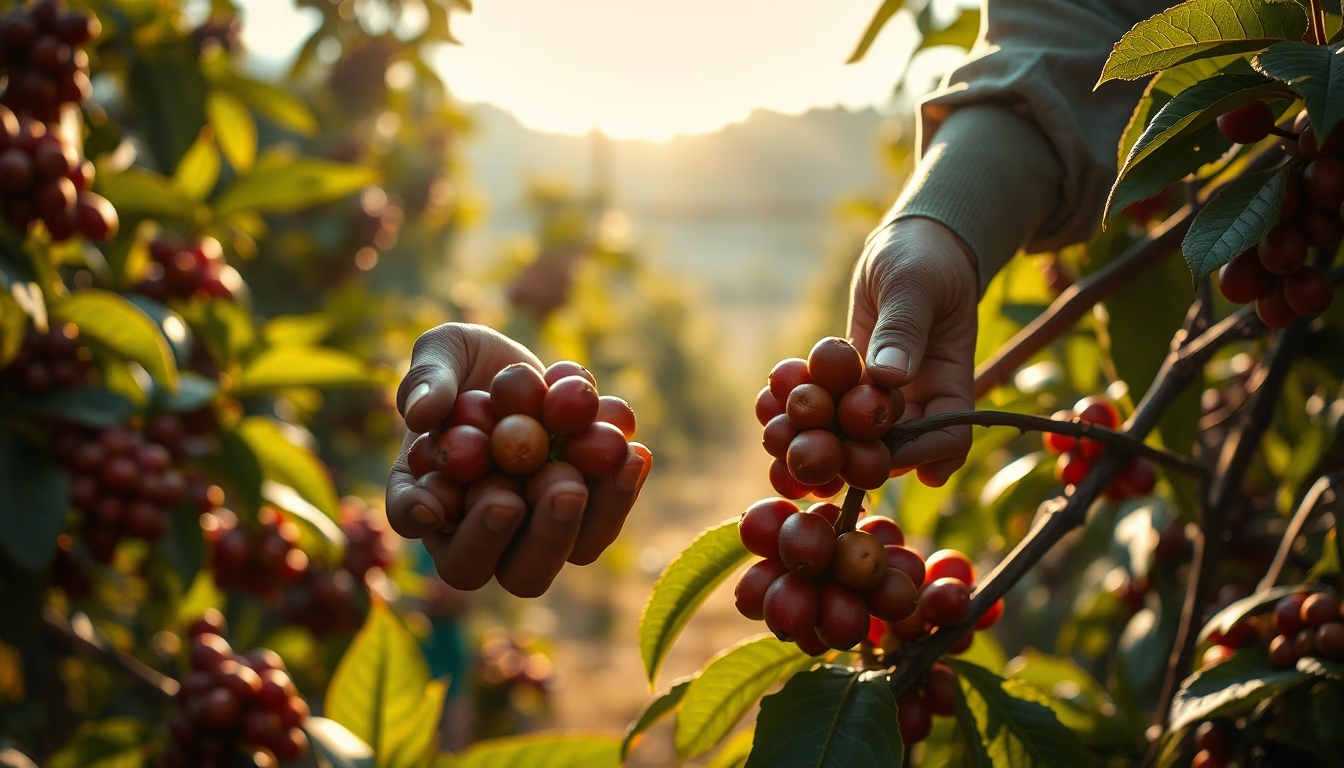
Rural worker hand-picks ripe coffee cherries on a Brazilian plantation, an essential practice for beverage quality.
About this subject
Hand-picking coffee is a tradition dating back to the 18th century in Brazil, when coffee cultivation expanded through the Paraíba Valley and later into the Cerrado Mineiro and Alta Mogiana regions. Unlike mechanical harvesting, which strips both green and ripe fruits indiscriminately, manual selection ensures only perfectly ripe cherries are harvested. This is crucial for specialty coffee production, which demands high uniformity and sweetness.
Workers, known as 'apanhadores' or 'colhedores', use a sieve or basket attached to their waist and pick each cherry individually, gently twisting it to detach from the branch. The harvest period varies by region and altitude: in Brazil, it occurs between May and September in lower areas, extending into October in highlands. Brazilian coffee farming is the world's largest, with an estimated 55 million bags produced in 2023, of which about 30% is still hand-picked, mainly on family farms and steep terrain.
Manual harvesting also has significant social impact: it generates seasonal employment for thousands of rural workers, many of whom migrate between regions during the harvest. However, mechanization is advancing, and manual labor tends to concentrate on high-quality arabica coffee plantations, where the premium price justifies the extra cost. Additionally, hand-picking reduces damage to coffee trees and allows selective harvesting, which can be repeated several times on the same plant throughout the season, picking only ripe cherries.
Frequently Asked Questions
Why is hand-picking coffee important for quality?
Hand-picking allows selective harvesting of only ripe cherries, ensuring uniform sweetness. This is critical for specialty coffees that require beans at ideal maturity.
How long does the coffee harvest last in Brazil?
The coffee harvest in Brazil runs from May to October, depending on region and altitude. In lower areas, harvest is from May to September; in highlands, it can extend into October.
What percentage of Brazilian coffee is still hand-picked?
About 30% of Brazilian coffee production is still hand-picked, mainly on family farms and steep terrain where mechanization is not feasible.
Direct URL
https://pub-c7d6a6ea828543ac903a74a341ccb2e1.r2.dev/imagens/coffee-plantation-worker-picking-ripe-coffee-cherries-by-hand-wide-late-afternoon-5.avifHow to credit
Include a visible link back to UtilizAí. Copy one of the snippets below:
<a href="https://xn--utiliza-eza.com/en/midia/imagens/coffee-plantation-worker-picking-ripe-coffee-cherries-by-hand-wide-late-afternoon-5">Coffee plantation worker picking ripe coffee cherries by hand</a> by <a href="https://xn--utiliza-eza.com">UtilizAí</a>, licensed under <a href="https://creativecommons.org/licenses/by/4.0/">CC BY 4.0</a>.
[Coffee plantation worker picking ripe coffee cherries by hand](https://xn--utiliza-eza.com/en/midia/imagens/coffee-plantation-worker-picking-ripe-coffee-cherries-by-hand-wide-late-afternoon-5) by [UtilizAí](https://xn--utiliza-eza.com), CC BY 4.0
License: CC-BY-4.0