Coffee plantation worker picking ripe coffee cherries by hand
1344×768 · AVIF · CC BY 4.0
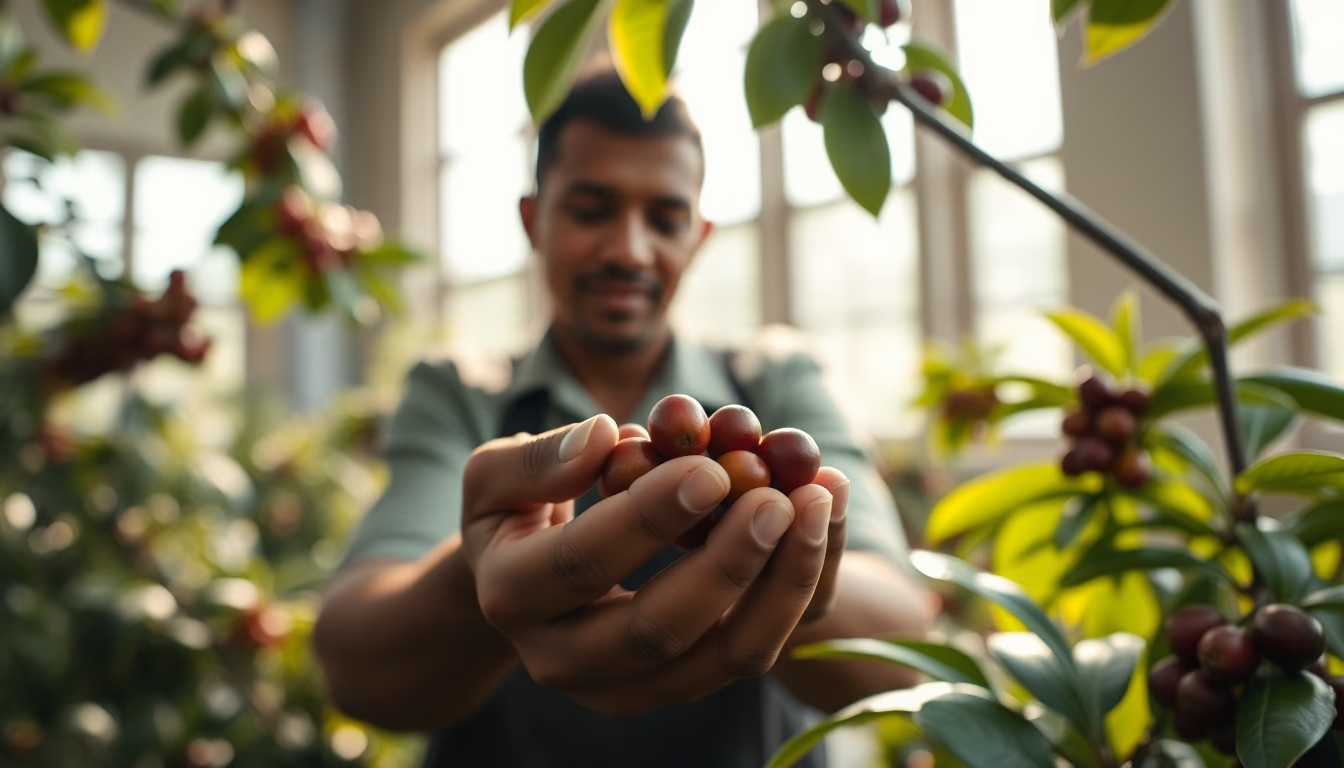
Rural worker hand-picks coffee on a Brazilian farm at dawn, a practice that preserves bean quality.
About this subject
Hand-picking coffee is a centuries-old tradition in Brazil, the world's largest coffee producer and exporter. Unlike mechanized harvesting, selective hand-picking allows workers to choose only ripe cherries, ensuring uniformity and sweetness in the final beverage. This technique is crucial for specialty coffees, which account for about 30% of national production and fetch prices up to 50% higher on the international market.
In Brazil, coffee farming is concentrated in states like Minas Gerais, Espírito Santo, São Paulo, and Bahia, which together produce over 90% of the country's output. The manual harvest takes place between May and September, depending on altitude and climate. Workers walk along rows of coffee trees with baskets or bags tied to their waists, collecting between 60 and 120 liters per day. Despite the advance of mechanization, human labor remains irreplaceable in mountainous terrain and for high-quality coffees.
The image was captured at dawn, the ideal time for harvesting because the morning dew keeps the cherries hydrated and less prone to damage. The worker wears a hat and light clothing to protect against the sun, while the straw or plastic basket collects ripe cherries, which must be processed within 24 hours to avoid unwanted fermentation. The scene evokes the historic farms of the Paraíba Valley and the Cerrado Mineiro, regions that harbor family farming traditions.
Fun fact: each coffee tree produces an average of 2 to 4 kilograms of fruit per harvest, and it takes about 5 kilograms of cherries to yield 1 kilogram of roasted coffee. Hand-picking also generates seasonal employment for thousands of rural workers, many of whom migrate between regions during the harvest, keeping alive an agricultural culture dating back to the 18th century.
Frequently Asked Questions
Why is hand-picking important for specialty coffees?
Hand-picking allows selective harvesting of only ripe cherries, avoiding unripe or overripe beans. This results in a sweeter, more uniform cup, a key requirement for specialty coffees certified by organizations like the Specialty Coffee Association (SCA).
What is the average productivity of a worker in manual coffee harvesting?
An experienced worker picks between 60 and 120 liters of coffee cherries per day, equivalent to about 30 to 60 kilograms. Productivity varies depending on plant density and terrain slope.
Which Brazilian regions are the largest coffee producers?
Minas Gerais leads production, followed by Espírito Santo, São Paulo, and Bahia. Together, these states account for over 90% of Brazil's coffee output, with highlights including the Cerrado Mineiro and Mogiana Paulista regions.
Direct URL
https://pub-c7d6a6ea828543ac903a74a341ccb2e1.r2.dev/imagens/coffee-plantation-worker-picking-ripe-coffee-cherries-by-hand-documentary-morning-6.avifHow to credit
Include a visible link back to UtilizAí. Copy one of the snippets below:
<a href="https://xn--utiliza-eza.com/en/midia/imagens/coffee-plantation-worker-picking-ripe-coffee-cherries-by-hand-documentary-morning-6">Coffee plantation worker picking ripe coffee cherries by hand</a> by <a href="https://xn--utiliza-eza.com">UtilizAí</a>, licensed under <a href="https://creativecommons.org/licenses/by/4.0/">CC BY 4.0</a>.
[Coffee plantation worker picking ripe coffee cherries by hand](https://xn--utiliza-eza.com/en/midia/imagens/coffee-plantation-worker-picking-ripe-coffee-cherries-by-hand-documentary-morning-6) by [UtilizAí](https://xn--utiliza-eza.com), CC BY 4.0
License: CC-BY-4.0