Christmas tree ornaments
1344×768 · AVIF · CC BY 4.0
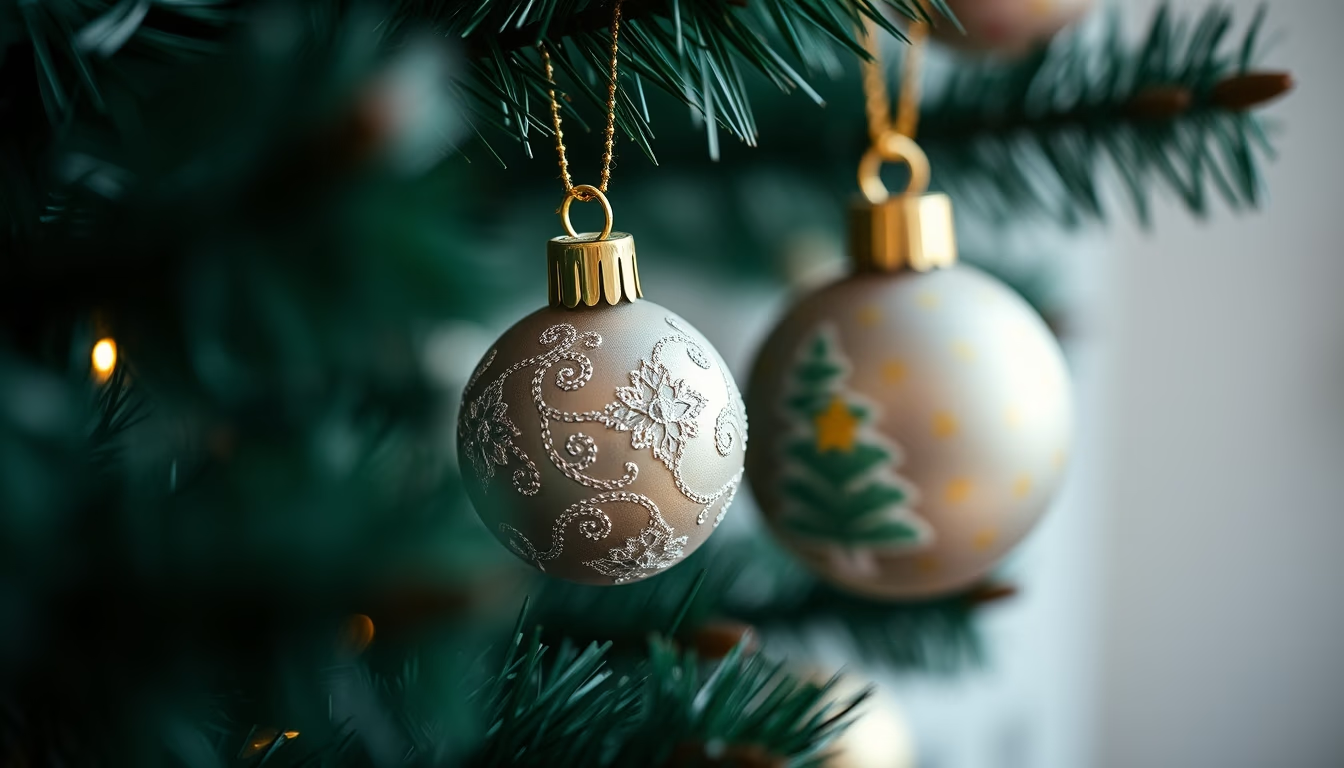
Christmas tree ornaments in close-up: discover the history and meanings behind these festive decorations.
About this subject
The tradition of decorating Christmas trees dates back to the 16th century in Germany, where families adorned pine trees with apples, nuts, and candles. These early ornaments symbolized the Tree of Paradise and the light of Christ. Over time, the practice spread across Europe, incorporating new materials. In the Thuringia region, the famous blown-glass baubles emerged, becoming a hallmark of Christmas.
Common materials for ornaments include glass, plastic, metal, wood, and fabric. Each offers distinct qualities: glass provides shine and elegance, while plastic is more durable and affordable. Colors carry deep symbolism: red represents love and Christ's blood, green symbolizes hope and eternal life, and gold denotes royalty and divine light. Shapes also hold meaning: stars recall the Star of Bethlehem, angels represent divine messengers, and bells announce Jesus' birth.
Interestingly, industrial production of ornaments is concentrated in countries like Poland and the Czech Republic, which export millions annually. Factories employ glass-blowing and hand-painting techniques preserving centuries-old traditions. Modern trends include sustainable ornaments made from recycled or natural materials, and personalized items bearing names or special dates.
In Brazil, European tradition blends with local elements. Besides classic ornaments, it's common to see ribbons, bows, and colorful baubles reflecting tropical joy. Brazilian Christmas trees gain creative touches, with handmade ornaments representing regional culture, such as miniature musical instruments or typical fruits.
Frequently Asked Questions
What is the origin of Christmas tree ornaments?
The tradition began in 16th-century Germany, where families decorated trees with apples, nuts, and candles. Later, blown-glass baubles emerged in the Thuringia region and became popular worldwide.
What do the colors of ornaments symbolize?
Red symbolizes love and Christ's blood; green represents hope and eternal life; gold denotes royalty and divine light. Other colors like blue (peace) and white (purity) are also common.
How are glass Christmas ornaments made?
Glass ornaments are hand-blown: a glass tube is heated and shaped with air and tools. They then receive an internal silver coating and external paint, sometimes hand-decorated.
Direct URL
https://pub-c7d6a6ea828543ac903a74a341ccb2e1.r2.dev/imagens/christmas-tree-ornaments-macro-closeup-p6.avifHow to credit
Include a visible link back to UtilizAí. Copy one of the snippets below:
<a href="https://xn--utiliza-eza.com/en/midia/imagens/christmas-tree-ornaments-macro-closeup-p6">Christmas tree ornaments</a> by <a href="https://xn--utiliza-eza.com">UtilizAí</a>, licensed under <a href="https://creativecommons.org/licenses/by/4.0/">CC BY 4.0</a>.
[Christmas tree ornaments](https://xn--utiliza-eza.com/en/midia/imagens/christmas-tree-ornaments-macro-closeup-p6) by [UtilizAí](https://xn--utiliza-eza.com), CC BY 4.0
License: CC-BY-4.0