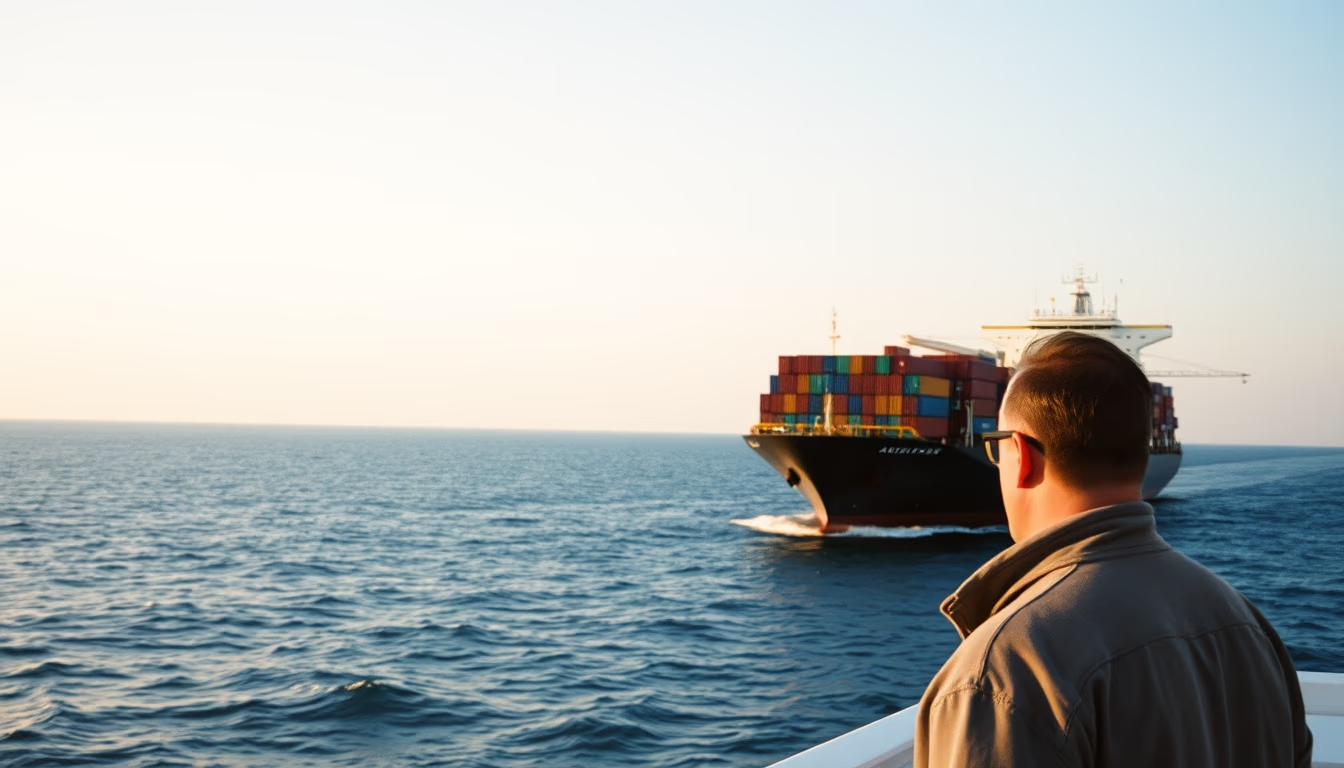
Cargo ship horizon
1344×768 · AVIF · CC BY 4.0
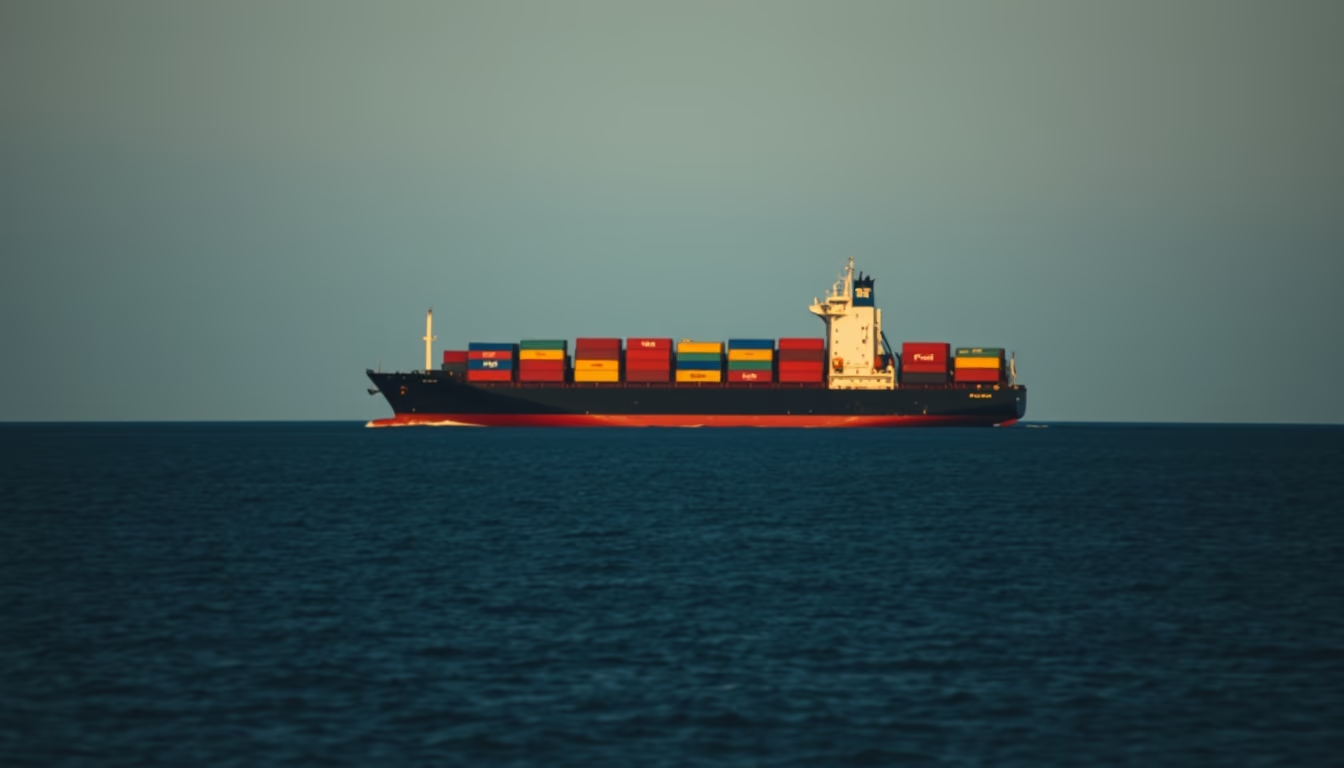
Cargo ship on the maritime horizon: the silhouette of a global trade giant that carries over 80% of the world's goods.
About this subject
Cargo ships are the backbone of international trade. About 90% of the volume of goods transported globally travels by sea, and cargo ships account for a large share of that traffic. These vessels vary enormously in size and capacity, from small coastal freighters to the giant ultra-large container ships (ULCS) that can exceed 400 meters in length and carry more than 20,000 TEUs (twenty-foot equivalent units). The largest cargo ships currently in operation, such as the HMM Algeciras and the MSC Gülsün, sail under flags of convenience but are operated by major international shipping lines.
Major shipping routes connect industrial and consumer centers. The Asia-Europe route via the Suez Canal is one of the busiest. In March 2021, the grounding of the container ship Ever Given in the Suez Canal halted global trade for six days, highlighting the world's dependence on these vessels. Another vital route is the Transpacific, linking China to West Coast ports such as Los Angeles and Long Beach. The Panama Canal is also crucial for ships crossing between the Atlantic and Pacific, though the largest vessels (Neopanamax class) are dimensioned to fit through its locks.
Cargo ship operations involve sophisticated logistics. Containers are loaded at port terminals using gantry cranes, and stowage is planned for stability and efficiency. Crews, typically 20 to 30 seafarers, work in shifts to maintain 24-hour navigation. Ships use powerful two-stroke diesel engines, but the sector faces pressure to reduce emissions; many are adopting low-sulfur fuels and experimenting with LNG propulsion or rotor sails for fuel savings.
A fun fact: the country with the largest merchant fleet by gross tonnage is Greece, controlling about 20% of the global fleet. By flag, Panama leads, followed by Liberia and the Marshall Islands. The cost of a new cargo ship can reach US$150 million for the largest models, and their typical lifespan is 20 to 25 years. The freight market is volatile, influenced by global demand, fuel prices, and idle capacity.
Frequently Asked Questions
What is the largest cargo ship in the world?
Currently, the largest cargo ships are ULCS (Ultra Large Container Ship) class, such as HMM Algeciras and MSC Gülsün, capable of carrying up to 24,000 TEUs. The longest is Ever Ace at 400 meters.
How many containers can a cargo ship carry?
Capacity varies: smaller feeder ships carry up to 3,000 TEUs, while giant ULCS exceed 23,000 TEUs. In terms of physical containers, a ship can carry between 10,000 and 20,000 units, depending on stacking.
How do cargo ships navigate on the high seas?
They use GPS navigation systems, radar, and electronic nautical charts. Routes are planned by deck officers considering currents, winds, and regulations. On the open sea, they follow established shipping lanes, such as IMO traffic separation schemes.
Direct URL
https://pub-c7d6a6ea828543ac903a74a341ccb2e1.r2.dev/imagens/cargo-ship-horizon-magazine-editorial-p0.avifHow to credit
Include a visible link back to UtilizAí. Copy one of the snippets below:
<a href="https://xn--utiliza-eza.com/en/midia/imagens/cargo-ship-horizon-magazine-editorial-p0">Cargo ship horizon</a> by <a href="https://xn--utiliza-eza.com">UtilizAí</a>, licensed under <a href="https://creativecommons.org/licenses/by/4.0/">CC BY 4.0</a>.
[Cargo ship horizon](https://xn--utiliza-eza.com/en/midia/imagens/cargo-ship-horizon-magazine-editorial-p0) by [UtilizAí](https://xn--utiliza-eza.com), CC BY 4.0
License: CC-BY-4.0