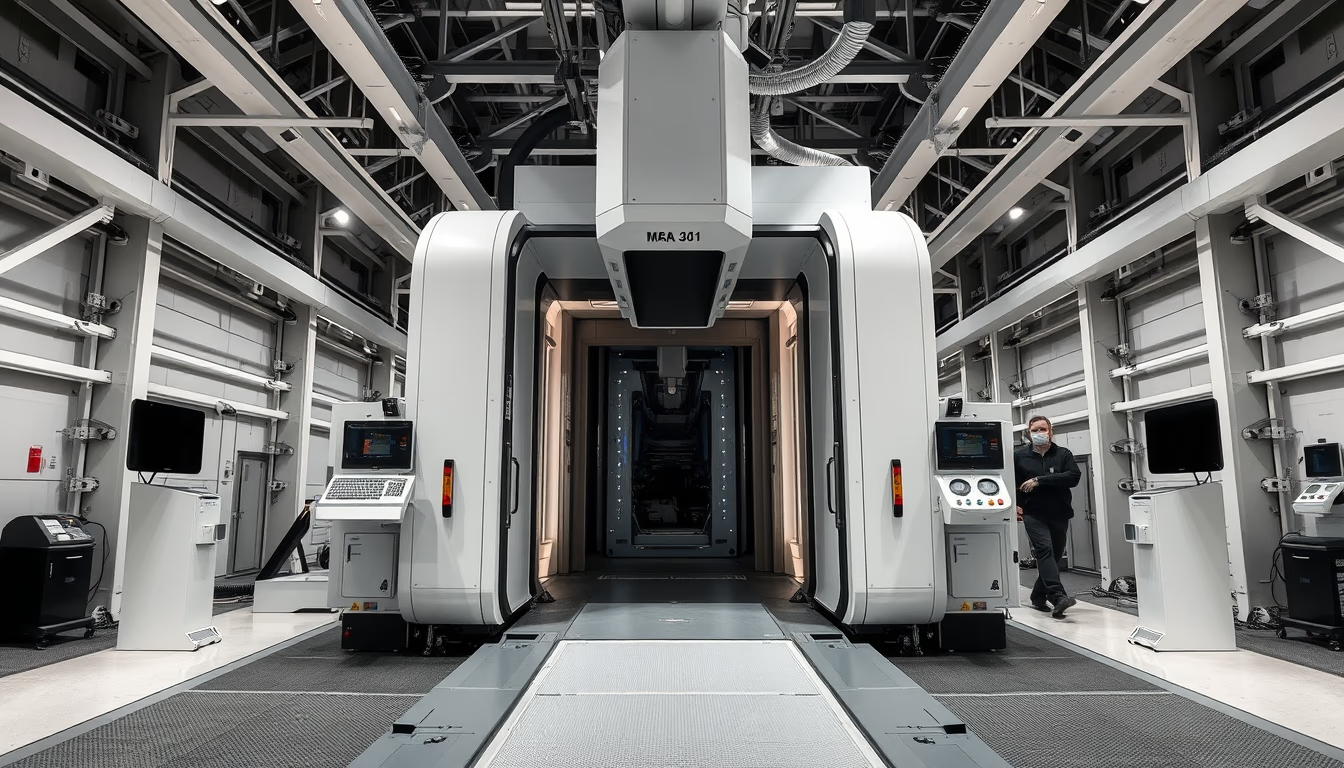
Cardiology heart monitor
1344×768 · AVIF · CC BY 4.0
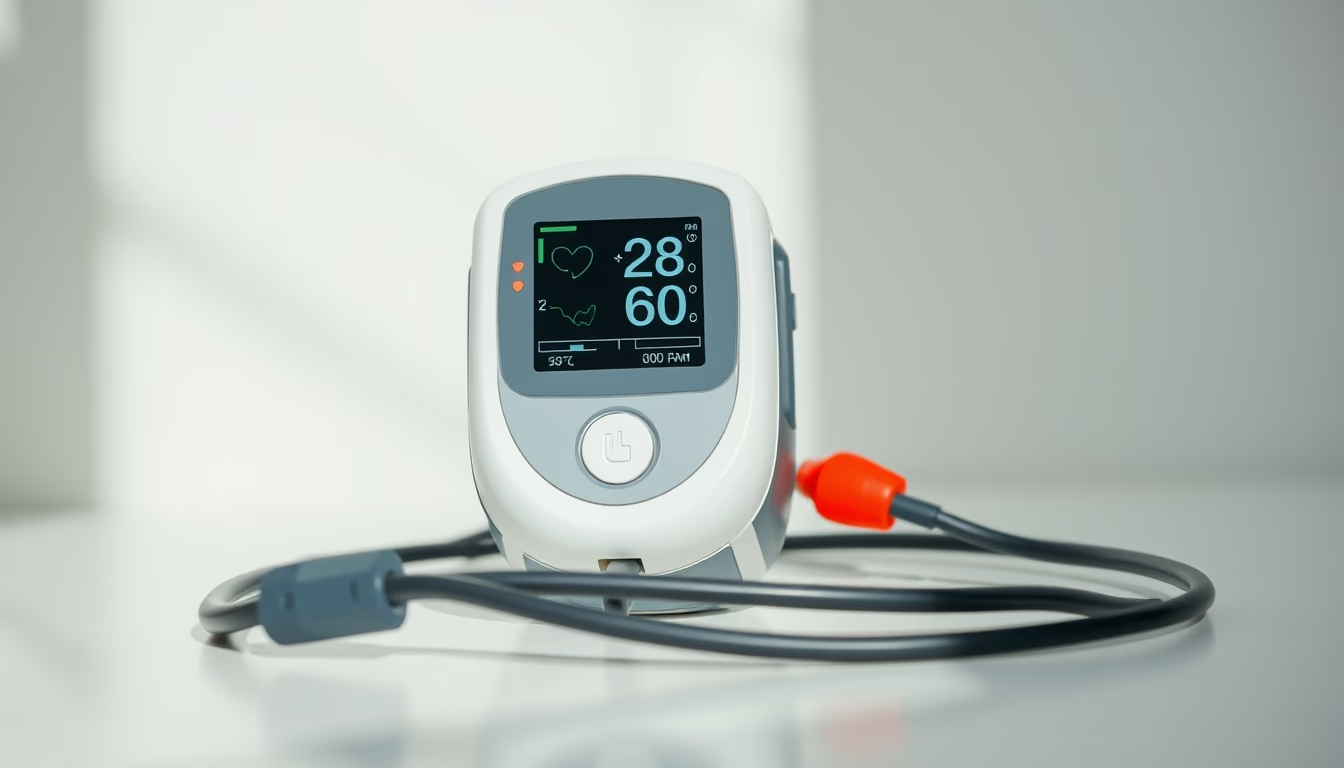
Monitores cardíacos são dispositivos essenciais na cardiologia moderna, registrando a atividade elétrica do coração para diagnóstico e acompanhamento de condições como arritmias e insuficiência cardíaca.
Sobre o tema
Monitores cardíacos, também conhecidos como monitores de ECG (eletrocardiograma), são instrumentos médicos que captam e exibem continuamente a atividade elétrica do coração. Eles são amplamente utilizados em hospitais, clínicas e até em ambientes domiciliares para pacientes com condições cardíacas crônicas ou em recuperação pós-cirúrgica. O dispositivo registra as variações elétricas que ocorrem durante cada batimento cardíaco, gerando um traçado que permite identificar anomalias como arritmias, isquemia ou distúrbios de condução. Os primeiros modelos de monitor cardíaco surgiram na década de 1940, com o desenvolvimento do eletrocardiógrafo por Willem Einthoven, que lhe rendeu o Prêmio Nobel de Medicina em 1924. Desde então, a tecnologia evoluiu drasticamente: dos grandes aparelhos de tubo de raios catódicos para telas LCD de alta definição, com capacidade de armazenamento digital e transmissão remota de dados. Atualmente, existem monitores portáteis tipo Holter, que registram 24 a 48 horas de atividade cardíaca, e dispositivos implantáveis como os loop recorders, que monitoram o coração por anos. A integração com inteligência artificial permite a detecção precoce de padrões anormais, como fibrilação atrial, reduzindo o risco de AVC. No Brasil, o uso de monitores cardíacos é regulamentado pela ANVISA, e hospitais como o Instituto do Coração (InCor) em São Paulo são referência no emprego desses equipamentos. Além do ECG, os monitores modernos medem frequência cardíaca, saturação de oxigênio (oximetria), e até parâmetros hemodinâmicos não invasivos. A manutenção da calibração e a correta colocação dos eletrodos são cruciais para um traçado preciso, evitando artefatos que podem simular patologias. A tendência para 2026 é a miniaturização e a conectividade total com prontuários eletrônicos, permitindo que médicos acompanhem pacientes remotamente via telemedicina.
Perguntas frequentes
Qual a diferença entre um monitor cardíaco e um eletrocardiograma convencional?
O monitor cardíaco fornece uma leitura contínua em tempo real da atividade elétrica do coração, enquanto o eletrocardiograma (ECG) convencional é um exame pontual, com registro por apenas alguns segundos. O monitor é ideal para detectar arritmias intermitentes ou monitorar pacientes internados.
Como funciona um monitor Holter?
O monitor Holter é um dispositivo portátil que registra o ECG por 24 a 48 horas. O paciente usa eletrodos no peito conectados a um gravador, mantendo um diário de sintomas. Após o período, o médico analisa o traçado para identificar anormalidades que podem não aparecer em um ECG de repouso.
Os monitores cardíacos modernos podem ser usados em telemedicina?
Sim. Muitos monitores atuais possuem conectividade Bluetooth ou celular, transmitindo dados em nuvem para plataformas de telemedicina. Isso permite que cardiologistas monitorem pacientes remotamente, especialmente em áreas rurais ou durante pandemias.
URL direta
https://pub-c7d6a6ea828543ac903a74a341ccb2e1.r2.dev/imagens/cardiology-heart-monitor-minimalist-composition-p2.avifComo creditar
Inclua um link visível de volta pro UtilizAí. Copie um dos snippets abaixo:
<a href="https://xn--utiliza-eza.com/midia/imagens/cardiology-heart-monitor-minimalist-composition-p2">Cardiology heart monitor</a> by <a href="https://xn--utiliza-eza.com">UtilizAí</a>, licensed under <a href="https://creativecommons.org/licenses/by/4.0/">CC BY 4.0</a>.
[Cardiology heart monitor](https://xn--utiliza-eza.com/midia/imagens/cardiology-heart-monitor-minimalist-composition-p2) by [UtilizAí](https://xn--utiliza-eza.com), CC BY 4.0
Licença: CC-BY-4.0