Cape hatteras lighthouse stripe
1344×768 · AVIF · CC BY 4.0

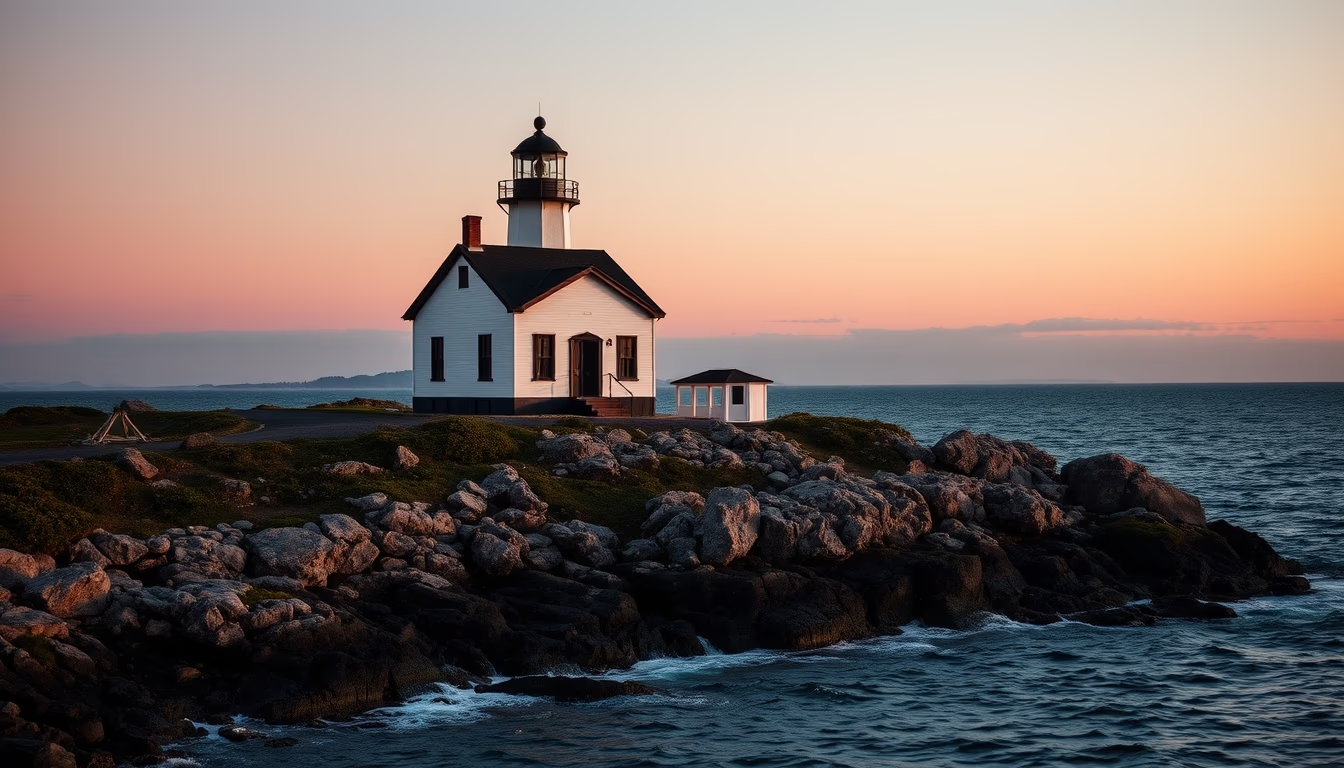
The Cape Hatteras Lighthouse, the tallest brick lighthouse in the US, is renowned for its iconic black and white diagonal stripes, a landmark on the North Carolina coast.
About this subject
The Cape Hatteras Lighthouse, situated on Hatteras Island off the coast of North Carolina, is one of the most recognizable lighthouses in the United States. Built in 1870, it replaced an earlier lighthouse from 1803 that had been compromised by coastal erosion. At 63 meters tall, it is the tallest brick lighthouse in the country and the second tallest brick lighthouse in the world. Its masonry conical structure is painted with black and white diagonal stripes, a unique pattern that not only makes it visually striking but also serves as a daytime navigational aid, allowing ships to easily identify it. The striped design, adopted in 1873, follows typical American lighthouse schemes but with a helical twist that enhances its silhouette.
The lighthouse played a crucial role in navigation along the treacherous area known as the Graveyard of the Atlantic, where hundreds of shipwrecks occurred due to currents and storms. Its light, originally fueled by whale oil and later by electric lamps, has a range of 24 nautical miles. In 1999, in one of the largest engineering operations of its kind, the lighthouse was moved 880 meters inland to protect it from coastal erosion, a process that took 23 days and cost $9.8 million.
The stripes have practical significance: black and white create a visual contrast that stands out against the sky and landscape. Interestingly, the pattern is not perfectly symmetrical; the width of the stripes varies to fit the tower's conical shape. The lighthouse is a symbol of North Carolina and appears on stamps, coins, and countless photographs. Today, it is a popular tourist attraction, where visitors can climb 257 steps to the top for panoramic views of the Atlantic Ocean and Cape Hatteras National Seashore.
Frequently Asked Questions
Why does the Cape Hatteras Lighthouse have diagonal stripes?
The black and white diagonal stripes serve as a daytime navigational aid, allowing ships to identify the lighthouse from afar. The diagonal pattern also creates a visual contrast that stands out against the sky and coastal landscape.
How many stripes does the lighthouse have?
The Cape Hatteras Lighthouse has four black stripes and four white stripes, arranged in a helical pattern. The width of the stripes varies to fit the tower's conical shape.
Was the lighthouse moved? Why?
Yes, in 1999 the lighthouse was moved 880 meters inland due to the threat of coastal erosion. The operation was necessary because the advancing sea was dangerously close to the base of the lighthouse.
Direct URL
https://pub-c7d6a6ea828543ac903a74a341ccb2e1.r2.dev/imagens/cape-hatteras-lighthouse-stripe-studio-still-life-fresh7.avifHow to credit
Include a visible link back to UtilizAí. Copy one of the snippets below:
<a href="https://xn--utiliza-eza.com/en/midia/imagens/cape-hatteras-lighthouse-stripe-studio-still-life-fresh7">Cape hatteras lighthouse stripe</a> by <a href="https://xn--utiliza-eza.com">UtilizAí</a>, licensed under <a href="https://creativecommons.org/licenses/by/4.0/">CC BY 4.0</a>.
[Cape hatteras lighthouse stripe](https://xn--utiliza-eza.com/en/midia/imagens/cape-hatteras-lighthouse-stripe-studio-still-life-fresh7) by [UtilizAí](https://xn--utiliza-eza.com), CC BY 4.0
License: CC-BY-4.0