Caliper vernier brass
1344×768 · AVIF · CC BY 4.0
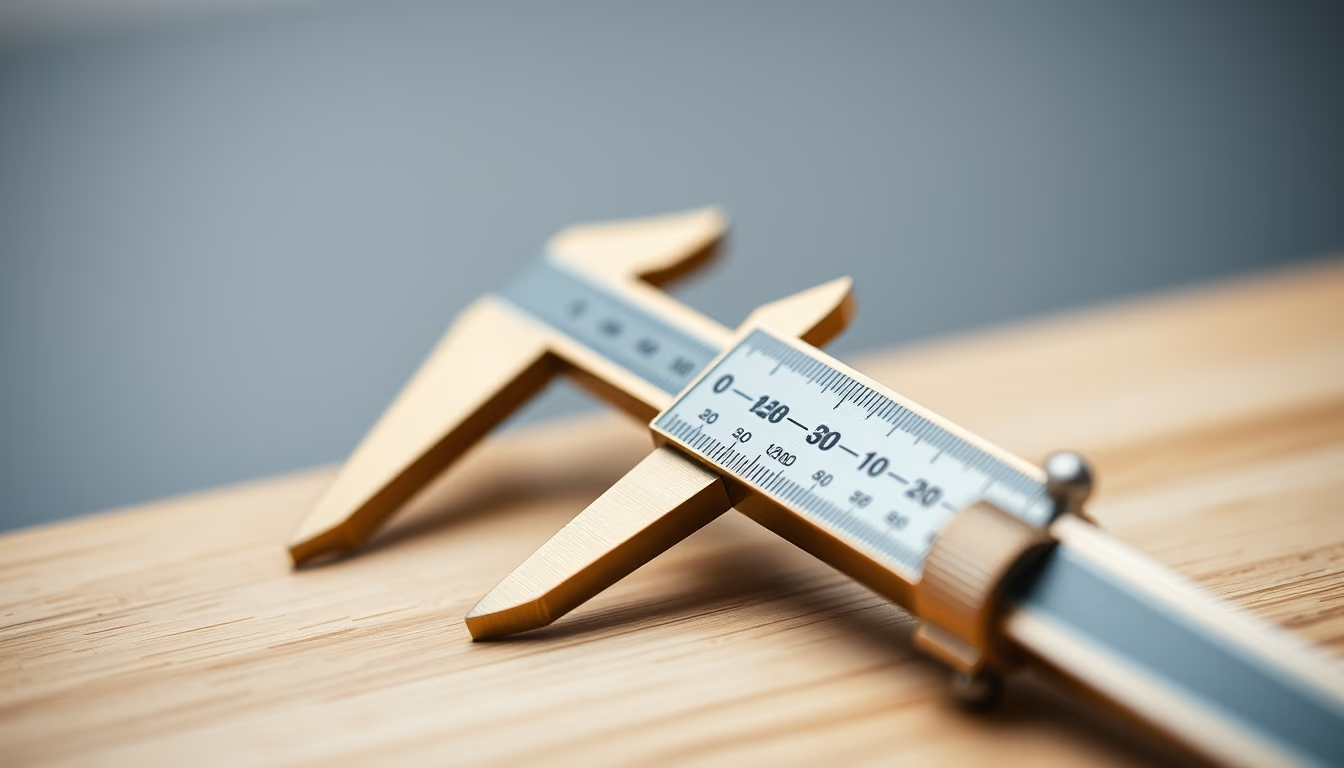
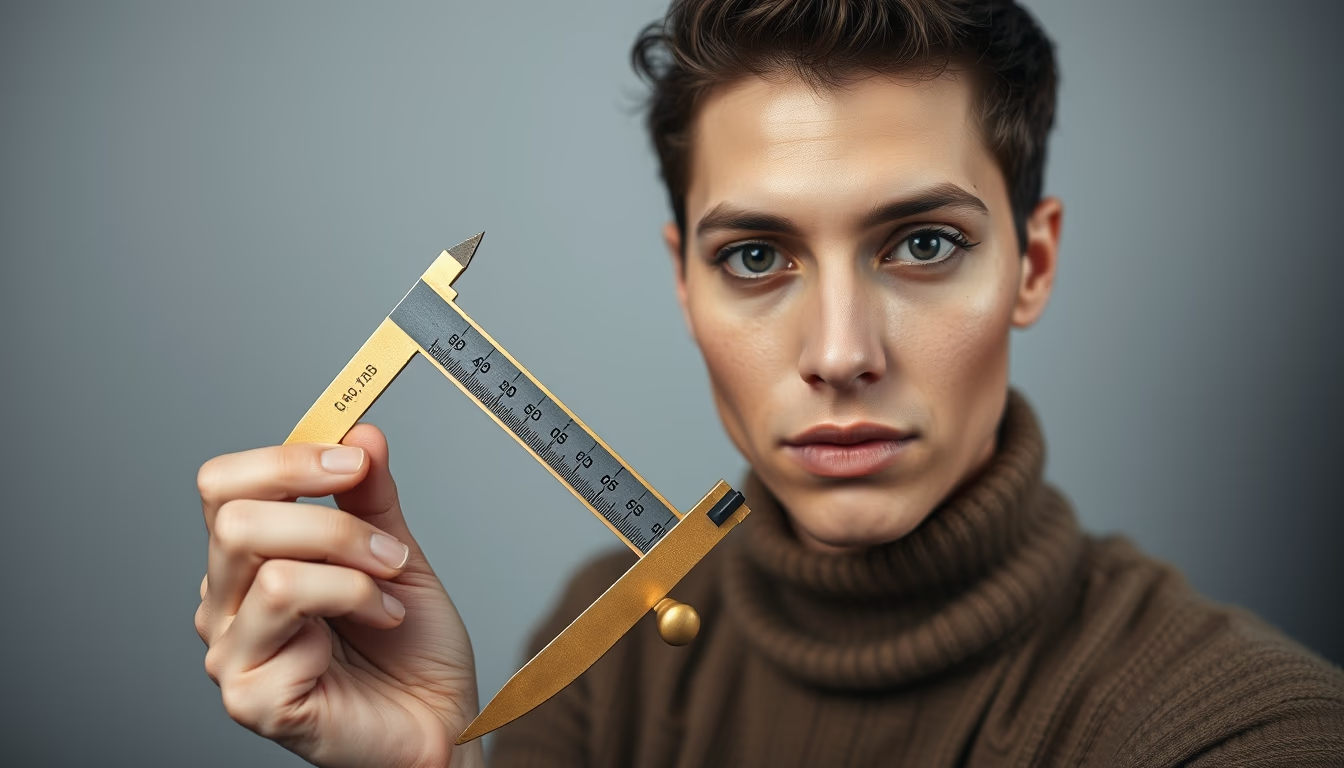
Brass vernier caliper, a precision instrument for measuring internal, external, and depth dimensions.
About this subject
The caliper is a linear measuring instrument used to accurately determine internal, external, and depth dimensions of objects. Its invention is credited to French mathematician Pierre Vernier (1580-1637), who developed the auxiliary scale that bears his name. The vernier or nonius scale allows readings with precision up to 0.02 mm, depending on graduation. Vintage models like this brass one were common in machine shops and laboratories before digital calipers became widespread.
Brass, an alloy of copper and zinc, was the preferred material for its corrosion resistance and machinability, as well as providing smooth sliding between the jaws. This caliper has a travel of approximately 150 mm, with scales engraved directly onto the metal. The fixed and movable jaws measure external dimensions, while the upper tips measure internal diameters. The depth rod, located at the opposite end, is used for measuring recesses.
Calibration of instruments like this was done manually, and periodic maintenance was required to prevent play that would compromise accuracy. With the advent of industrialization in the 19th century, brass calipers became essential tools in the production of interchangeable parts. Today, they are valued by collectors and antique tool enthusiasts, representing a milestone in the history of metrology.
Interestingly, the term 'nonius' derives from the nickname of Portuguese mathematician Pedro Nunes (1502-1578), who created a precursor to the system. The name 'vernier' is more common in English-speaking countries. Both terms are recognized in Brazil, but 'nônio' is preferred in technical literature.
Frequently Asked Questions
How does a vernier scale on a caliper work?
The vernier scale has divisions slightly smaller than the main scale. By aligning one of the vernier marks with a mark on the fixed scale, you read the corresponding fraction of a millimeter, enabling precise measurements.
What is the difference between a brass caliper and a stainless steel one?
Brass calipers are more prone to wear but offer smooth sliding and do not rust. Stainless steel calipers are harder and more durable, but can corrode in humid environments if not treated.
How to maintain an antique brass caliper?
Keep it clean and lightly lubricated with fine oil. Avoid excessive humidity. Store in a padded case. Do not force the jaws and recalibrate periodically if in use.
Direct URL
https://pub-c7d6a6ea828543ac903a74a341ccb2e1.r2.dev/imagens/caliper-vernier-brass-tilt-shift-miniature-fresh13.avifHow to credit
Include a visible link back to UtilizAí. Copy one of the snippets below:
<a href="https://xn--utiliza-eza.com/en/midia/imagens/caliper-vernier-brass-tilt-shift-miniature-fresh13">Caliper vernier brass</a> by <a href="https://xn--utiliza-eza.com">UtilizAí</a>, licensed under <a href="https://creativecommons.org/licenses/by/4.0/">CC BY 4.0</a>.
[Caliper vernier brass](https://xn--utiliza-eza.com/en/midia/imagens/caliper-vernier-brass-tilt-shift-miniature-fresh13) by [UtilizAí](https://xn--utiliza-eza.com), CC BY 4.0
License: CC-BY-4.0