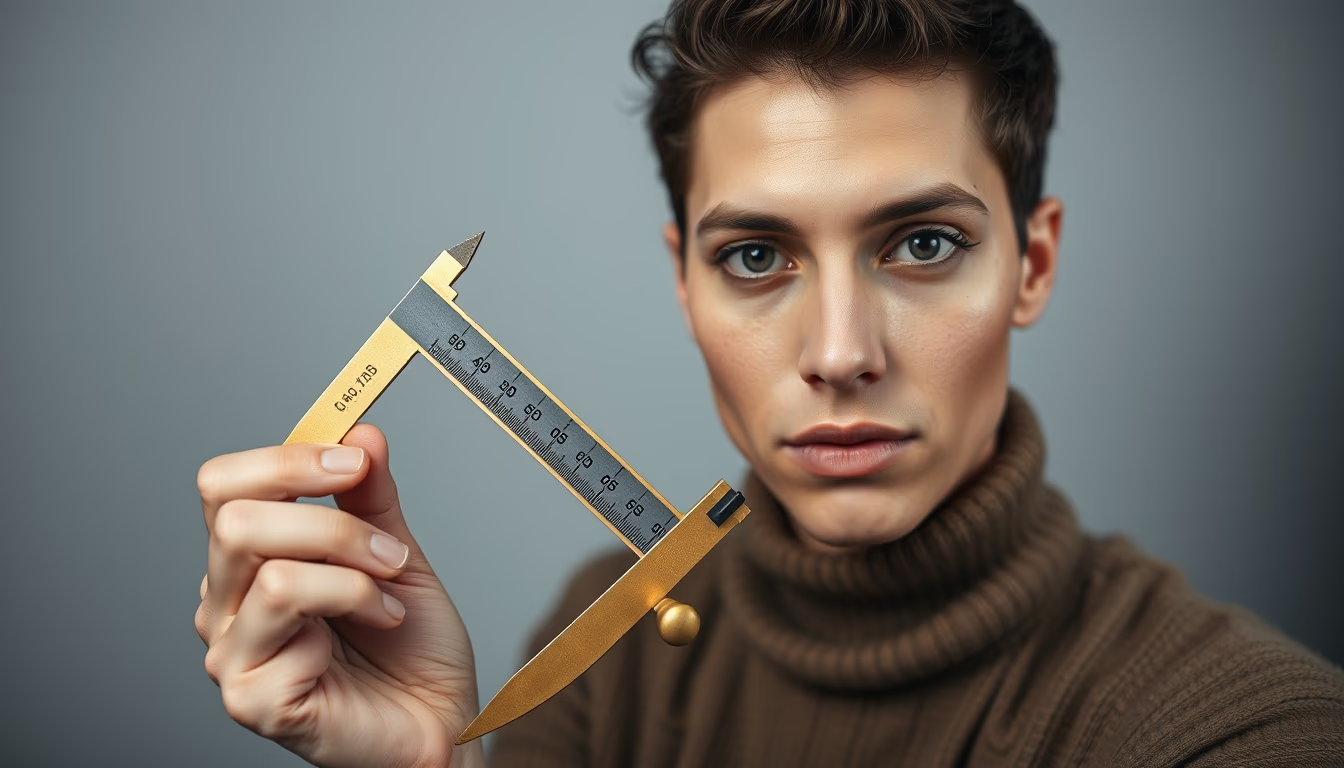
Caliper vernier brass
1344×768 · AVIF · CC BY 4.0
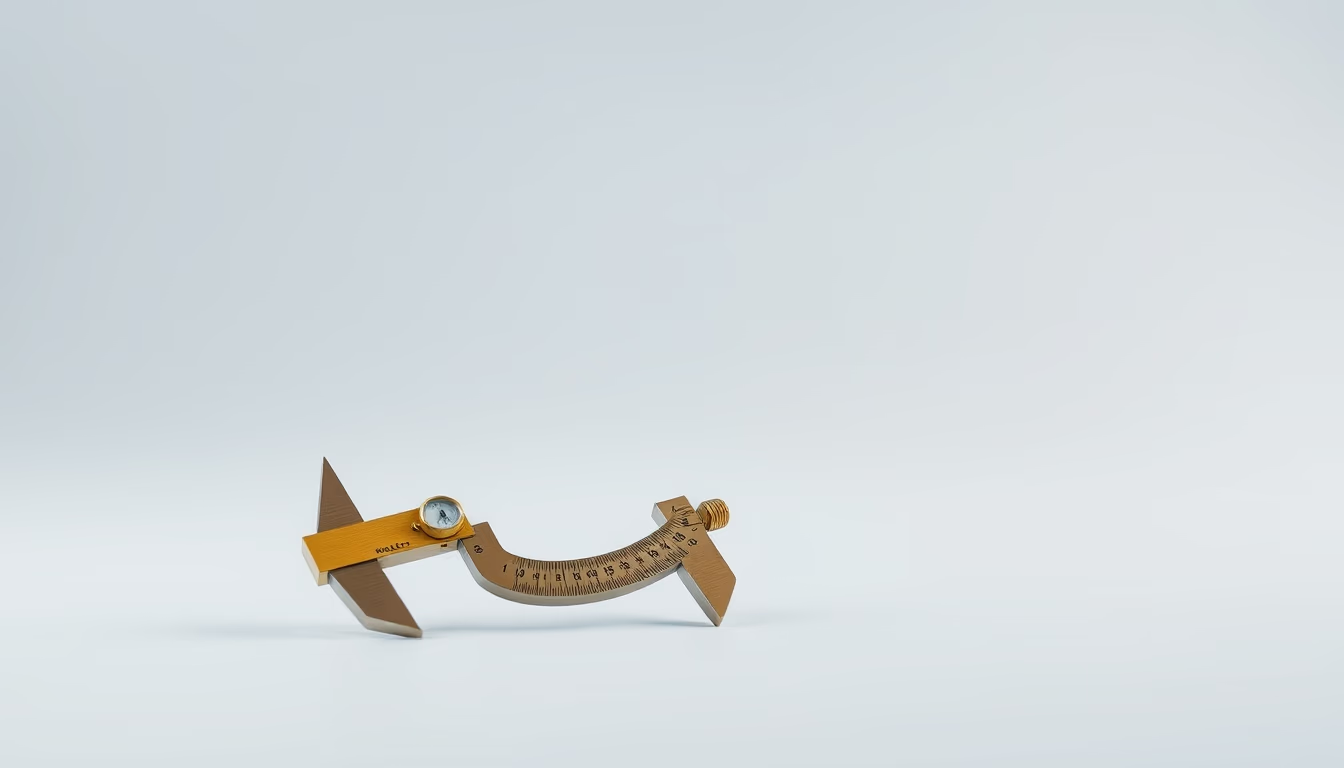
The brass vernier caliper is a precision measuring instrument, invented in the 17th century, used to measure internal, external and depth dimensions.
About this subject
The vernier caliper, also known as a vernier scale caliper, was invented by French mathematician Pierre Vernier in 1631. This instrument enables far more precise measurements than a common ruler, with typical resolutions of 0.02 mm or 0.001 inch. The brass model, common in antique pieces, stands out for its dimensional stability and corrosion resistance, being widely used in machine shops and metrology laboratories.
The operating principle relies on the vernier scale, a sliding auxiliary scale with divisions slightly smaller than those of the main scale. By aligning the marks, the user can read fractions of the smallest division. For example, a vernier scale with 50 divisions covers 49 mm of the main scale, allowing readings of 0.02 mm. This technique was a crucial advancement for the Industrial Revolution, enabling interchangeable parts.
Beyond the traditional form, there are variations such as depth calipers and height calipers. While digital models have become popular, analog brass calipers are still valued by collectors and professionals who prefer mechanical reliability without batteries. Maintenance involves cleaning with isopropyl alcohol and light lubrication of the slides.
Interestingly, the term vernier also names a famous moon of Saturn, discovered in 1989, in honor of the inventor. To ensure accuracy, the caliper should be periodically calibrated using gauge blocks, and reading requires care to avoid parallax errors.
Frequently Asked Questions
How does a vernier caliper work?
A vernier caliper uses a sliding auxiliary scale (vernier) that aligns with the main scale. By matching the lines, you can read fractions of the smallest division, increasing measurement precision.
What is the difference between digital and analog calipers?
Digital calipers have an electronic display and are easier to read but require batteries. Analog (vernier) calipers are mechanical, more durable, and do not need power, making them preferable in environments where battery failure is a concern.
How to calibrate a brass caliper?
Calibration is performed using gauge blocks of known dimensions. The caliper reading is checked at various points and zero is adjusted if needed. Annual calibration by accredited laboratories is recommended.
Direct URL
https://pub-c7d6a6ea828543ac903a74a341ccb2e1.r2.dev/imagens/caliper-vernier-brass-studio-still-life-fresh9.avifHow to credit
Include a visible link back to UtilizAí. Copy one of the snippets below:
<a href="https://xn--utiliza-eza.com/en/midia/imagens/caliper-vernier-brass-studio-still-life-fresh9">Caliper vernier brass</a> by <a href="https://xn--utiliza-eza.com">UtilizAí</a>, licensed under <a href="https://creativecommons.org/licenses/by/4.0/">CC BY 4.0</a>.
[Caliper vernier brass](https://xn--utiliza-eza.com/en/midia/imagens/caliper-vernier-brass-studio-still-life-fresh9) by [UtilizAí](https://xn--utiliza-eza.com), CC BY 4.0
License: CC-BY-4.0