Caliper vernier brass
1344×768 · AVIF · CC BY 4.0
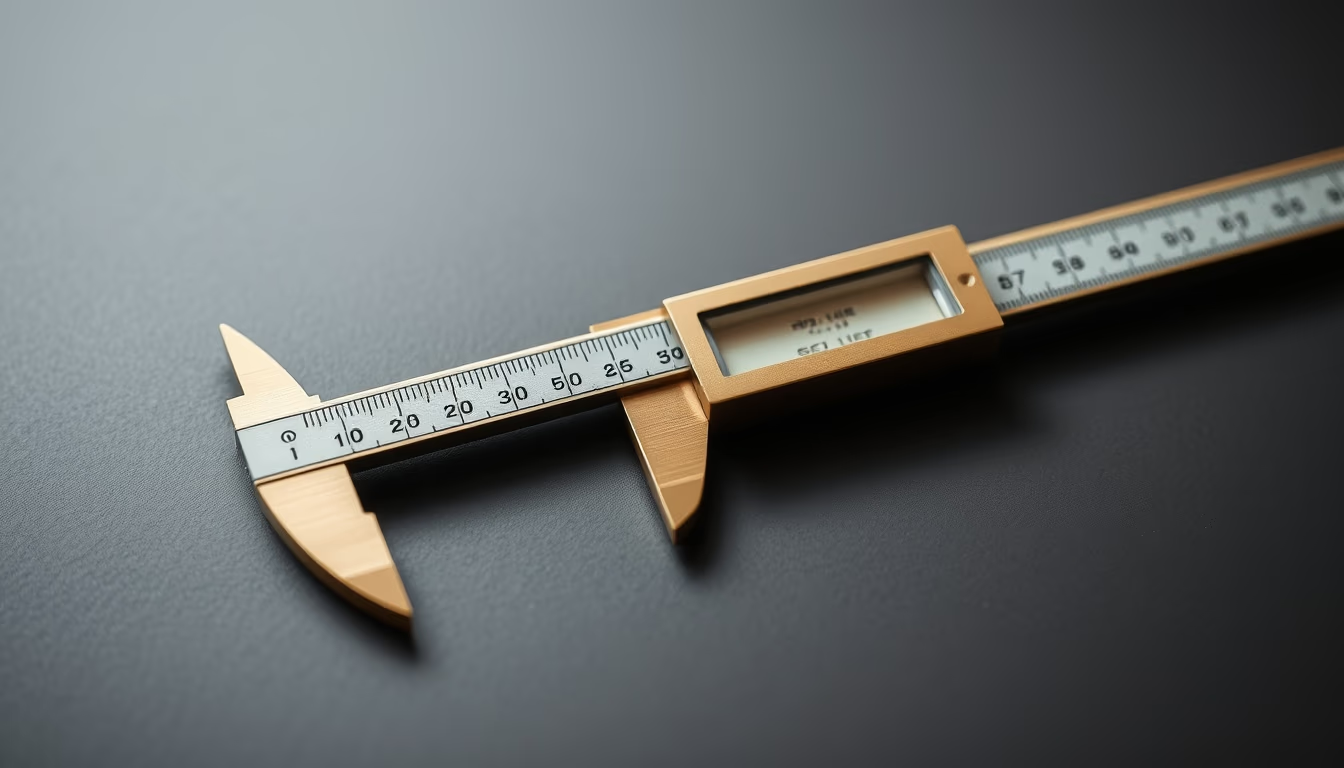
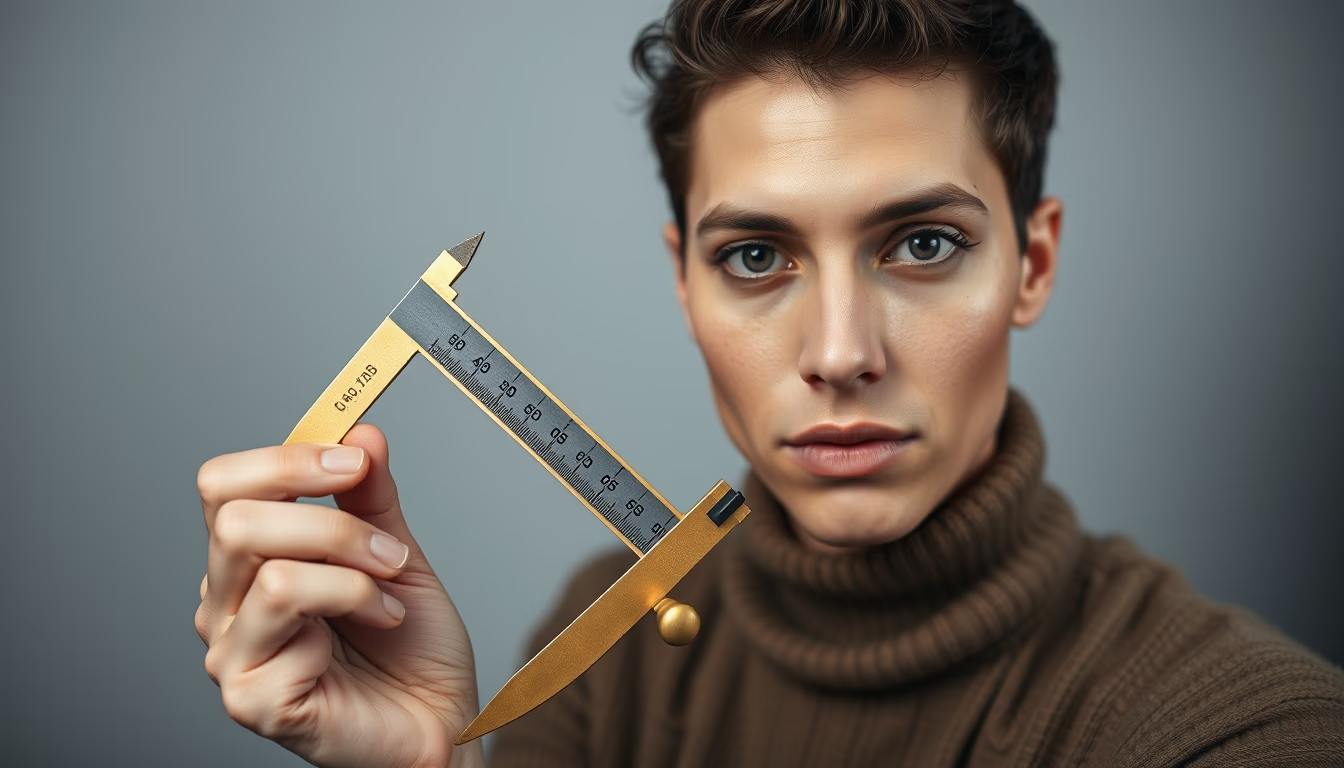
The brass vernier caliper is a precision measuring instrument that marked the history of industrial metrology.
About this subject
The brass vernier caliper is a classic precision measuring tool, widely used before digital instruments became popular. Its construction from brass, an alloy of copper and zinc, offered corrosion resistance and dimensional stability, qualities essential for calibrating mechanical parts. The vernier scale, invented by French mathematician Pierre Vernier in the 17th century, allows readings with precision up to 0.02 millimeters (or 0.001 inches), a significant advancement for its time.
Historically, brass calipers were crucial during the Industrial Revolution, especially in manufacturing steam engines, locomotives, and armaments. Machine shops and railroads used them to verify dimensions of shafts, cylinders, and gears. Brass also avoided sparks in flammable environments, making it preferred in coal mines.
Interestingly, the vernier scale works on a nonius principle: a movable scale with divisions slightly smaller than those of the fixed scale, allowing interpolation of fractions. Antique calipers often bore marks from renowned manufacturers like Starrett, Mitutoyo, or Brown & Sharpe, each with their own engraving standards. The polished brass finish not only protected against oxidation but also facilitated cleaning in oily environments.
Over time, the brass caliper was replaced by stainless steel versions and later by digital models with LCD displays. However, it is still valued by collectors and restorers of old machinery, who appreciate its vintage aesthetics and mechanical reliability. In some metrology courses, manual vernier use is taught to understand the fundamentals of scale-based measurement.
Frequently Asked Questions
What is the precision of a brass vernier caliper?
Typical precision is 0.02 mm (or 0.001 inches), depending on the number of divisions on the vernier scale. More refined models can achieve 0.01 mm.
Why was brass used in antique calipers?
Brass was chosen for its corrosion resistance, low spark production (safety in flammable environments), dimensional stability, and easier machinability compared to steel at the time.
How do you read the vernier scale on a caliper?
The reading combines the fixed scale (millimeters or inches) with the vernier scale. The zero of the vernier indicates whole millimeters; the vernier line that aligns with a fixed scale line gives the fraction.
Direct URL
https://pub-c7d6a6ea828543ac903a74a341ccb2e1.r2.dev/imagens/caliper-vernier-brass-minimalist-composition-fresh0.avifHow to credit
Include a visible link back to UtilizAí. Copy one of the snippets below:
<a href="https://xn--utiliza-eza.com/en/midia/imagens/caliper-vernier-brass-minimalist-composition-fresh0">Caliper vernier brass</a> by <a href="https://xn--utiliza-eza.com">UtilizAí</a>, licensed under <a href="https://creativecommons.org/licenses/by/4.0/">CC BY 4.0</a>.
[Caliper vernier brass](https://xn--utiliza-eza.com/en/midia/imagens/caliper-vernier-brass-minimalist-composition-fresh0) by [UtilizAí](https://xn--utiliza-eza.com), CC BY 4.0
License: CC-BY-4.0