Caliper vernier brass
1344×768 · AVIF · CC BY 4.0
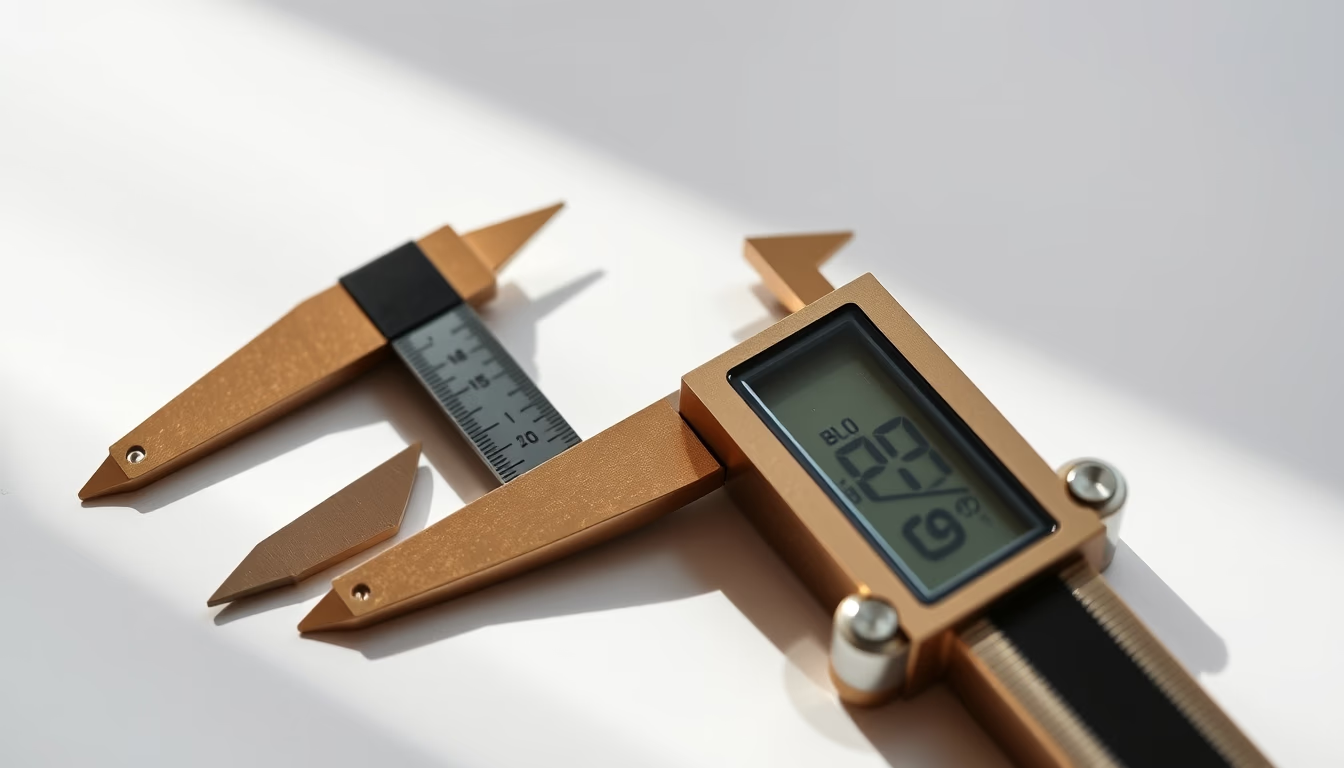
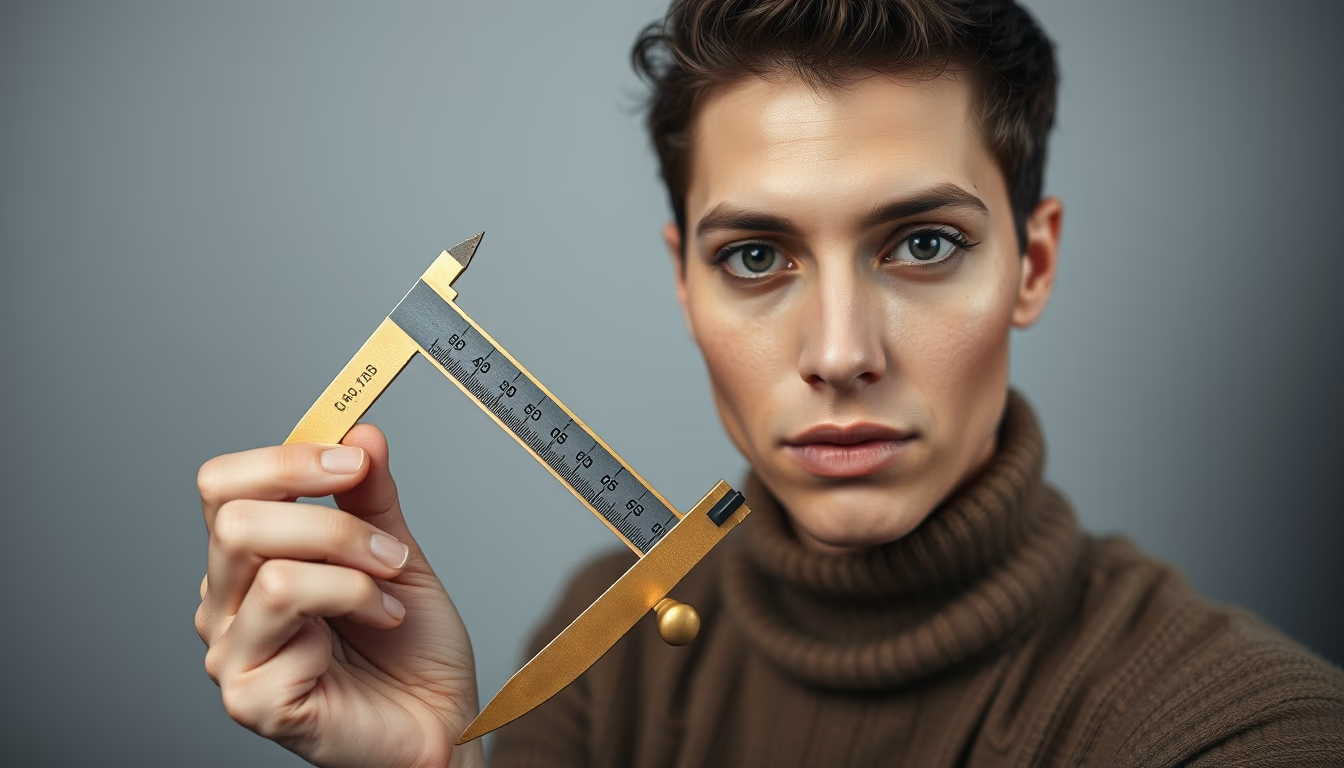
The brass vernier caliper is a high precision measuring instrument that revolutionized mechanics and metallurgy since the 19th century.
About this subject
The vernier caliper, invented by French mathematician Pierre Vernier in 1631, only became a practical measuring tool in the 19th century with advances in metallurgy and mechanical manufacturing. The brass version was particularly valued for its corrosion resistance and dimensional stability, being widely used in machine shops and precision laboratories.
This instrument can measure internal, external, and depth dimensions with precision up to 0.02 mm or 0.001 inch, depending on the scale. The operating principle relies on the vernier scale, a secondary scale that slides over the main scale, enabling fractional readings by visual interpolation. Brass combined with stainless steel for the measuring tips ensured durability and accuracy even in humid environments.
In engineering history, the vernier caliper was essential for the standardization of interchangeable parts, especially in the automotive industry and arms manufacturing. Antique brass models are now collectible items, appreciated for their aesthetics and still functional precision. Renowned brands such as Mitutoyo, Brown & Sharpe, and Starrett produced emblematic versions that marked an era.
Interestingly, the word 'vernier' comes from its inventor's surname, but in many languages the term 'nonius' (from mathematician Pedro Nunes) is used as a synonym for the movable scale. The brass vernier caliper represents a link between the art of metalworking and precision engineering, standing as a testament to the evolution of metrology.
Frequently Asked Questions
What is the difference between a vernier caliper and a digital caliper?
A vernier caliper uses graduated scales for manual reading, while a digital caliper has an electronic display that shows the measurement directly, offering greater speed and eliminating parallax errors. Brass vernier calipers are more traditional and require no batteries.
How do you read a vernier caliper in fractional inches?
The reading combines the main inch scale with the vernier, which typically has 8 divisions for 1/128 of an inch or 16 for 1/256. The zero on the vernier indicates the whole inch; the vernier line that aligns with a main scale line gives the fraction.
Why were old vernier calipers made of brass?
Brass was chosen for its corrosion resistance, low coefficient of thermal expansion, and ease of machining. This ensured lasting precision even in humid environments or with temperature variations.
Direct URL
https://pub-c7d6a6ea828543ac903a74a341ccb2e1.r2.dev/imagens/caliper-vernier-brass-magazine-editorial-fresh2.avifHow to credit
Include a visible link back to UtilizAí. Copy one of the snippets below:
<a href="https://xn--utiliza-eza.com/en/midia/imagens/caliper-vernier-brass-magazine-editorial-fresh2">Caliper vernier brass</a> by <a href="https://xn--utiliza-eza.com">UtilizAí</a>, licensed under <a href="https://creativecommons.org/licenses/by/4.0/">CC BY 4.0</a>.
[Caliper vernier brass](https://xn--utiliza-eza.com/en/midia/imagens/caliper-vernier-brass-magazine-editorial-fresh2) by [UtilizAí](https://xn--utiliza-eza.com), CC BY 4.0
License: CC-BY-4.0