Cable car alpine
1344×768 · AVIF · CC BY 4.0
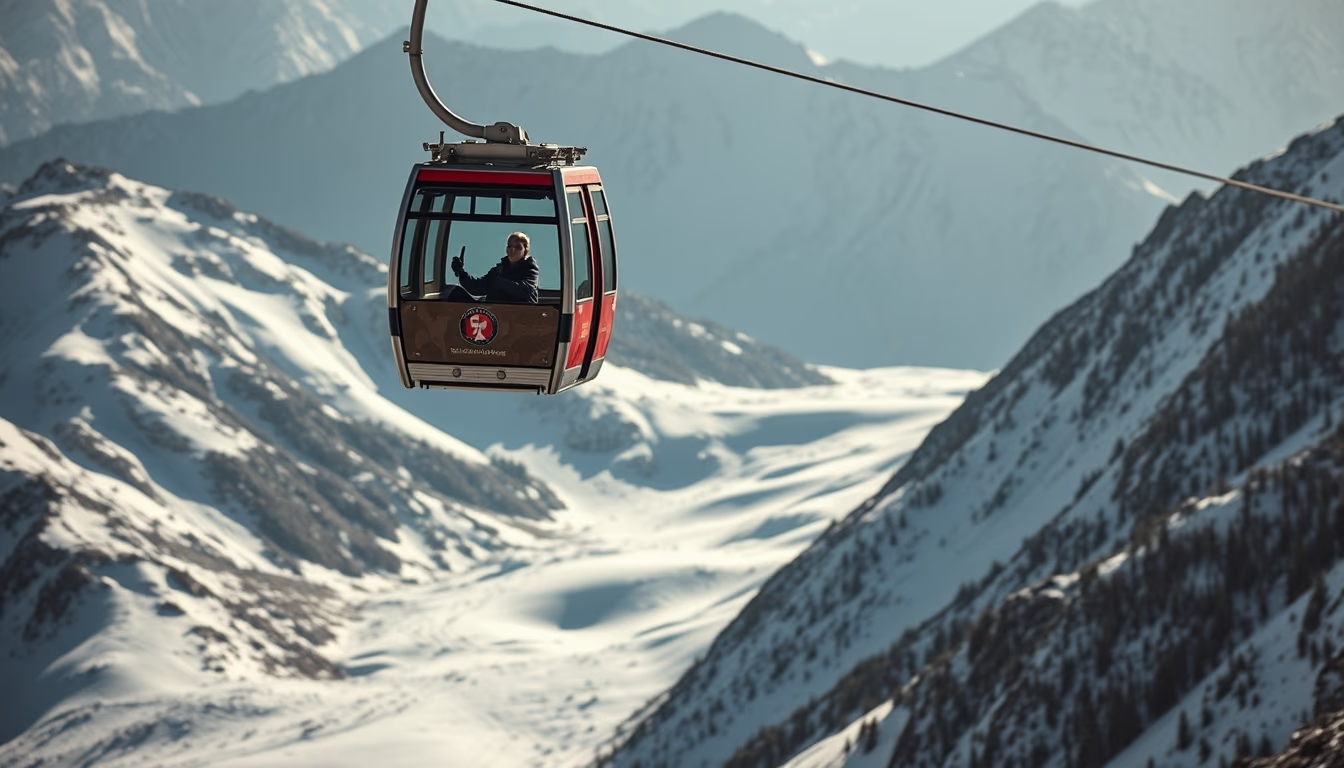
Alpine cable cars are aerial ropeway transport systems essential for tourism and mobility in the European Alps.
About this subject
Alpine cable cars represent one of the most emblematic transport solutions in Europe's mountainous regions, especially the Alps. These systems consist of suspended steel cables that move cabins or gondolas, allowing access to high altitudes, ski resorts, and remote villages. Unlike funiculars or trams, cable cars operate with continuous aerial support, making them ideal for steep and rugged terrain. In Switzerland, France, Italy, and Austria, they are integral to tourism infrastructure and public transportation.
The history of alpine cable cars dates back to the late 19th century, when the first passenger cable car was built in 1898 in Bolzano, Italy, connecting the city to Colle Mount. Since then, technology has evolved significantly. Steel cables became stronger, cabins now offer comfort and safety, and modern systems like the Matterhorn Glacier Ride in Switzerland, inaugurated in 2021, reach speeds of up to 10 meters per second. This particular cable car holds the world record for the greatest vertical drop, at 1,458 meters between stations.
Iconic examples include the Aiguille du Midi cable car in Chamonix, France, which takes passengers to an altitude of 3,842 meters, one of the highest in Europe. The Klein Matterhorn cable car near Zermatt operates at 3,883 meters and offers panoramic views of the Monte Rosa massif. In total, there are hundreds of cable cars in the Alps, many running year-round, transporting skiers in winter and tourists in summer. They also serve as vital cargo and construction material carriers in inaccessible areas.
The economic and cultural importance of alpine cable cars is immense. They generate direct and indirect jobs, boost winter and summer tourism, and help maintain mobility in regions where roads are impractical. For nature lovers, cable cars provide a unique experience of alpine landscapes, with views of glaciers, snow-capped peaks, and green valleys. Moreover, many cable cars are designed with low environmental impact, using renewable energy and recyclable materials.
Frequently Asked Questions
What is the highest cable car in the Alps?
The Aiguille du Midi cable car in Chamonix, France, reaches 3,842 meters. The Klein Matterhorn in Switzerland operates at 3,883 meters, making it one of the highest in the world.
How does an alpine cable car work?
A cable car uses suspended steel cables between towers to move cabins or gondolas. Traction is provided by an electric motor at the station, and the cabin is attached to the cable by a grip device that allows detachment at stations.
What are the main cable car destinations in the Alps?
Famous destinations include Zermatt (Matterhorn Glacier Ride), Chamonix (Aiguille du Midi), St. Moritz (Diavolezza), and Innsbruck (Nordkette). They offer panoramic views, trail access, and ski resorts.
Direct URL
https://pub-c7d6a6ea828543ac903a74a341ccb2e1.r2.dev/imagens/cable-car-alpine-magazine-editorial-p5.avifHow to credit
Include a visible link back to UtilizAí. Copy one of the snippets below:
<a href="https://xn--utiliza-eza.com/en/midia/imagens/cable-car-alpine-magazine-editorial-p5">Cable car alpine</a> by <a href="https://xn--utiliza-eza.com">UtilizAí</a>, licensed under <a href="https://creativecommons.org/licenses/by/4.0/">CC BY 4.0</a>.
[Cable car alpine](https://xn--utiliza-eza.com/en/midia/imagens/cable-car-alpine-magazine-editorial-p5) by [UtilizAí](https://xn--utiliza-eza.com), CC BY 4.0
License: CC-BY-4.0