Brutalist concrete facade
1344×768 · AVIF · CC BY 4.0
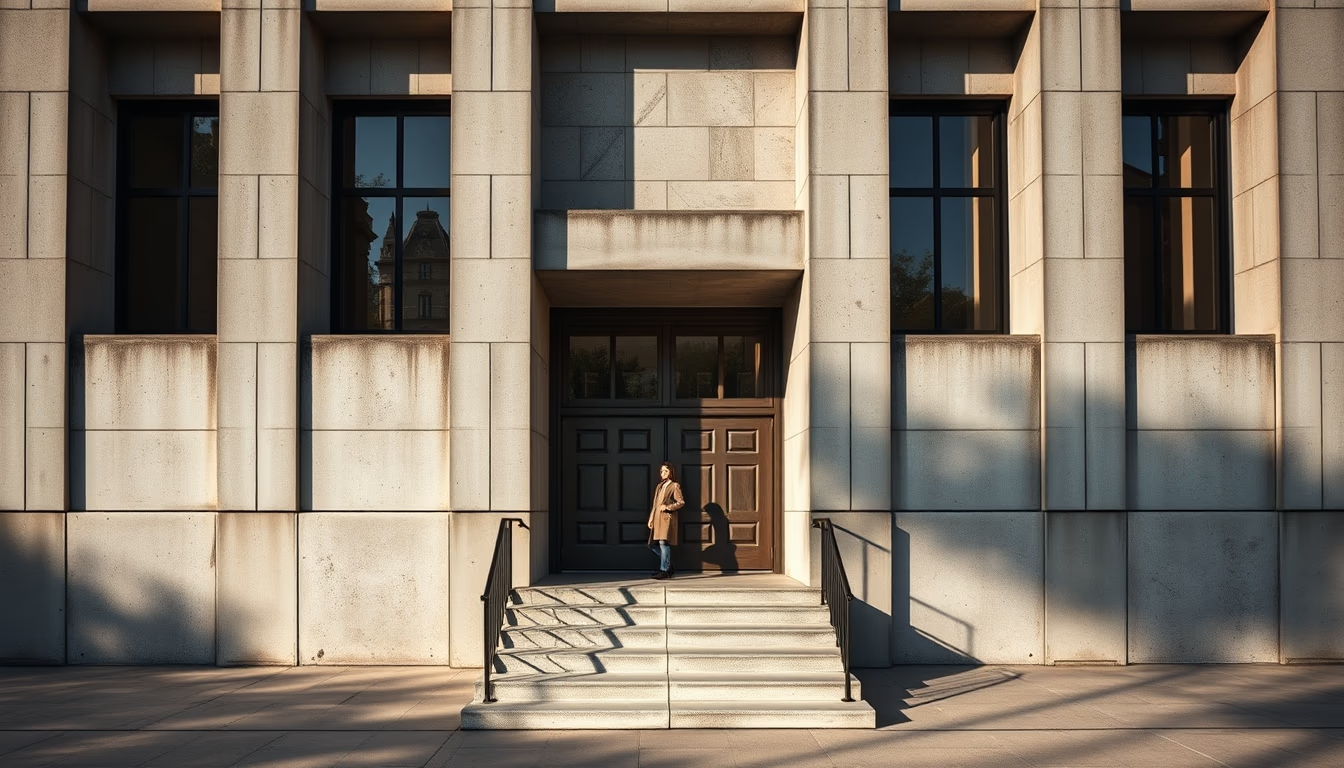
Brutalist concrete facades define a architectural movement that emphasizes raw materials and exposed structure.
About this subject
Brutalism is an architectural style that emerged in the 1950s, primarily in the United Kingdom, as an offshoot of modernism. Its name derives from the French "béton brut" (raw concrete), a term coined by architect Le Corbusier to describe the natural finish of reinforced concrete. It is characterized by angular geometric forms, textured surfaces, and the frank display of construction materials, especially exposed concrete.
In Brazil, brutalism found fertile ground in the 1960s and 1970s, with iconic works such as the Copan building (São Paulo, 1966) by Oscar Niemeyer, which though not purely brutalist shares principles of scale and materiality. Other notable examples include MASP (São Paulo Museum of Art, 1968) by Lina Bo Bardi, with its 74-meter free span supported by concrete beams, and the Palácio da Alvorada (Brasília, 1958) by Niemeyer, blending concrete with fluid curves. These structures reflect a tropical adaptation of the style, emphasizing natural ventilation and integration with the surroundings.
The raw concrete facade is not merely aesthetic: it serves as a structural and thermal element. Concrete's thermal mass helps regulate indoor temperature, reducing air conditioning needs. Additionally, the rough texture repels rainwater and hides imperfections. However, exposed concrete requires careful maintenance to prevent efflorescence (salt stains) and reinforcement corrosion. In humid climates like Brazil's coast, durability depends on specific treatments.
In recent decades, brutalism has experienced a revival, especially among contemporary architects seeking an honest and sustainable aesthetic. Projects like Cidade das Artes (Rio de Janeiro, 2013) by Christian de Portzamparc and Sesc 24 de Maio (São Paulo, 2017) by Paulo Mendes da Rocha incorporate brutalist elements in new contexts. The 2026 trend, as per the "trending-2026" tag, suggests that raw concrete facades are regaining prominence in editorial and cultural projects, valuing brutality as an expression of resistance and authenticity.
Frequently Asked Questions
Why is raw concrete called 'brutalist'?
The term brutalism comes from the French 'béton brut' (raw concrete), coined by Le Corbusier. The style is named for exposing the material without finishes, valuing its natural texture.
Is brutalism suitable for tropical climates like Brazil's?
Yes, with adaptations. Concrete's thermal mass aids thermal comfort, but humidity requires waterproofing and maintenance to prevent stains and corrosion.
What are the main differences between Brazilian and European brutalism?
Brazilian brutalism incorporates curves and integration with nature, influenced by Niemeyer and Lina Bo Bardi, while European brutalism is more angular and austere.
Direct URL
https://pub-c7d6a6ea828543ac903a74a341ccb2e1.r2.dev/imagens/brutalist-concrete-facade-magazine-editorial-p2.avifHow to credit
Include a visible link back to UtilizAí. Copy one of the snippets below:
<a href="https://xn--utiliza-eza.com/en/midia/imagens/brutalist-concrete-facade-magazine-editorial-p2">Brutalist concrete facade</a> by <a href="https://xn--utiliza-eza.com">UtilizAí</a>, licensed under <a href="https://creativecommons.org/licenses/by/4.0/">CC BY 4.0</a>.
[Brutalist concrete facade](https://xn--utiliza-eza.com/en/midia/imagens/brutalist-concrete-facade-magazine-editorial-p2) by [UtilizAí](https://xn--utiliza-eza.com), CC BY 4.0
License: CC-BY-4.0