Breakdance cardboard urban
1344×768 · AVIF · CC BY 4.0
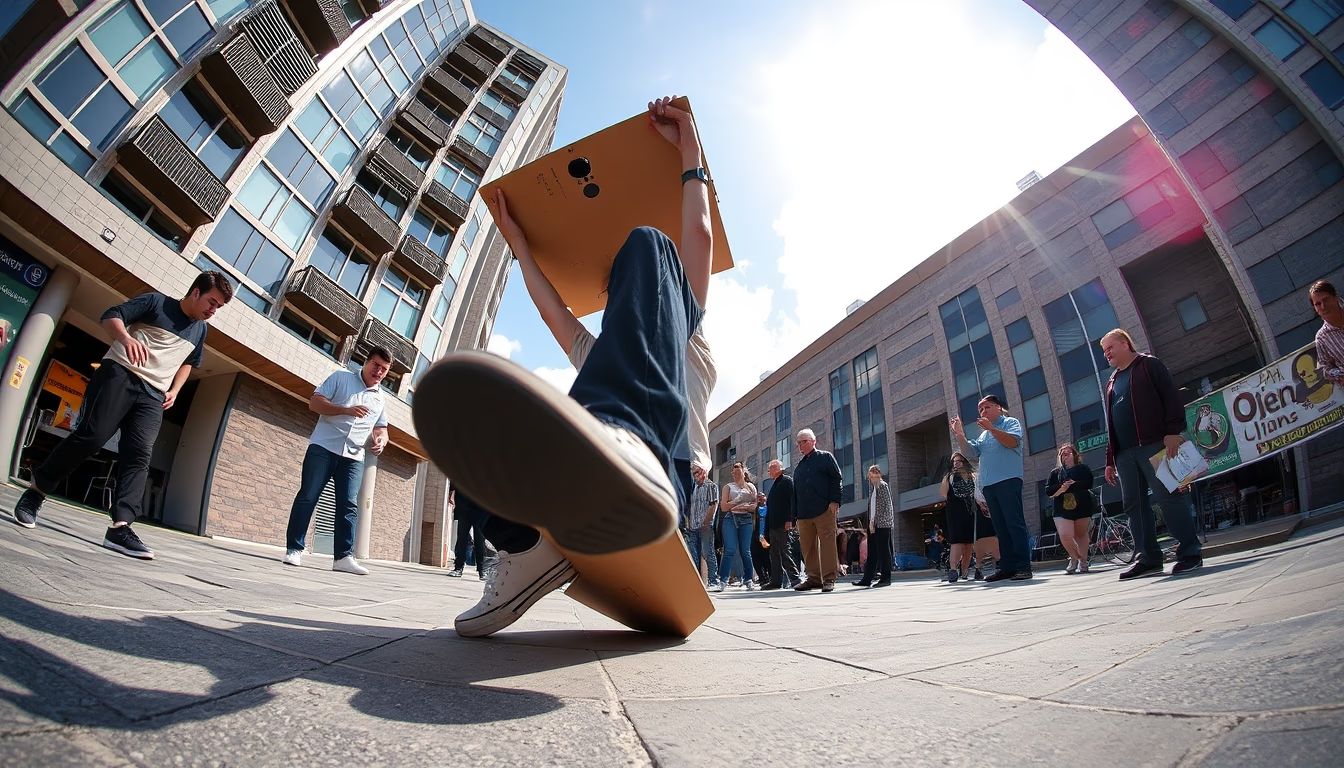
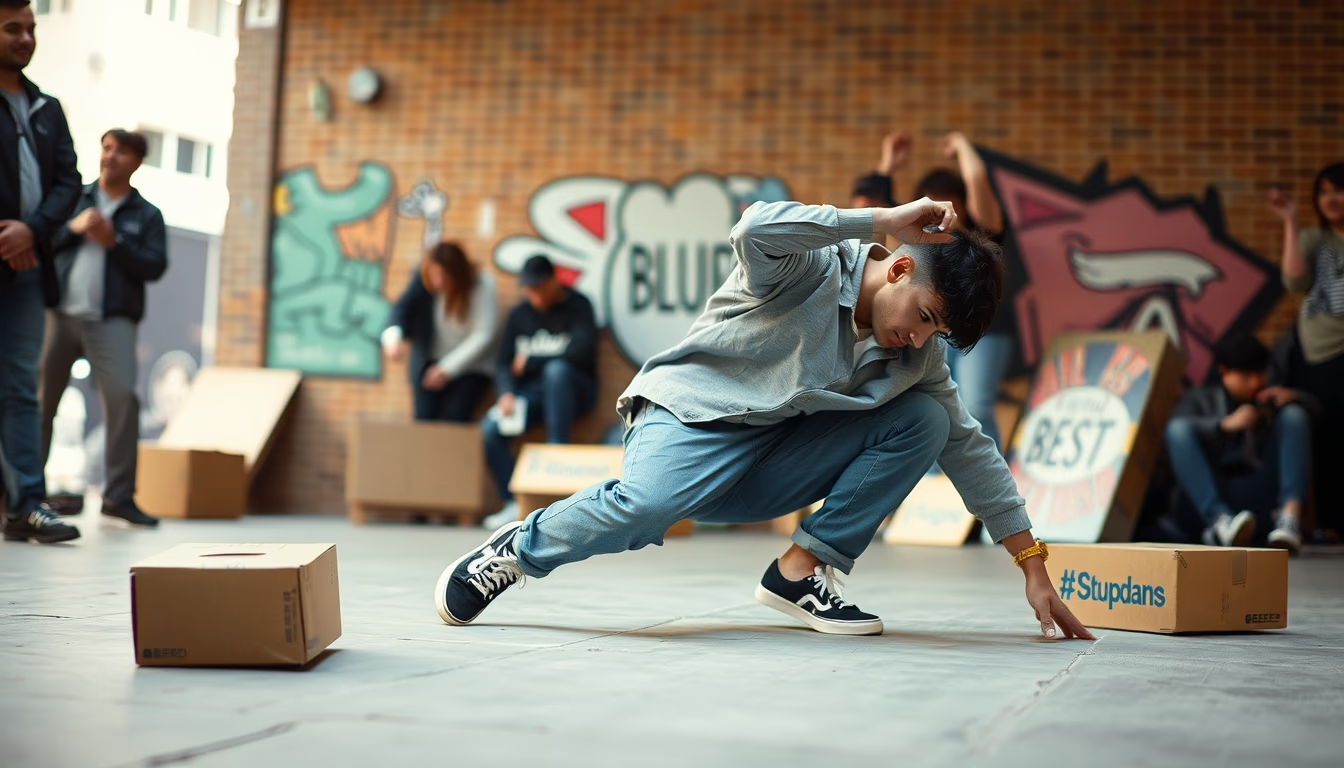
Breakdance, a street dance born in the Bronx in the 1970s, uses cardboard boxes as improvised flooring for floor moves, symbolizing the creativity and resilience of hip-hop culture.
About this subject
Breakdance, or breaking, emerged in the early 1970s in the Bronx, New York, as part of the hip-hop movement. B-boys and b-girls danced on sidewalks, in parks, and at street parties, often on pieces of cardboard. Cardboard not only cushioned the impact of floor moves but also marked the battle space, creating an improvised dance floor. The practice went global in the 1980s, when films like 'Breakin'' and 'Beat Street' introduced the dance to new audiences.
The choice of cardboard is both practical and symbolic. Cheap and accessible, it allowed youth from marginalized communities to create a stage anywhere. Moreover, the characteristic sound of cardboard being stepped on became part of breaking's aesthetic, a sonic signature of street culture. Today, breaking is an Olympic sport, debuting at Paris 2024, but its roots remain tied to the streets and to improvisation.
Breakdance moves are divided into four pillars: toprock (standing steps), downrock (floor moves), power moves (acrobatics like headspins), and freezes (striking poses). Cardboard is especially used in downrock, protecting the back and arms during footwork and slides. In competitions, b-boys and b-girls often bring their own pieces of cardboard to ensure consistent flooring, a tradition that persists even at events held in gyms with wooden floors.
The image of breakdancing on cardboard evokes the essence of street dance: adaptability, originality, and cultural resilience. In cities around the world, from Tokyo to São Paulo, dancers can be seen practicing in squares with cardboard, keeping the spirit of the origins alive. This practice also educates new generations about hip-hop history, showing that creativity can turn simple materials into tools of art and expression.
Frequently Asked Questions
Why do b-boys use cardboard to breakdance?
Cardboard serves as an improvised floor to cushion impacts, protect the body during floor moves, and mark the battle area. It is cheap, portable, and iconic in street dance culture.
What are the main types of breakdance moves?
Breaking has four elements: toprock (standing steps), downrock (floor moves like footwork), power moves (acrobatics such as spins), and freezes (striking poses). Cardboard is most used in downrock.
Is breakdance an Olympic sport?
Yes, breaking debuted as an Olympic sport at the Paris 2024 Games, but it retains its street roots, with dancers often practicing on cardboard in urban settings.
Direct URL
https://pub-c7d6a6ea828543ac903a74a341ccb2e1.r2.dev/imagens/breakdance-cardboard-urban-fish-eye-wide-angle-fresh3.avifHow to credit
Include a visible link back to UtilizAí. Copy one of the snippets below:
<a href="https://xn--utiliza-eza.com/en/midia/imagens/breakdance-cardboard-urban-fish-eye-wide-angle-fresh3">Breakdance cardboard urban</a> by <a href="https://xn--utiliza-eza.com">UtilizAí</a>, licensed under <a href="https://creativecommons.org/licenses/by/4.0/">CC BY 4.0</a>.
[Breakdance cardboard urban](https://xn--utiliza-eza.com/en/midia/imagens/breakdance-cardboard-urban-fish-eye-wide-angle-fresh3) by [UtilizAí](https://xn--utiliza-eza.com), CC BY 4.0
License: CC-BY-4.0