Breakdance cardboard urban
1344×768 · AVIF · CC BY 4.0
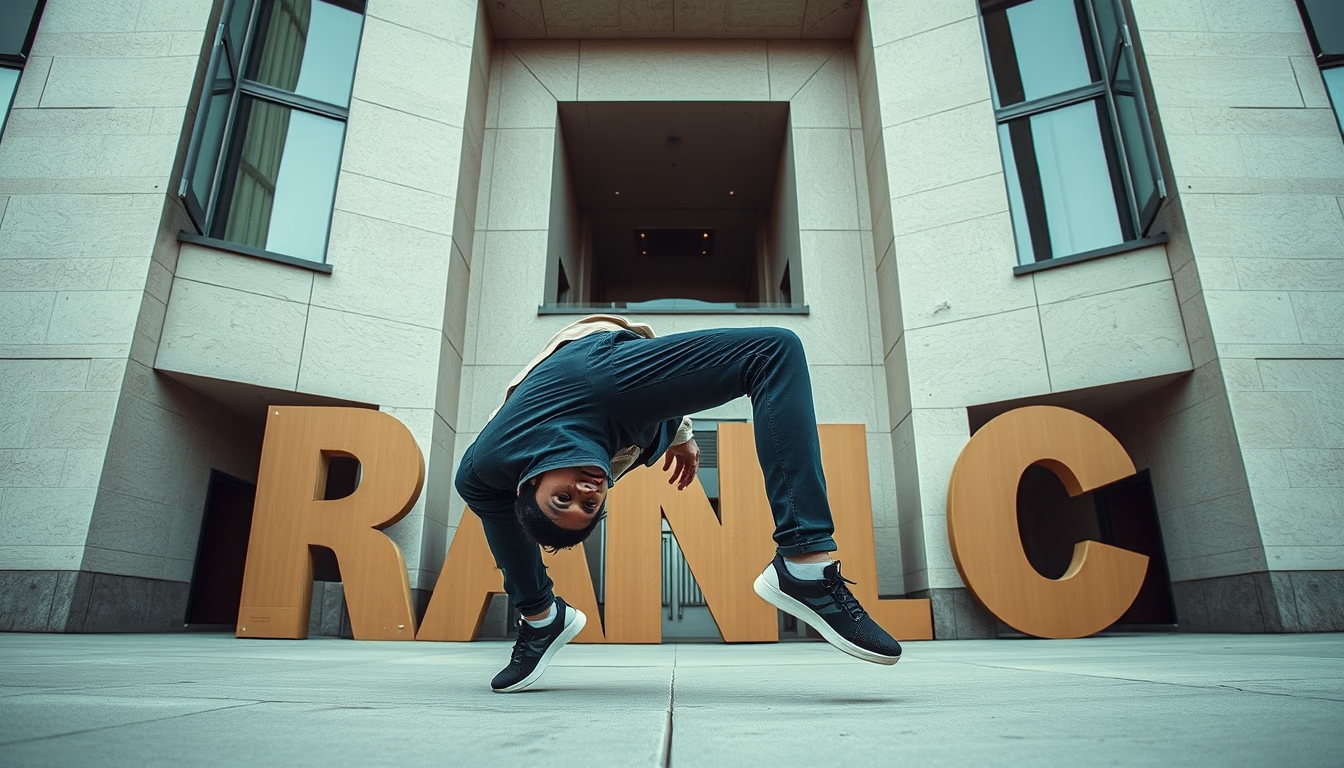
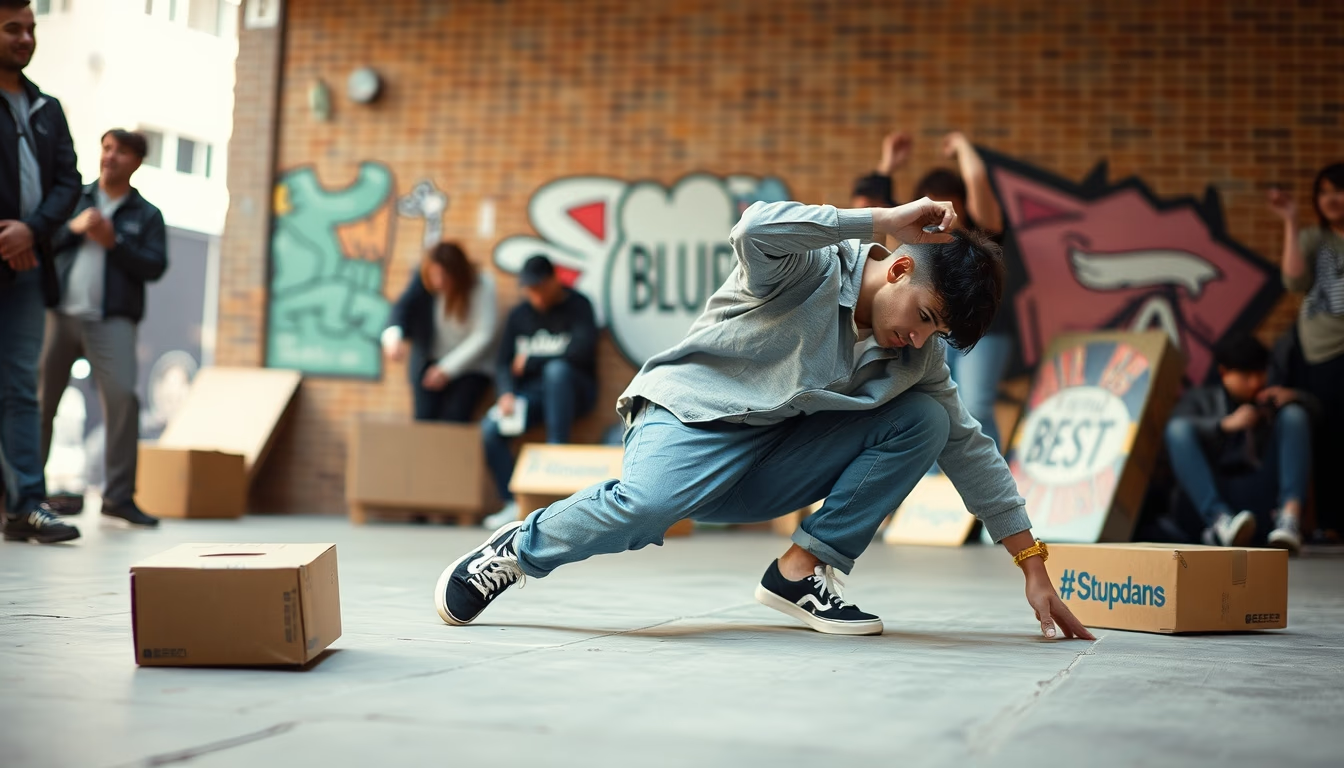
Cardboard breakdance in the streets: the urban dance that turns sidewalks and architecture into stages for creativity and cultural resistance.
About this subject
Breakdance, also known as B-boying or breaking, originated in the 1970s in the Bronx, New York, as part of the hip-hop movement. Young dancers would lay cardboard on the ground, improvising acrobatic moves and spins. The cardboard was not only a soft surface to cushion falls but also a symbol of claiming public space: by placing dance on asphalt, b-boys and b-girls asserted the street as a territory of expression. To this day, cardboard remains common in open-air battles and performances, preserving the aesthetic of the origins.
The relationship between breakdance and urban architecture is intrinsic. Concrete walls, staircases, plazas, and building facades serve as natural backdrops for choreography. Architectural photography that captures dancers amidst these elements highlights the contrast between the moving body and the rigidity of structures. This visual composition became popular in photo essays and documentaries, such as the films "Beat Street" and "Wild Style," which immortalized 1980s New York cityscapes. Today, international breaking festivals like Red Bull BC One often use iconic urban locations, blending dance and architecture.
Interestingly, cardboard in breakdance has a technical role beyond protection. In competitions, "cardboard" marks the battle area, functioning as an improvised ring. Dancers specializing in footwork and freezes explore the surface, spinning on their backs or balancing on one hand. The texture of cardboard also influences moves: more grippy than smooth floors, it requires greater control and strength. This characteristic is valued by purists who consider cardboard essential to the authenticity of breaking.
In Brazil, breakdance arrived in the 1980s and gained traction in peripheral communities, especially in São Paulo and Rio de Janeiro. Groups like Backspin Crew and Street Warriors adapted the cardboard culture to church squares and subway stations. The practice remains alive in street battles and events such as the H2O Hip Hop Festival. Brazilian architectural photography of breakdance often explores the contrast between dance and modernist architecture in cities like Brasília, generating images that dialogue with national identity.
Frequently Asked Questions
Why do breakdancers use cardboard to dance on the street?
Cardboard serves as a cushioning surface for falls and spins, protects the dancer from dirty or hot ground, and marks the battle area, harking back to breaking's origins in the 1970s when B-boys improvised with discarded boxes.
How does urban architecture influence breakdance?
Architecture provides visual backdrops and physical challenges: walls for power moves, stairs for footwork, plazas for cyphers. Photographers exploit these contrasts to compose images highlighting human movement against geometric structures.
Does Brazilian breakdance have its own characteristics?
Yes, Brazilian breaking incorporates elements of capoeira and samba, and battles often take place in public spaces like church squares and subway stations. Groups like Backspin Crew and Street Warriors maintain the cardboard tradition, adapting it to the country's urban landscape.
Direct URL
https://pub-c7d6a6ea828543ac903a74a341ccb2e1.r2.dev/imagens/breakdance-cardboard-urban-architectural-photography-fresh17.avifHow to credit
Include a visible link back to UtilizAí. Copy one of the snippets below:
<a href="https://xn--utiliza-eza.com/en/midia/imagens/breakdance-cardboard-urban-architectural-photography-fresh17">Breakdance cardboard urban</a> by <a href="https://xn--utiliza-eza.com">UtilizAí</a>, licensed under <a href="https://creativecommons.org/licenses/by/4.0/">CC BY 4.0</a>.
[Breakdance cardboard urban](https://xn--utiliza-eza.com/en/midia/imagens/breakdance-cardboard-urban-architectural-photography-fresh17) by [UtilizAí](https://xn--utiliza-eza.com), CC BY 4.0
License: CC-BY-4.0