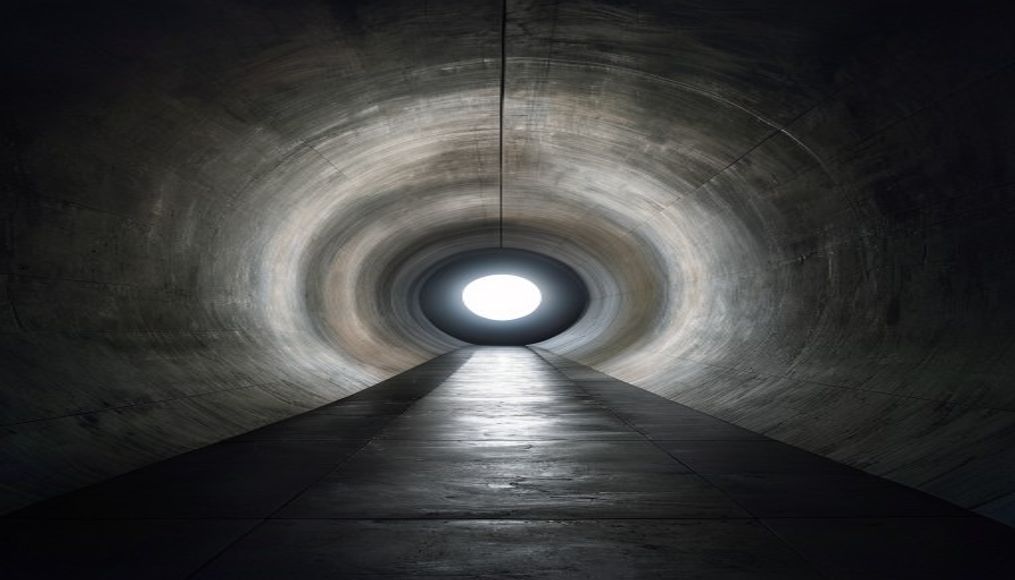
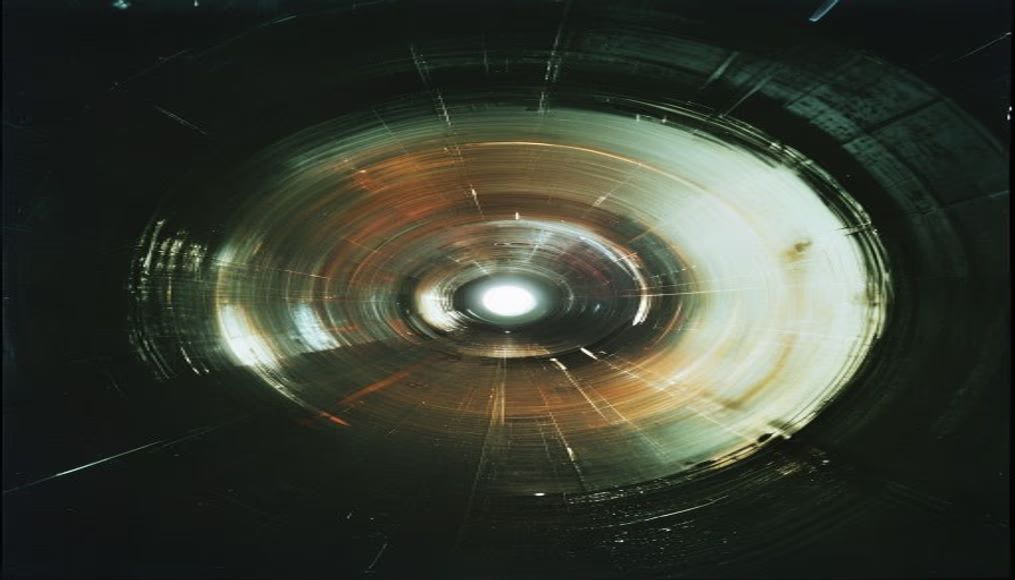
Black hole accretion disk
1344×768 · AVIF · CC BY 4.0

Black hole accretion disks are superheated structures of gas and dust orbiting the event horizon, emitting intense radiation across the electromagnetic spectrum.
About this subject
An accretion disk is an astrophysical structure composed of matter (gas, dust, plasma) falling toward a black hole, swirling around it at high speeds. Due to conservation of angular momentum, the material forms a flattened equatorial disk, heated by viscous friction and magnetic fields to millions of degrees Kelvin. This extreme heat makes the disk shine intensely, primarily in X-rays, but also in optical and radio wavelengths, depending on the black hole type.
Accretion disks are essential for studying black holes because they are the main source of detectable radiation. The supermassive black hole at the center of galaxy M87, for example, was imaged by the Event Horizon Telescope (EHT) in 2019, revealing its accretion disk and the shadow of the event horizon. More recently, in 2022, the EHT captured the accretion disk of Sagittarius A*, the Milky Way's central black hole, confirming predictions of general relativity.
Different types of accretion disks exist, classified by accretion rate and geometry. Thin disks (Shakura-Sunyaev model) are common in binary systems with stellar-mass black holes. Thick or advection-dominated disks (ADAF) occur at low accretion rates, like in Sgr A*. Understanding these disks helps explain phenomena such as relativistic jets, quasars, and active galactic nuclei (AGN).
Recent observations by the James Webb Space Telescope (JWST) are providing unprecedented data on accretion disks in distant galaxies, revealing the chemical composition and gas dynamics near primordial black holes. These studies are crucial for understanding the growth of supermassive black holes and their influence on galaxy evolution.
Frequently Asked Questions
What happens to matter in the accretion disk when it falls into the black hole?
The matter spirals inward due to loss of angular momentum, heating to extreme temperatures. Some matter may be ejected in relativistic jets, but most crosses the event horizon and is accreted by the black hole, increasing its mass.
Why is the accretion disk of Sagittarius A* harder to image than that of M87?
Sgr A is much smaller and varies rapidly (in minutes), while M87 is larger and more stable. Additionally, Sgr A*'s radio emission is fainter, requiring extremely high temporal resolution and sensitivity.
Do accretion disks only occur around black holes?
No, accretion disks also form around neutron stars, white dwarfs, and even protostars. In all cases, the accretion process releases gravitational energy, generating radiation.
Direct URL
https://pub-c7d6a6ea828543ac903a74a341ccb2e1.r2.dev/imagens/black-hole-accretion-disk-commercial-product-photography-p4.avifHow to credit
Include a visible link back to UtilizAí. Copy one of the snippets below:
<a href="https://xn--utiliza-eza.com/en/midia/imagens/black-hole-accretion-disk-commercial-product-photography-p4">Black hole accretion disk</a> by <a href="https://xn--utiliza-eza.com">UtilizAí</a>, licensed under <a href="https://creativecommons.org/licenses/by/4.0/">CC BY 4.0</a>.
[Black hole accretion disk](https://xn--utiliza-eza.com/en/midia/imagens/black-hole-accretion-disk-commercial-product-photography-p4) by [UtilizAí](https://xn--utiliza-eza.com), CC BY 4.0
License: CC-BY-4.0