Bike share station
1344×768 · AVIF · CC BY 4.0
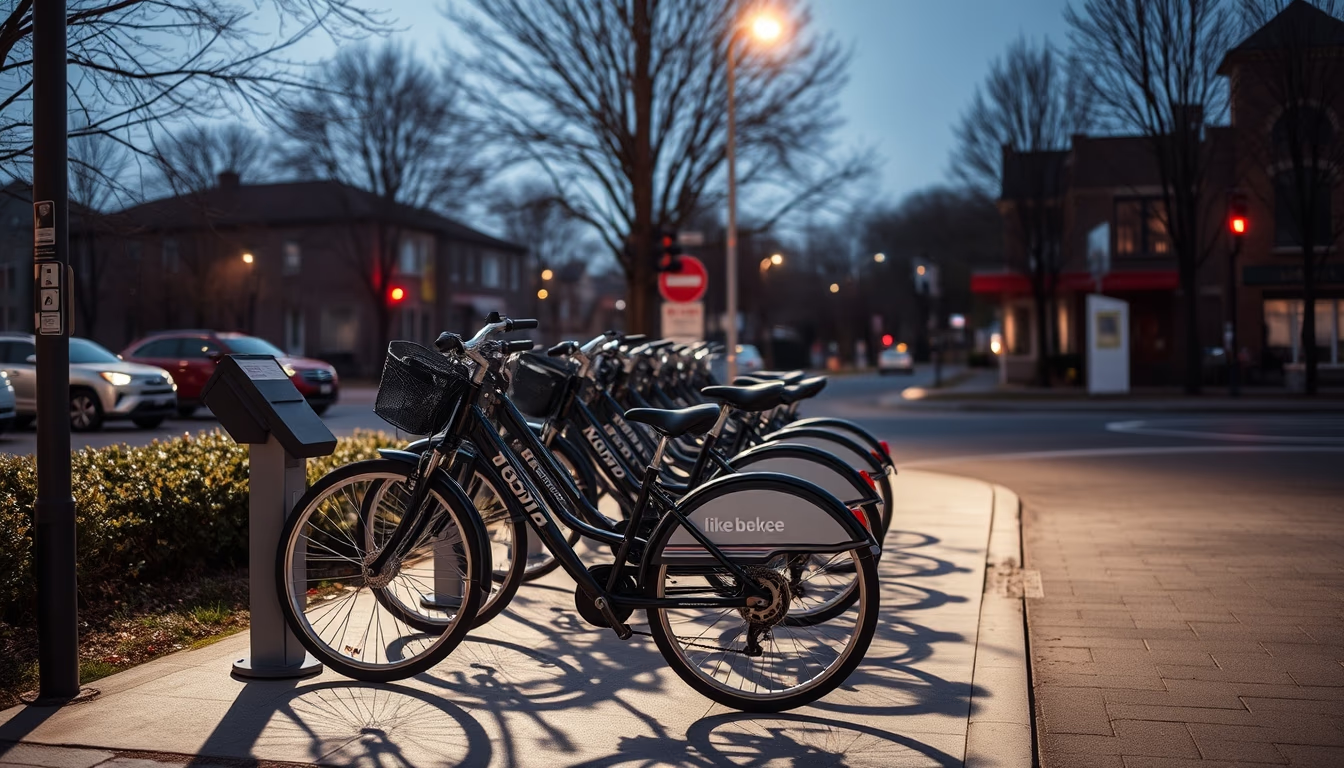
Bike share stations have transformed urban mobility in cities worldwide, offering a sustainable alternative for short trips.
About this subject
Bike share stations have emerged as an innovative solution to urban mobility challenges. The concept originated in 1965 with Amsterdam's White Bikes program, where painted bicycles were left for public use, but modern systems consolidated in the 2000s with GPS tracking and electronic payment. Two main models exist: docked systems with fixed stations where bikes lock into docks, and dockless systems that allow return anywhere within a geofenced area. Successful examples include Paris (Vélib'), London (Santander Cycles), New York (Citi Bike), and São Paulo (Bike Sampa), generating millions of trips annually.
A typical station works as follows: the user locates the station via app, unlocks the bike with a code or card, rides, and returns it to any station. This reduces the need for private bike parking and encourages multimodal trips with metro and bus integration. By 2022, over 10 million shared bicycles operated worldwide, with growth accelerating during the pandemic as people sought alternatives to crowded transit. Benefits include reduced carbon emissions, less congestion, and improved public health.
Culturally, bike share stations have become icons of smart, sustainable cities. They frequently appear in art and photography, as in this image exploring the urban aesthetics of aligned bicycle rows. Challenges remain: vandalism, theft, and rebalancing (some stations full, others empty). Solutions include truck redistribution and dynamic pricing. The trend for 2026 is expansion of e-bikes and integration with Mobility as a Service (MaaS) apps, making bike share even more central to urban transport.
Frequently Asked Questions
How do bike share stations work?
Stations have docks where bikes are locked. Users unlock via app or card, ride, and return to any station in the system.
Which cities have successful bike share programs?
Examples include Paris (Vélib'), London (Santander Cycles), New York (Citi Bike), and many cities in China like Hangzhou.
What are the environmental benefits of bike sharing?
It reduces carbon emissions, traffic congestion, and promotes physical activity. Studies show bike share trips replace car trips about 50% of the time.
Direct URL
https://pub-c7d6a6ea828543ac903a74a341ccb2e1.r2.dev/imagens/bike-share-station-fine-art-photography-p0.avifHow to credit
Include a visible link back to UtilizAí. Copy one of the snippets below:
<a href="https://xn--utiliza-eza.com/en/midia/imagens/bike-share-station-fine-art-photography-p0">Bike share station</a> by <a href="https://xn--utiliza-eza.com">UtilizAí</a>, licensed under <a href="https://creativecommons.org/licenses/by/4.0/">CC BY 4.0</a>.
[Bike share station](https://xn--utiliza-eza.com/en/midia/imagens/bike-share-station-fine-art-photography-p0) by [UtilizAí](https://xn--utiliza-eza.com), CC BY 4.0
License: CC-BY-4.0