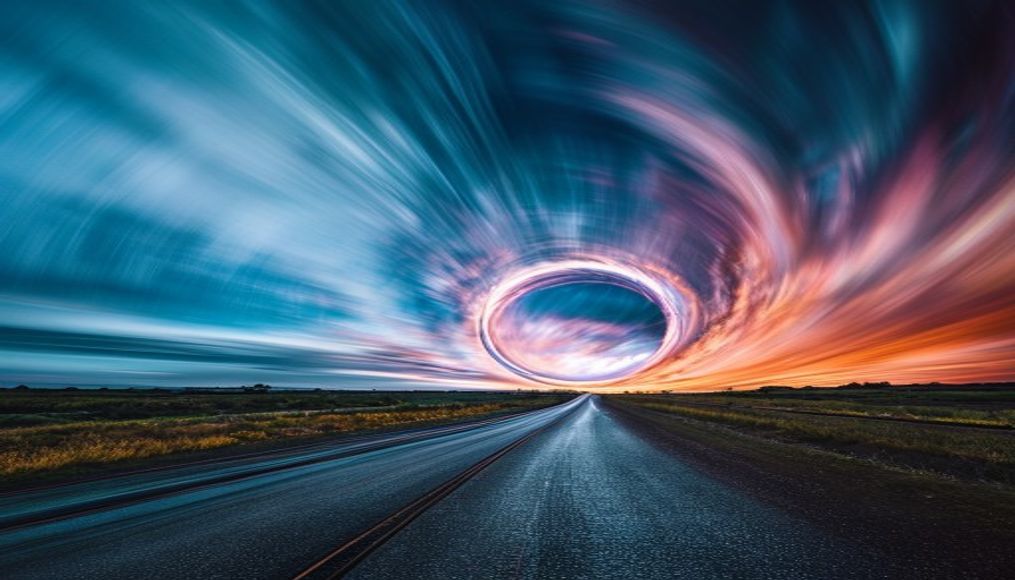
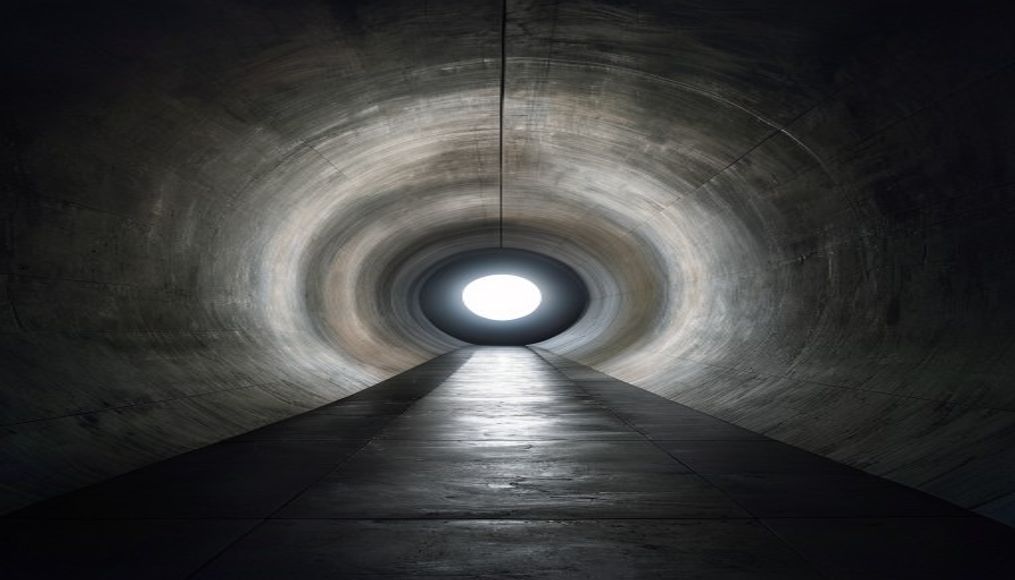
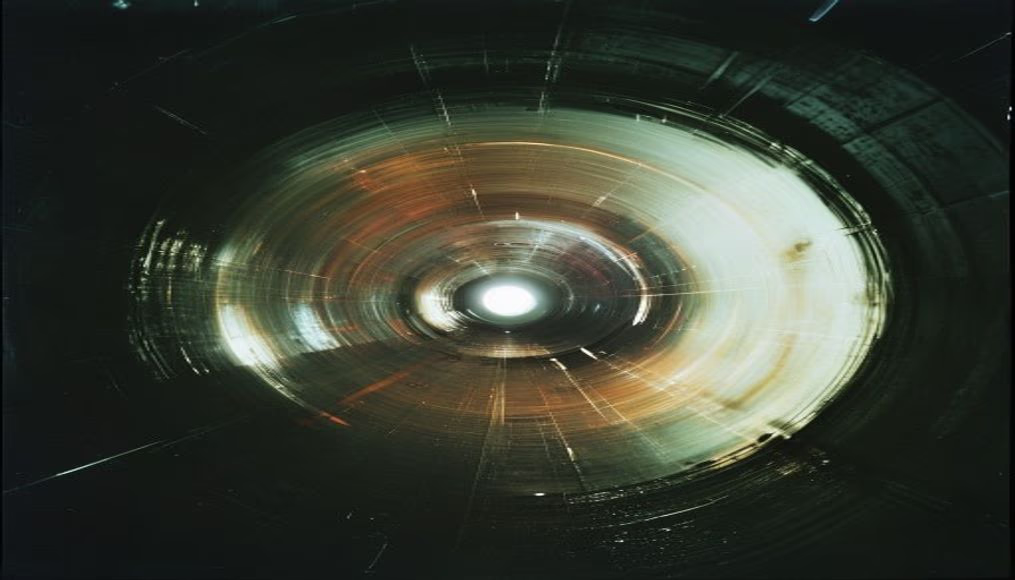
Big bang artistic concept
1344×768 · AVIF · CC BY 4.0

The Big Bang is the scientific theory describing the origin of the universe from a rapid expansion about 13.8 billion years ago, supported by evidence such as cosmic microwave background radiation.
About this subject
The Big Bang was not an explosion in empty space, but an expansion of spacetime itself from an extremely hot and dense state. This cosmological theory is supported by three main observational pillars: the expansion of the universe (discovered by Edwin Hubble in 1929), the cosmic microwave background radiation (accidentally detected by Arno Penzias and Robert Wilson in 1965), and the abundance of light elements such as hydrogen and helium, predicted by primordial nucleosynthesis. The initial event is estimated to have occurred approximately 13.8 billion years ago, with an uncertainty of about 20 million years.
In the first moments after the Big Bang, the universe underwent a period of extremely rapid cosmic inflation, which solved problems like the homogeneity and flatness of the cosmos. Following that, the universe cooled enough for quarks to combine into protons and neutrons, initiating nucleosynthesis. About 380,000 years later, the temperature dropped to the point where electrons and nuclei formed neutral atoms, making the universe transparent and releasing the radiation we now observe as the cosmic background. This period is called recombination, and its thermal signature (2.7 K) is one of the strongest proofs of the model.
The name "Big Bang" was coined in 1949 by astronomer Fred Hoyle, a proponent of the steady-state theory, in a pejorative tone. Hoyle believed the idea of an explosive beginning was absurd. However, the term caught on and is now used universally. One of the major open questions is what caused the Big Bang or what existed before it. Current physics cannot describe the instant t=0, as the known laws of general relativity and quantum mechanics break down at that singular point. Models such as loop quantum gravity or cyclic cosmology attempt to fill this gap, but remain speculative.
Frequently Asked Questions
What caused the Big Bang?
Science still does not know what caused the Big Bang. Known laws of physics break down at t=0, so there is no consensus description for the initial event. Theories like loop quantum gravity propose a 'Big Bounce' from a previous collapsing universe.
What existed before the Big Bang?
This question has no definitive answer. Since time and space began with the Big Bang, talking about 'before' may not make sense. Some theories suggest a multiverse or a primordial quantum state, but everything remains hypothetical.
What is the strongest evidence for the Big Bang?
The cosmic microwave background radiation is considered the strongest evidence. Discovered in 1965, it fills the entire sky with a uniform temperature of 2.7 K, confirming the prediction of an expanding universe that emerged from a hot, dense state. Other important evidence includes the expansion of galaxies and the abundance of light elements.
Direct URL
https://pub-c7d6a6ea828543ac903a74a341ccb2e1.r2.dev/imagens/big-bang-artistic-concept-minimalist-composition-p1.avifHow to credit
Include a visible link back to UtilizAí. Copy one of the snippets below:
<a href="https://xn--utiliza-eza.com/en/midia/imagens/big-bang-artistic-concept-minimalist-composition-p1">Big bang artistic concept</a> by <a href="https://xn--utiliza-eza.com">UtilizAí</a>, licensed under <a href="https://creativecommons.org/licenses/by/4.0/">CC BY 4.0</a>.
[Big bang artistic concept](https://xn--utiliza-eza.com/en/midia/imagens/big-bang-artistic-concept-minimalist-composition-p1) by [UtilizAí](https://xn--utiliza-eza.com), CC BY 4.0
License: CC-BY-4.0