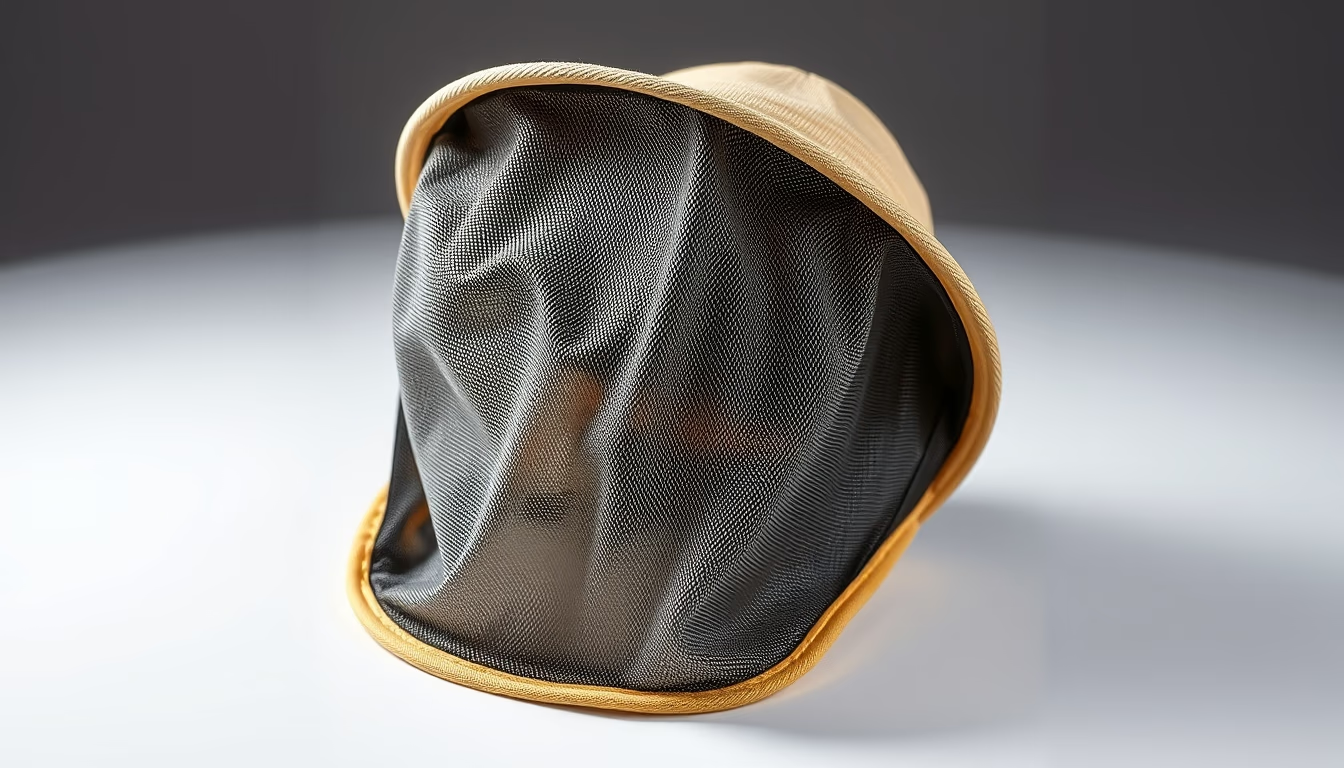
Beekeeper veil empty hat
1344×768 · AVIF · CC BY 4.0

O chapéu vazio com véu de apicultor é um equipamento essencial para a proteção contra picadas de abelhas durante o manejo de colmeias.
Sobre o tema
O chapéu vazio com véu de apicultor é um dos itens mais icônicos da apicultura, utilizado para proteger a cabeça e o rosto do profissional. Em geral, esse equipamento consiste em um chapéu de aba larga, que serve como espaçador para manter o véu afastado do rosto, e um véu de malha fina, que impede a aproximação das abelhas. O material do véu costuma ser de nylon ou poliéster, com mesh suficiente para permitir visibilidade e ventilação.
A cor clara do chapéu e do véu é intencional: as abelhas associam cores escuras a predadores naturais, como ursos, e por isso tendem a atacar menos apicultores vestidos de branco. Estudos etológicos mostram que a visão das abelhas é sensível a contrastes, e tons claros reduzem o estímulo de defesa. Além disso, o tecido claro reflete o calor, essencial em climas tropicais como o do Brasil, maior produtor de mel da América Latina.
Historicamente, o uso de proteção facial na apicultura remonta ao século XIX. Antes disso, os apicultores dependiam de fumaça e experiência para evitar ferroadas. Hoje, o conjunto de chapéu e véu é usado por apicultores amadores e profissionais em todo o mundo, sendo frequentemente combinado com macacões e luvas. A escolha correta do tamanho e da firmeza do véu é crucial para evitar que ele encoste no rosto, pois as abelhas podem picar através do tecido se este estiver em contato direto com a pele.
Curiosamente, o chapéu vazio também serve como símbolo da apicultura sustentável. Muitos apicultores preferem esse modelo simples em vez de capacetes integrais, pois permite maior sensibilidade térmica e auditiva durante o trabalho. No Brasil, a Associação Brasileira de Estudos das Abelhas (A.B.E.L.H.A.) recomenda o uso de equipamentos de proteção individual como este para evitar acidentes, especialmente durante a colheita do mel.
A produção de mel no Brasil movimenta cerca de R$ 300 milhões por ano, segundo dados da FAO. A apicultura não só gera renda para pequenos produtores, mas também é vital para a polinização de culturas como café, laranja e soja. O chapéu com véu é, portanto, uma ferramenta que viabiliza essa atividade econômica e ecológica, garantindo a segurança do trabalhador e a produtividade das colmeias.
Perguntas frequentes
Por que o chapéu de apicultor é sempre branco ou de cor clara?
A cor clara ajuda a evitar ataques de abelhas, pois elas associam cores escuras a predadores como ursos. Além disso, tecidos claros refletem melhor o calor, proporcionando conforto térmico em climas quentes.
Qual é o material mais comum usado no véu de apicultor?
O véu geralmente é feito de malha fina de nylon ou poliéster, com abertura suficiente para visibilidade e ventilação, mas pequena o bastante para impedir a passagem de abelhas.
É necessário usar luvas junto com o chapéu e véu?
Sim, luvas são recomendadas para proteger as mãos, pois as abelhas podem picar áreas expostas. O conjunto completo de proteção inclui também macacão e botas.
URL direta
https://pub-c7d6a6ea828543ac903a74a341ccb2e1.r2.dev/imagens/beekeeper-veil-empty-hat-magazine-editorial-fresh11.avifComo creditar
Inclua um link visível de volta pro UtilizAí. Copie um dos snippets abaixo:
<a href="https://xn--utiliza-eza.com/midia/imagens/beekeeper-veil-empty-hat-magazine-editorial-fresh11">Beekeeper veil empty hat</a> by <a href="https://xn--utiliza-eza.com">UtilizAí</a>, licensed under <a href="https://creativecommons.org/licenses/by/4.0/">CC BY 4.0</a>.
[Beekeeper veil empty hat](https://xn--utiliza-eza.com/midia/imagens/beekeeper-veil-empty-hat-magazine-editorial-fresh11) by [UtilizAí](https://xn--utiliza-eza.com), CC BY 4.0
Licença: CC-BY-4.0