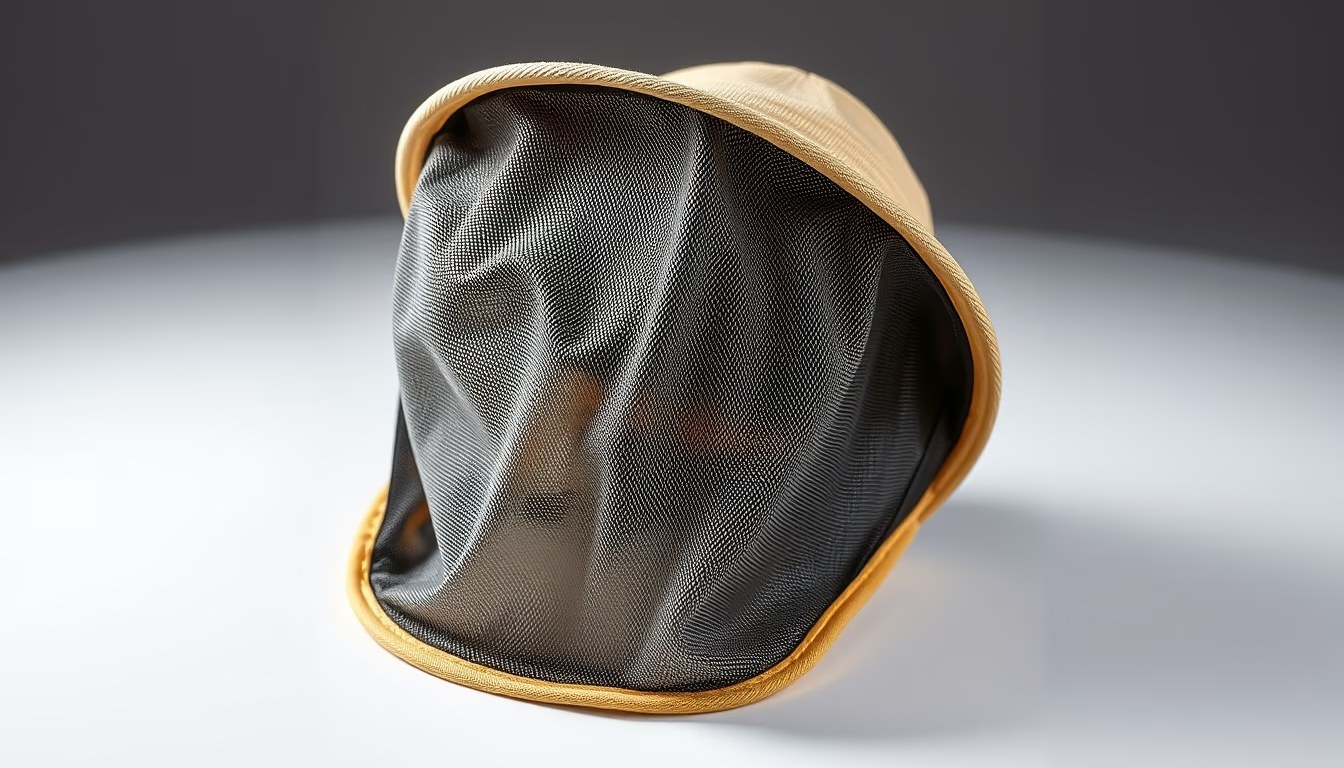
Bean to bar workshop
1344×768 · AVIF · CC BY 4.0

The complete process of artisanal chocolate making, from selecting cocoa beans to the final bar, in hands-on workshops.
About this subject
The term "bean to bar" describes an artisanal movement in which the chocolatier controls every step of production, from purchasing cocoa beans to packaging the final bar. Originating in the United States in the 2000s, this model quickly spread worldwide as an alternative to commercial chocolates, which often use cocoa mass of unknown origin and additives. In Brazil, a country with a strong cocoa tradition in southern Bahia and Pará, bean to bar workshops have gained prominence in cities such as São Paulo, Belém, and Ilhéus, promoting traceability and the valorization of local cocoa varieties.
A typical workshop covers everything from roasting the beans, a crucial step for flavor development, to grinding, conching (texture refinement), and tempering (control of cocoa butter crystallization). Participants learn to distinguish varieties such as Forastero, Criollo, and Trinitario, and understand the impact of fermentation and drying. Data from the Brazilian Association of Chocolate Industry shows that consumption of specialty chocolates grows 15% per year, driven by consumers interested in origin and sustainability.
Culturally, bean to bar revives pre-industrial techniques and empowers small producers. In southern Bahia, for example, cocoa cabruca, grown under the shade of the Atlantic Forest, is the raw material for internationally awarded bars. Workshops also address fair trade: many are taught by local cooperatives that sell their beans directly to chocolatiers. This short chain reduces intermediaries and ensures higher income for farmers.
Fun facts: the ideal roasting temperature ranges from 120°C to 140°C; poorly fermented beans produce bitter and astringent flavors. The world record for the largest artisanal chocolate bar, weighing 5,792 kg, was set by a Brazilian in 2022 in São Paulo. Beyond flavor, bean to bar promotes biodiversity, as cocoa depends on natural pollinators such as the Forcipomyia midge.
Frequently Asked Questions
What is needed to participate in a bean to bar workshop?
Usually no prior experience is required. Instructors provide ingredients and equipment such as cocoa beans, roaster, and grinder. You only need curiosity and a willingness to learn.
How long does a typical bean to bar workshop last?
Most last from 3 to 6 hours, depending on depth. Some include tasting different cocoa origins and tempering techniques.
Is bean to bar chocolate healthier than industrialized chocolate?
Generally yes, as it contains fewer additives and preservatives. It also preserves natural antioxidants from cocoa. However, sugar and fat content vary by recipe.
Direct URL
https://pub-c7d6a6ea828543ac903a74a341ccb2e1.r2.dev/imagens/bean-to-bar-workshop-documentary-photography-fresh10.avifHow to credit
Include a visible link back to UtilizAí. Copy one of the snippets below:
<a href="https://xn--utiliza-eza.com/en/midia/imagens/bean-to-bar-workshop-documentary-photography-fresh10">Bean to bar workshop</a> by <a href="https://xn--utiliza-eza.com">UtilizAí</a>, licensed under <a href="https://creativecommons.org/licenses/by/4.0/">CC BY 4.0</a>.
[Bean to bar workshop](https://xn--utiliza-eza.com/en/midia/imagens/bean-to-bar-workshop-documentary-photography-fresh10) by [UtilizAí](https://xn--utiliza-eza.com), CC BY 4.0
License: CC-BY-4.0