Bean to bar workshop
1344×768 · AVIF · CC BY 4.0
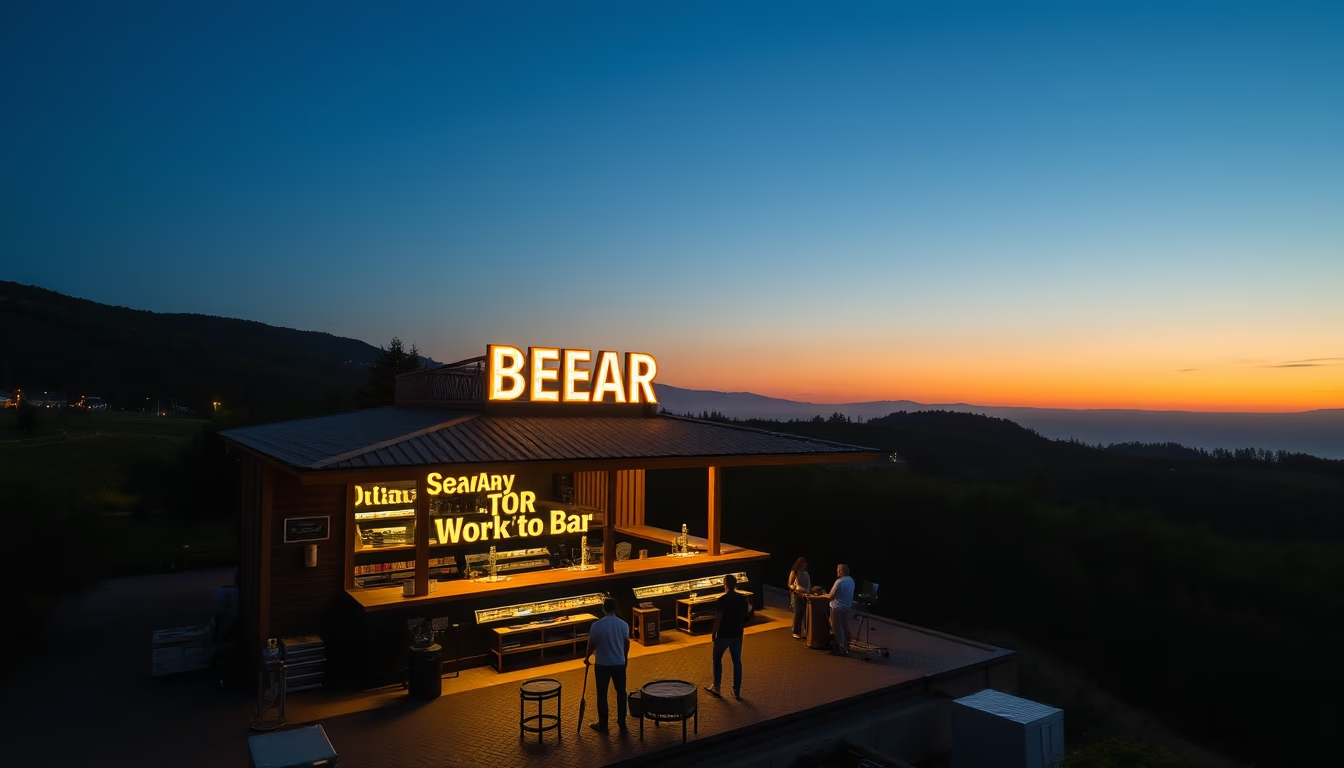
Bean to bar chocolate workshop: artisanal process from bean to bar, captured by drone.
About this subject
The bean to bar movement has revolutionized the craft chocolate industry by giving producers full control over every step, from selecting cacao beans to final packaging. Unlike commercial chocolate, which often blends varieties and uses additives, bean to bar preserves the terroir and sensory characteristics of each origin. Workshops dedicated to this practice have become popular in Brazilian urban centers like São Paulo, Rio de Janeiro, and Belo Horizonte, as well as in growing regions such as Ilhéus (Bahia) and Linhares (Espírito Santo).
A typical bean to bar workshop teaches participants to roast, crack, refine beans in a melanger, and temper the chocolate. The result is unique tasting bars with flavor notes ranging from fruity to smoky, depending on bean origin and fermentation. Courses often include guided tastings and discussions on fair trade and sustainability. Aerial drone shots reveal the organized layout of equipment: roasting stations, rows of melangers, and molding benches.
The scene shows a spacious room filled with natural light and a functional layout. From above, one can see the symmetry of workstations, suggesting a collaborative environment. This type of workshop attracts both chocolate enthusiasts and culinary professionals seeking differentiation. In Brazil, bean to bar gained traction in the 2010s, with brands like Luisa Abram, Chocolat du Jour, and Bauducco (premium lines) investing in unique origins from the Amazon and the Atlantic Forest.
Fun fact: a typical bean to bar chocolate takes 2 to 3 days to produce, while industrial chocolate can be ready in hours. Refinement in the melanger can last 24 to 72 hours, depending on the desired texture. Using drones to document these workshops is recent but offers a unique perspective on workflow and the scale of artisanal production.
Frequently Asked Questions
What does bean to bar mean?
Bean to bar is an artisanal chocolate-making process where the producer controls every step from selecting and roasting cacao beans to molding and packaging, ensuring higher quality and traceability.
How long does a bean to bar workshop last?
Typically, a bean to bar workshop lasts 4 to 8 hours, depending on depth. Intensive courses may extend over two days.
What equipment is used in a bean to bar workshop?
Main equipment includes: cacao roaster, cracker, melanger (stone grinder), tempering machine, and molds. Smaller versions are available for home use.
Direct URL
https://pub-c7d6a6ea828543ac903a74a341ccb2e1.r2.dev/imagens/bean-to-bar-workshop-aerial-drone-shot-fresh13.avifHow to credit
Include a visible link back to UtilizAí. Copy one of the snippets below:
<a href="https://xn--utiliza-eza.com/en/midia/imagens/bean-to-bar-workshop-aerial-drone-shot-fresh13">Bean to bar workshop</a> by <a href="https://xn--utiliza-eza.com">UtilizAí</a>, licensed under <a href="https://creativecommons.org/licenses/by/4.0/">CC BY 4.0</a>.
[Bean to bar workshop](https://xn--utiliza-eza.com/en/midia/imagens/bean-to-bar-workshop-aerial-drone-shot-fresh13) by [UtilizAí](https://xn--utiliza-eza.com), CC BY 4.0
License: CC-BY-4.0