Banker explaining interest rate to a client
1344×768 · AVIF · CC BY 4.0

A professional explains the Selic rate to a client in a bank meeting, highlighting its impact on investments and the Brazilian economy.
About this subject
The Selic rate, acronym for Special Settlement and Custody System, is Brazil's benchmark interest rate. Set every 45 days by the Monetary Policy Committee (Copom) of the Central Bank, it influences all other interest rates in the country, from savings yields to credit costs. Currently at 13.75% per year (as of March 2025), this high level aims to curb inflation, which ended 2024 at 4.5%, above the target midpoint.
In meetings like the one depicted, the professional explains that Selic directly impacts fixed income: government bonds like Tesouro Selic track the rate, while CDBs and LCIs offer a percentage of it. Understanding Selic helps clients decide between fixed income and variable income. For instance, with high Selic, fixed income becomes more attractive, reducing appetite for stocks.
Historically, Selic peaked at 14.25% in 2015 and hit an all-time low of 2% in 2020, showing how the Central Bank uses it to manage economic activity. The rate also affects exchange rates: high interest attracts foreign capital, strengthening the real. However, credit costs rise, impacting consumption and investment.
Interestingly, Selic is called a "target" because Copom sets a value to be pursued, and the Central Bank operates in the open market to keep the rate close to that goal. This communication between banks and clients is crucial for financial literacy, enabling individuals to make more informed decisions about their assets.
Frequently Asked Questions
What is the Selic rate and who sets it?
The Selic rate is Brazil's benchmark interest rate, set by the Monetary Policy Committee (Copom) of the Central Bank every 45 days.
How does Selic affect fixed-income investments?
Investments like Tesouro Selic, CDBs, and LCIs have their returns linked to Selic. When Selic rises, these assets become more profitable.
Why is Selic currently high?
Selic is at 13.75% per year to curb inflation, which ended 2024 at 4.5%, above the 3.0% target. High interest rates discourage consumption and help reduce inflation.
Direct URL
https://pub-c7d6a6ea828543ac903a74a341ccb2e1.r2.dev/imagens/banker-explaining-selic-rate-to-a-client-symmetric-bright-midday-3.avifHow to credit
Include a visible link back to UtilizAí. Copy one of the snippets below:
<a href="https://xn--utiliza-eza.com/en/midia/imagens/banker-explaining-selic-rate-to-a-client-symmetric-bright-midday-3">Banker explaining interest rate to a client</a> by <a href="https://xn--utiliza-eza.com">UtilizAí</a>, licensed under <a href="https://creativecommons.org/licenses/by/4.0/">CC BY 4.0</a>.
[Banker explaining interest rate to a client](https://xn--utiliza-eza.com/en/midia/imagens/banker-explaining-selic-rate-to-a-client-symmetric-bright-midday-3) by [UtilizAí](https://xn--utiliza-eza.com), CC BY 4.0
License: CC-BY-4.0
Tags
Related images
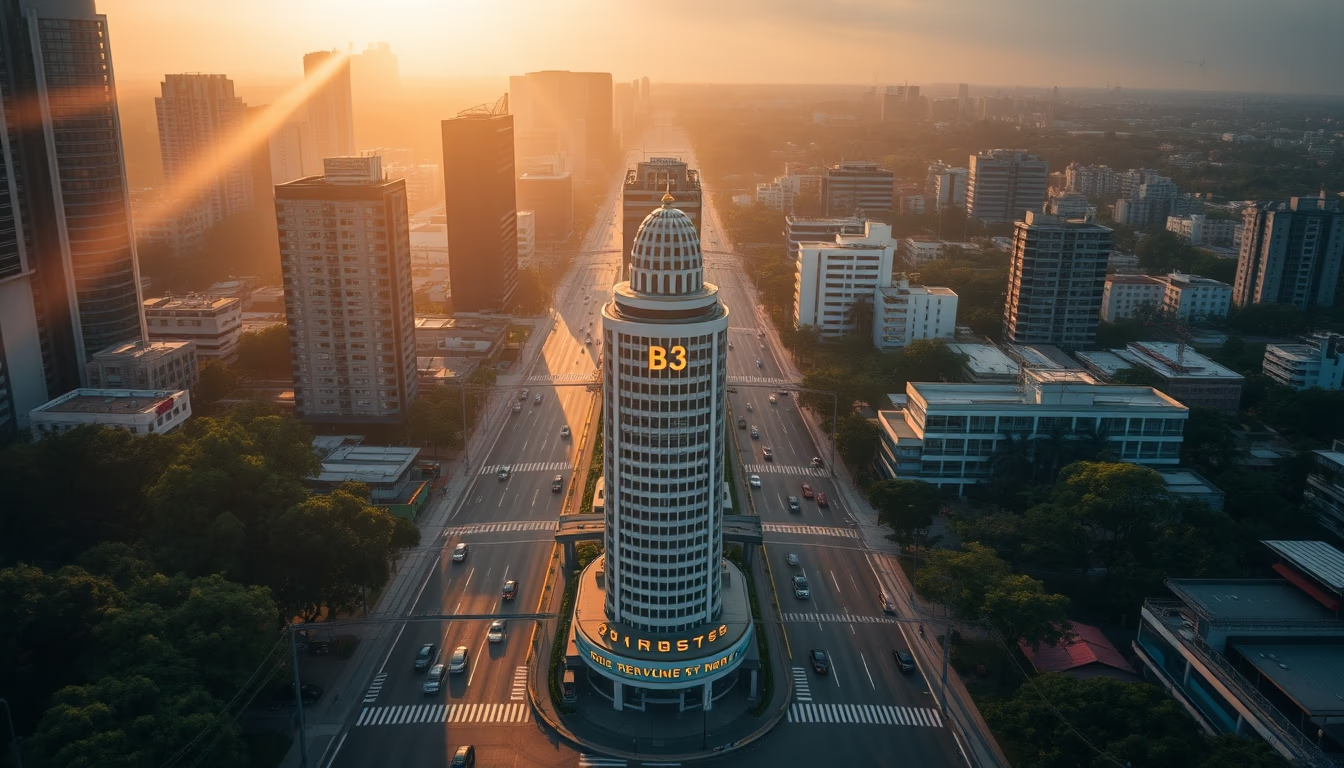 Aerial view of São Paulo financial district at golden hour with B3 building
 Aerial view of São Paulo financial district at golden hour with B3 building
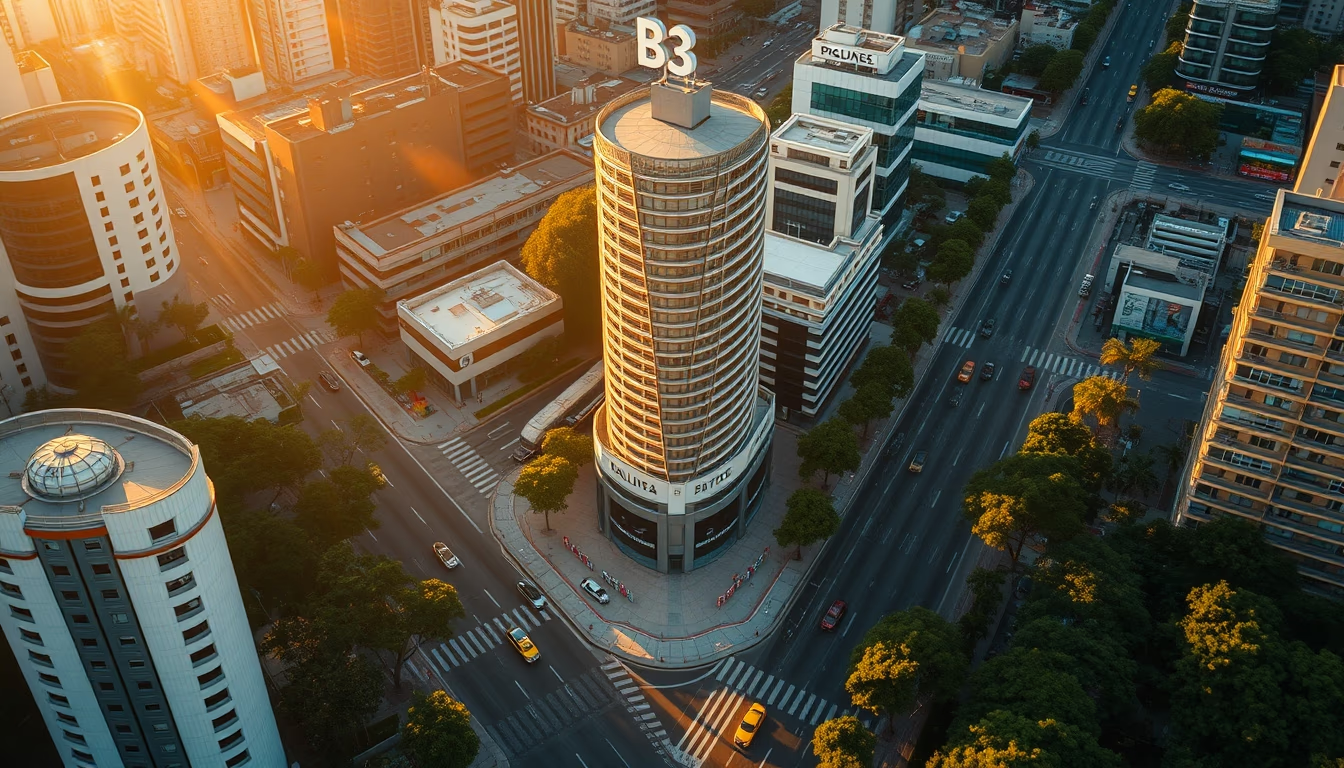 Aerial view of São Paulo financial district at golden hour with B3 building
 Aerial view of São Paulo financial district at golden hour with B3 building
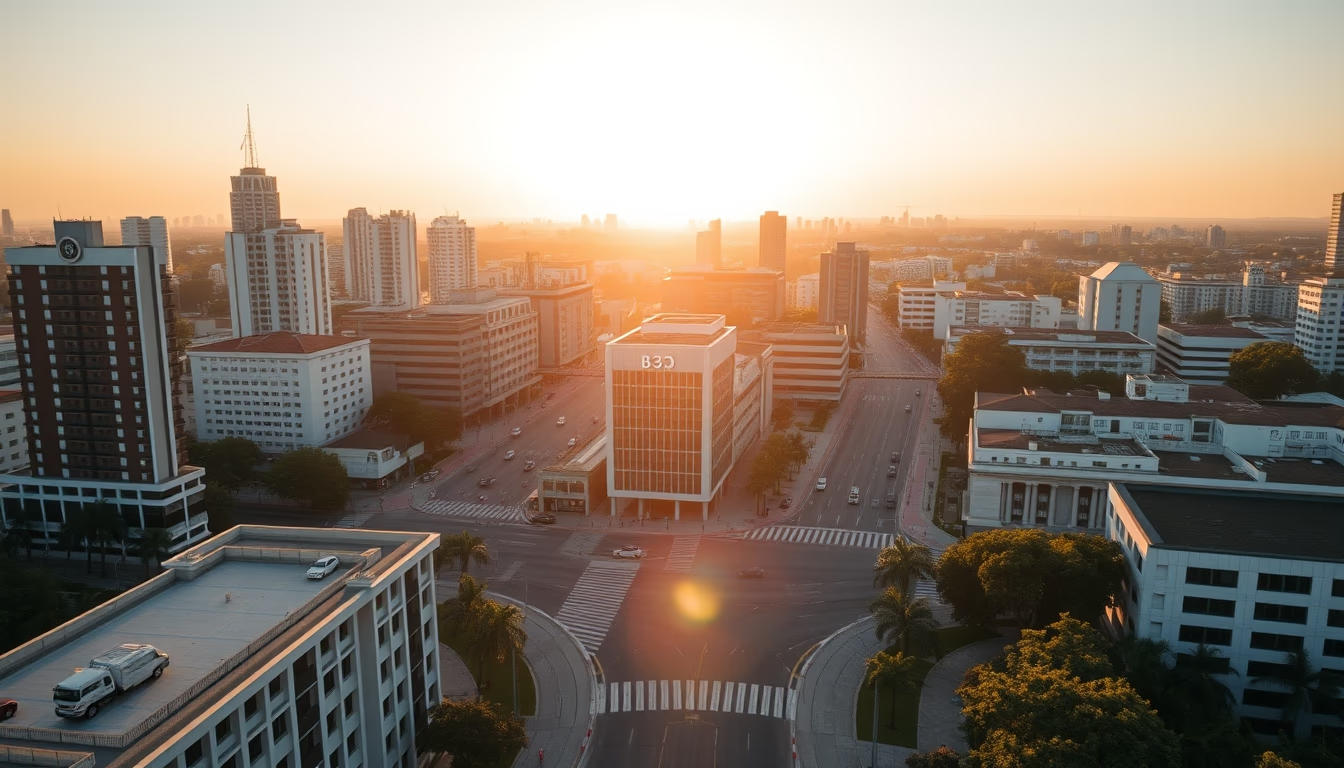 Aerial view of São Paulo financial district at golden hour with B3 building
 Aerial view of São Paulo financial district at golden hour with B3 building