Banker explaining interest rate to a client
1344×768 · AVIF · CC BY 4.0

On an overcast afternoon, a banker explains the Selic rate to a client in a corporate office.
About this subject
The Selic rate, officially named Special Settlement and Custody System, is Brazil's benchmark interest rate. Set by the Monetary Policy Committee (Copom) of the Central Bank, it directly influences interest rates on loans, financing, and the returns on financial investments such as CDBs and fixed-income funds. When Copom raises the Selic, the goal is to curb inflation by making credit more expensive and discouraging consumption. Conversely, when it lowers the rate, it aims to stimulate economic activity.
In Brazil, the Selic is a key monetary policy instrument, and monitoring it is crucial for investors and borrowers. In 2024, the Selic rate was maintained at 10.50% per year for part of the year, reflecting controlled inflation but fiscal risks. Historically, it has reached very high levels, such as 14.25% per year in 2015, and record lows of 2% per year in 2020 during the COVID-19 pandemic, when the Central Bank needed to stimulate the economy.
For the general public, understanding the Selic is essential for making informed financial decisions. A banker explaining the rate to a client typically covers how it impacts everything from savings account yields to the cost of a mortgage. Clear communication about the Selic helps demystify economic concepts and promotes financial literacy, especially in a country where inflation and interest rates are recurring topics in daily life.
Frequently Asked Questions
What is the Selic rate and who sets it?
The Selic is Brazil's benchmark interest rate, set by the Monetary Policy Committee (Copom) of the Central Bank. It serves as a reference for all other interest rates in the country.
How does the Selic affect investments?
The Selic directly influences the returns on fixed-income investments such as CDBs, government bonds (Tesouro Selic), and DI funds. When the Selic rises, these investments tend to yield more.
What is the relationship between Selic and inflation?
Copom uses the Selic to control inflation. If inflation is high, it raises the Selic to make credit more expensive and reduce consumption. If inflation is low, it may lower the Selic to stimulate the economy.
Direct URL
https://pub-c7d6a6ea828543ac903a74a341ccb2e1.r2.dev/imagens/banker-explaining-selic-rate-to-a-client-editorial-overcast-daytime-3.avifHow to credit
Include a visible link back to UtilizAí. Copy one of the snippets below:
<a href="https://xn--utiliza-eza.com/en/midia/imagens/banker-explaining-selic-rate-to-a-client-editorial-overcast-daytime-3">Banker explaining interest rate to a client</a> by <a href="https://xn--utiliza-eza.com">UtilizAí</a>, licensed under <a href="https://creativecommons.org/licenses/by/4.0/">CC BY 4.0</a>.
[Banker explaining interest rate to a client](https://xn--utiliza-eza.com/en/midia/imagens/banker-explaining-selic-rate-to-a-client-editorial-overcast-daytime-3) by [UtilizAí](https://xn--utiliza-eza.com), CC BY 4.0
License: CC-BY-4.0
Tags
Related images
 Aerial view of São Paulo financial district at golden hour with B3 building
 Aerial view of São Paulo financial district at golden hour with B3 building
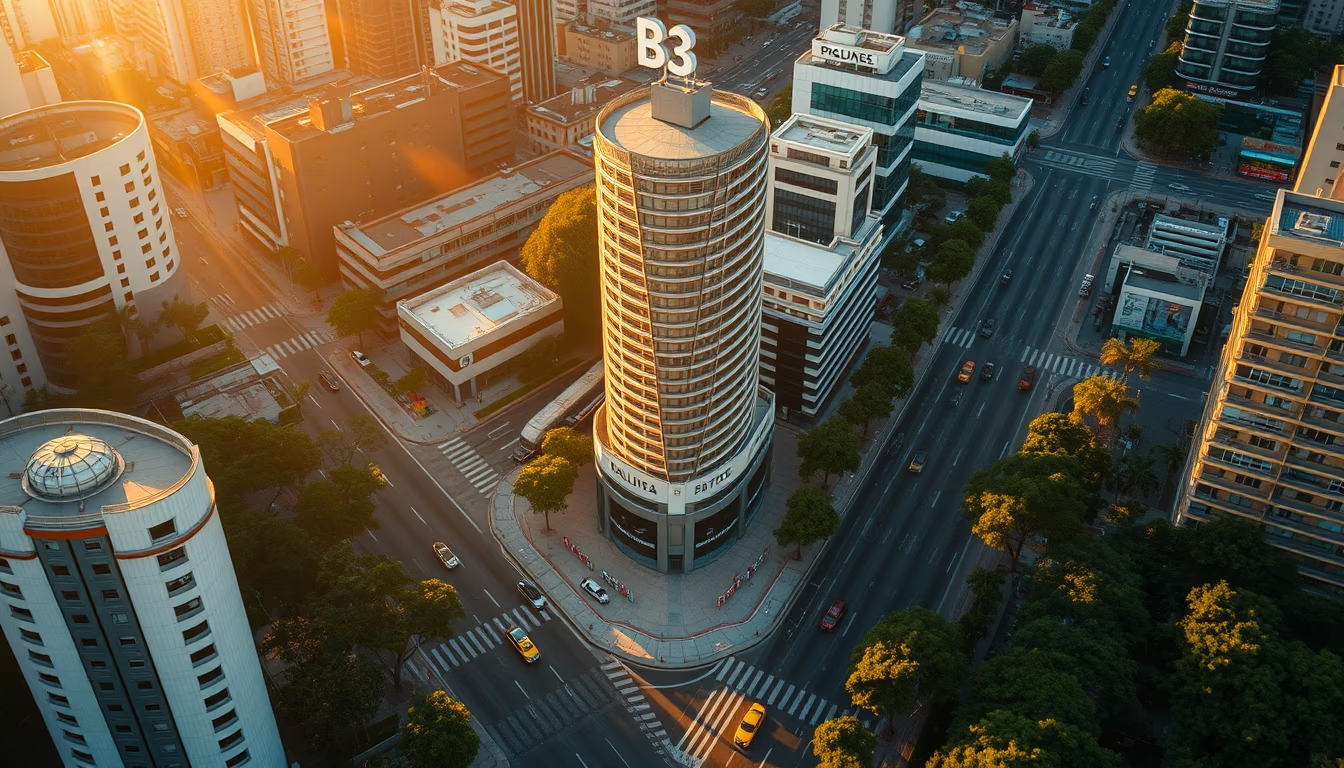 Aerial view of São Paulo financial district at golden hour with B3 building
 Aerial view of São Paulo financial district at golden hour with B3 building
 Aerial view of São Paulo financial district at golden hour with B3 building
 Aerial view of São Paulo financial district at golden hour with B3 building